
The 'One In, One Out' Rule and Other Habits That Keep Homes Organized Long-Term
Organization isn't a one-time event. Explore the daily and weekly habits that prevent clutter from building back up over time.
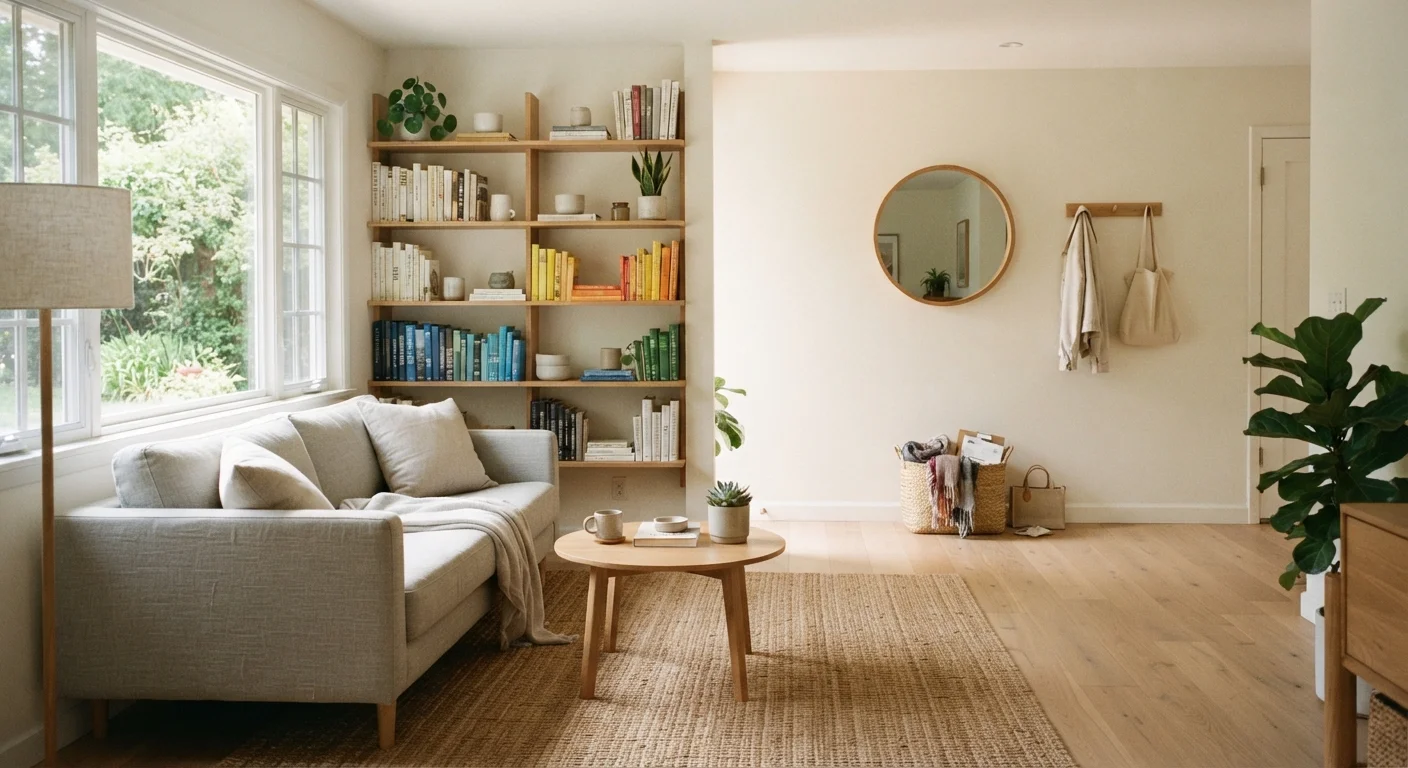
Photo: FaqsDrive.com | Smart Way To Search editorial
—— In This Article
Key Takeaways
- The 'one in, one out' rule prevents clutter from accumulating after an initial declutter.
- Daily reset routines of 10–15 minutes are more effective than occasional deep-cleaning sessions.
- Assigning every item a permanent 'home' is the foundation of any lasting organization system.
- Weekly habit reviews help catch clutter hotspots before they become overwhelming.
- Involving all household members in shared routines dramatically improves long-term success.
Why Organization Fades Without the Right Habits
Many homeowners put enormous effort into organizing a space — sorting, purging, labeling — only to find it back in disarray within weeks. The reason isn't a lack of effort. It's a lack of a maintenance system. If you've ever started from scratch, our beginner's guide to decluttering explains why the first step is always removing before organizing.
Once a space is cleared, the real challenge begins: keeping it that way. Clutter doesn't return all at once. It creeps back gradually — a shopping bag left on the counter, a jacket draped over a chair, mail piled on the table. Without small, consistent habits to counteract these tendencies, even the most thoughtfully organized home reverts to chaos.
The good news is that effective maintenance doesn't require hours of effort. It requires the right behaviors, repeated consistently.
The 'One In, One Out' Rule Explained
The most powerful habit for preventing clutter buildup is deceptively simple: whenever something new enters your home, something old leaves. Buy a new pair of shoes? Donate or discard a worn-out pair. Receive a new kitchen gadget? Evaluate what it replaces and remove it.
Apply the 'one in, one out' rule every time a new item enters your home.
This keeps total possessions at a stable level, preventing gradual accumulation. It also encourages more intentional purchasing habits over time.
Perform a 10–15 minute daily reset each evening before bed.
Small daily resets stop clutter from compounding. A consistent nightly routine is far less effortful than a weekend rescue mission.
Assign a specific, logical location for every item in your home.
When items have no designated spot, they land on any available surface. Clear homes for objects make tidying nearly automatic.
Schedule a weekly 'clutter audit' of your home's hotspot zones.
Certain areas — entryways, kitchen counters, nightstands — naturally attract clutter. Checking these weekly catches drift before it spreads.
Process incoming mail and paperwork the same day it arrives.
Paper piles are one of the fastest-growing clutter sources in most homes. Same-day handling prevents the backlog that feels impossible to tackle later.
This rule works because it treats your home's storage capacity as fixed. Rather than endlessly expanding what you own, you maintain equilibrium. Over time, this habit also sharpens your awareness before purchasing — knowing you'll need to let something go makes you more deliberate about what you bring in.
It's worth noting that 'one in, one out' doesn't have to be rigid. For items you genuinely need to accumulate temporarily (seasonal clothing, school supplies), a monthly review serves the same purpose. The goal is consistent attention, not perfection.
Daily and Weekly Habits That Sustain Order
Beyond the one-in, one-out principle, a handful of small routines make a significant difference in how organized a home stays day to day.
A daily reset — spending 10–15 minutes each evening returning items to their designated spots — prevents the slow accumulation that leads to overwhelm. Think of it as a nightly standard: dishes go in the dishwasher, bags go back to their hooks, surfaces get cleared.
A weekly sweep involves walking through your home once a week with a basket, collecting anything that's migrated out of place. This is also the right time to check your clutter hotspots — entryways, kitchen counters, and bathroom vanities tend to attract the most drift.
These routines work best when everyone in a household participates. If you share your space with others who have different organizational styles, our guide to organizing shared spaces offers practical strategies for creating systems everyone can maintain.
Make Habits Visible for Everyone
If you share your home with family members or roommates, post your reset routine somewhere visible — inside a cabinet door or on a shared calendar. When the system is transparent and simple, it's easier for others to participate. Short, specific tasks (rather than vague instructions like 'tidy up') get done more reliably.
The 'Everything Has a Home' Principle
No habit is more foundational to lasting organization than giving every item in your home a designated place. When something doesn't have a clear home, it defaults to a surface — the counter, the chair, the floor. Over time, these surfaces become permanent dumping grounds.
80%
Of clutter comes from disorganization, not lack of space
Professional organizers widely cite that most clutter accumulates because items lack designated locations, not because homes are too small.
40%
Of housework eliminated by decluttering
Research from the National Soap and Detergent Association has been cited in organizing literature suggesting that reducing clutter significantly cuts cleaning time.
Assigning items specific locations means that putting things away is automatic rather than a decision. Scissors always go in the top drawer. Keys always hang by the door. Incoming mail always goes in the tray — not on the counter.
This principle also helps identify items that genuinely don't belong. If you can't find a logical home for something, it's often a sign that the item itself is the problem — either it's not used, it's redundant, or it belongs elsewhere. For a deeper look at common mistakes that undermine this approach, see our article on why organizing before decluttering makes the problem worse.
For a comprehensive room-by-room framework that builds on these habits, the complete guide to organizing a home from top to bottom covers every space in detail.
Habits Take Time to Stick
Research on habit formation suggests new behaviors can take anywhere from a few weeks to several months to become automatic — so don't judge your system by the first week. Start with just one or two of these habits, let them become routine, then layer in others. Gradual adoption is more sustainable than trying to overhaul everything at once.

Home & Garden Editorial Team
Home & Garden Editorial Team is the collective byline for our editorial team and contributor network. Articles published under this byline or an editorial pen name are researched, written, and reviewed according to our editorial standards for clarity, consistency, and independence before publication.
View author profile