
The Complete Guide to Organizing a Home From Top to Bottom
An end-to-end resource covering decluttering methods, storage strategies, maintenance habits, and organizing every room in your home.
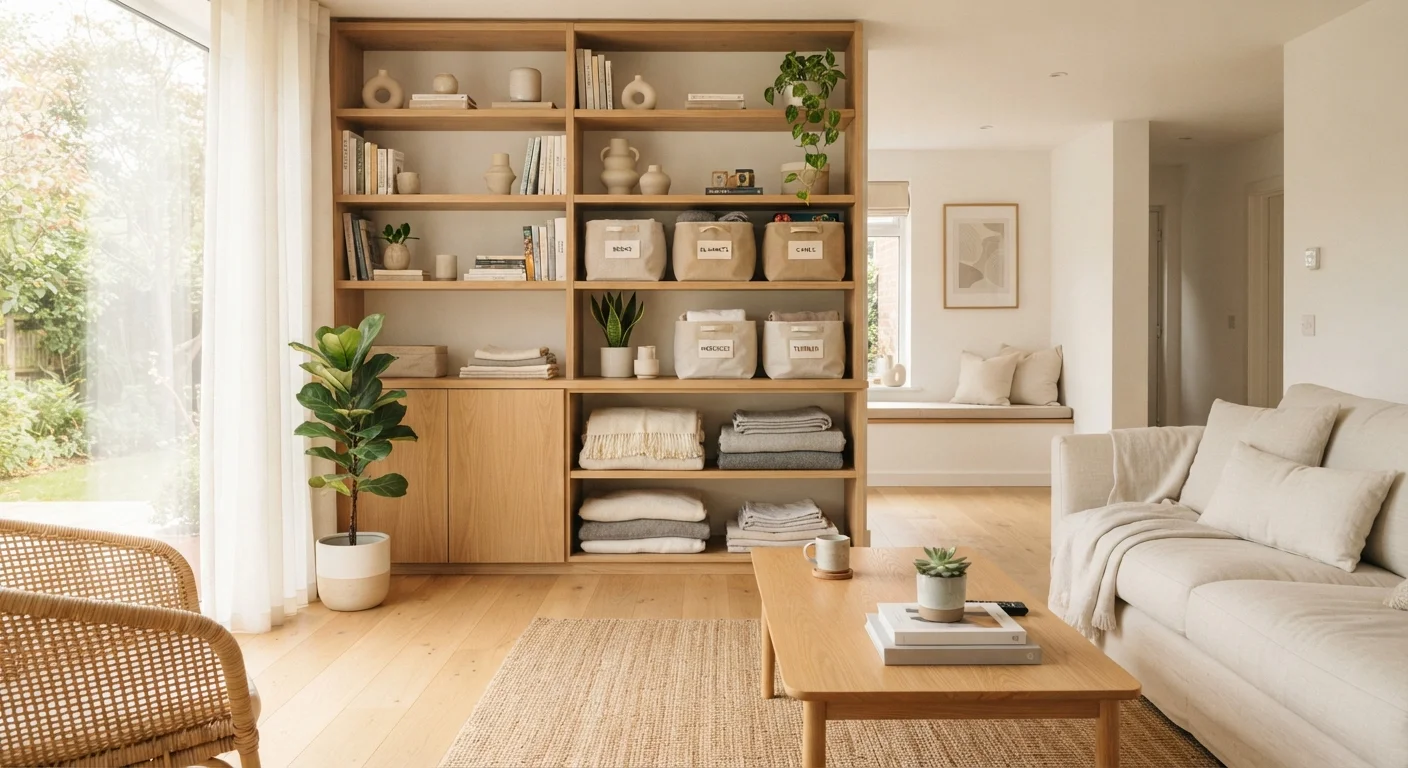
Photo: FaqsDrive.com | Smart Way To Search editorial
—— In This Article
Key Takeaways
- Always declutter before introducing new storage — organizing clutter just hides the problem.
- Dividing your home into functional zones makes maintaining order far easier long-term.
- Each room has unique organizing priorities that call for tailored strategies.
- Sustainable organization depends on daily habits, not one-time overhauls.
- Storage solutions should fit how you actually live, not an idealized version of your routine.
Start With Decluttering — Not Organizing
The single most common home-organization mistake is reaching for bins and labels before deciding what to keep. When you organize first, you simply redistribute clutter rather than eliminate it — a cycle that leads to frustration and relapse. Before touching a single shelf, sort everything in a given space into four categories: keep, donate, discard, and relocate.
Work one area at a time — a single drawer, one closet shelf — so the task stays manageable. Ask yourself whether an item has been used in the past year and whether it would be repurchased if lost. Sentimentality is valid, but items kept purely out of obligation add weight without adding value.
For a deeper look at why sequence matters, see why decluttering must come before organizing. Getting this order right is the foundation everything else builds on.
Avoid Buying Storage Too Soon
Purchasing bins, baskets, and drawer dividers before you've finished decluttering is one of the most common and costly organizing mistakes. You may end up with containers designed to hold items you ultimately discard. Complete your sort-and-purge pass in each area first, then assess what storage — if any — you actually need.
Understanding Zones and Storage Principles
Zoning means assigning every area of your home a specific purpose and keeping only related items there. A mudroom zone holds outerwear and bags; a meal-prep zone keeps cutting boards and knives near the stove. When everything has a designated zone, returning items to their place becomes automatic rather than effortful.
Two additional principles guide smart storage decisions. Negative space — intentional empty areas — prevents visual overload and gives you room to expand. Prime real estate refers to the most accessible storage spots (eye-level shelves, front-of-drawer positions), which should hold the items you use daily. Less-used belongings go in harder-to-reach locations.
If any of these terms are unfamiliar, the plain-language guide to home organization terminology covers them all in one place.
25%
Of a two-car garage used for storage, not cars
According to the U.S. Department of Energy, roughly one in four two-car garages in American homes is too full to fit any vehicles.
40%
Of housework eliminated by reducing clutter
Home organization researchers have estimated that decluttering a typical home can reduce the time spent on household cleaning and tidying by a significant margin.
Room-by-Room Organizing Strategy
Each room serves a different function, so each needs its own approach.
Kitchen
Group items by task: baking supplies together, daily cooking tools within arm's reach of the stove. Purge expired pantry goods quarterly. Use vertical space inside cabinets with stackable risers.
Bedrooms
Limit bedroom surfaces to items used every single day. Clothing organization works best when seasonal items are stored out of sight — under the bed or in higher closet shelves — to reduce visual noise in your daily routine.
Bathrooms
Moisture-prone environments need airtight containers for cotton products and regular audits of expired medicines and cosmetics. Keep the counter clear of everything except daily-use items.
Living Areas
Establish a nightly reset ritual: return remote controls, books, and throws to their zones before bed. Baskets and ottomans with hidden storage help keep communal spaces tidy without feeling sterile.
Garage and Storage Spaces
Categorize by activity — automotive, gardening, sports — and label clearly. Wall-mounted pegboards and shelving free up floor space, which is especially valuable in smaller garages. For broader home upkeep context, the home improvement hub offers beginner-friendly guidance on maintaining these spaces long-term.
Organize your most-used spaces first, not the most overwhelming ones. Early wins in a kitchen junk drawer or bathroom cabinet build momentum that carries you through harder areas like a packed garage.
Behavioral research on habit formation consistently shows that small, visible successes increase the likelihood of continuing a new routine.
When in doubt about a category, create a 'pending' box with a written date. If you haven't retrieved anything from it in 60 days, donate the box without opening it.
This method removes the emotional friction of in-the-moment decision making and provides an objective test for whether an item is genuinely needed.
Choosing the Right Storage Solutions
Before purchasing any storage product, measure the space and confirm it fits your actual belongings — not a generic household. A few principles help narrow the choices:
- Visibility matters: Clear containers work well in pantries and craft areas where you need to see contents at a glance. Opaque bins suit closets where uniformity reduces visual clutter.
- Label everything: Labels reduce the friction of putting things away, which is where most organizing systems break down.
- Scale to the space: A large basket in a small bathroom overwhelms the room. Choose storage proportional to the area and the quantity of items it needs to hold.
- Flexibility over perfection: Adjustable shelving and modular units adapt as your needs change, making them more durable investments than fixed, purpose-built furniture.
Avoid the trap of buying storage before decluttering — you may end up with containers sized for a volume of items you no longer own.
Measure Before You Buy Storage
Write down the exact dimensions of every shelf, cabinet, and drawer before shopping for storage products. Many organizing projects stall because containers don't fit the space they were bought for. A tape measure and a notes app on your phone are the two most useful organizing tools you own.
Building Habits That Keep Your Home Organized
Organization is not a one-time event. The most elaborately organized home will revert to chaos without daily maintenance habits. These small practices make the biggest long-term difference:
- One-in, one-out rule: When a new item enters the home, a comparable item leaves. This keeps volume stable.
- Daily 10-minute tidy: A short reset each evening — dishes away, surfaces cleared, shoes returned — prevents clutter from accumulating into overwhelming piles.
- Seasonal reviews: Schedule four short decluttering sessions per year, aligned with season changes. Swap out clothing, check pantry and bathroom supplies, and reassess what zones are working.
- Fix friction points immediately: If you notice an item is consistently left out of its zone, that is a sign the system needs adjusting, not that you need more willpower.
An organized home is ultimately a reflection of systems that fit the way you actually live. When routines feel effortless, they stick.

Home & Garden Editorial Team
Home & Garden Editorial Team is the collective byline for our editorial team and contributor network. Articles published under this byline or an editorial pen name are researched, written, and reviewed according to our editorial standards for clarity, consistency, and independence before publication.
View author profile