
Fixed Shelving vs. Modular Storage Systems: Which Suits Your Home Better?
Weighing built-in shelving against modular storage? This comparison breaks down flexibility, cost, and function to help you think it through.
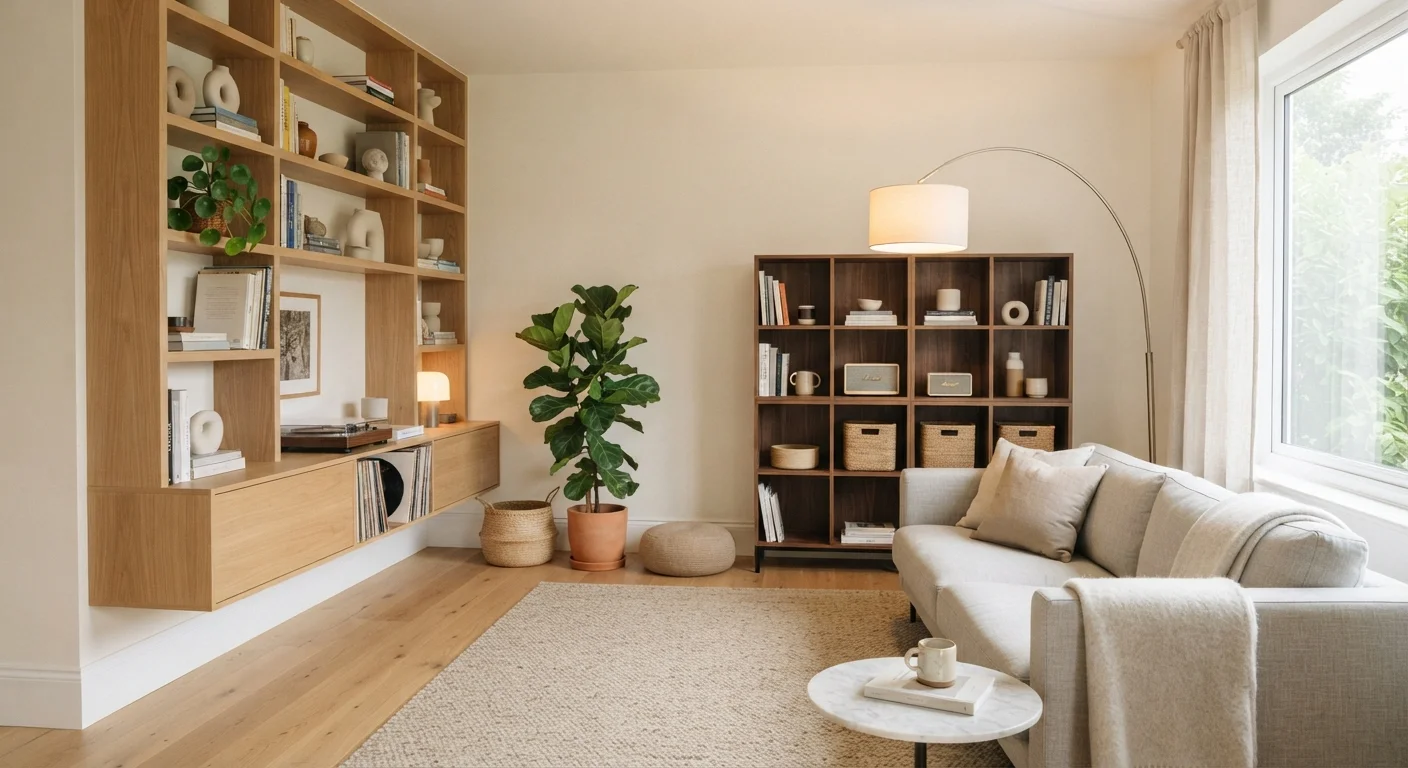
Photo: FaqsDrive.com | Smart Way To Search editorial
—— In This Article
Key Takeaways
- Fixed shelving offers a polished, built-in look but requires professional installation and is not easily moved.
- Modular systems can be reconfigured or relocated, making them ideal for renters or changing households.
- Installation costs for fixed shelving are generally higher upfront; modular units vary widely by material and size.
- Fixed shelves add structural permanence that can increase perceived home value in some contexts.
- Modular storage works well in shared or multi-use rooms where needs evolve frequently.
- Neither option is universally better — your home layout, tenure, and lifestyle determine the right fit.
Understanding the Core Difference
At its most basic, the distinction is simple: fixed shelving is anchored permanently to a wall or structure, while modular storage systems are freestanding, interchangeable units you assemble and rearrange as needed.
Fixed shelving includes built-in bookcases, alcove shelves, and wall-mounted plank shelves secured into studs. Once installed — often by a carpenter or skilled DIYer — they become part of the room. Modular systems, by contrast, typically consist of standardized cubes, brackets, or panels that connect together. You can expand them, shrink them, or move them to a different room entirely.
Both solve the same core problem — where do I put all my stuff? — but they approach it from opposite directions. If you're also thinking about how to take advantage of the space you already have, our guide on using vertical space and dead corners pairs well with either approach.
| Criterion | Fixed Shelving | Modular Storage Systems |
|---|---|---|
| Installation | Requires drilling, anchoring, often a professional | Typically tool-minimal, DIY-friendly |
| Upfront Cost | Generally higher | Lower to start; scales with additions |
| Flexibility | Permanent once installed | Reconfigurable and moveable |
| Aesthetic | Seamless, built-in look | Freestanding; varies by finish |
| Best for Renters | Rarely suitable | Well suited |
| Custom Fit | Can be built to exact dimensions | Limited by standard unit sizes |
| Relocation | Stays with the property | Moves with you |
Cost, Installation, and Commitment
Fixed shelving typically involves higher upfront costs. Custom carpentry, materials, hardware, and professional labor add up quickly. Even simpler wall-mounted shelves require locating wall studs, drilling, and potentially patching walls later if you change your mind. In most jurisdictions, purely decorative shelving doesn't require a permit, but load-bearing built-ins or those integrated with structural walls may be a different matter — always check local building codes.
Modular systems generally have a lower barrier to entry. Many require no tools beyond a mallet or screwdriver, and you can start with a single unit and expand over time. That incremental approach is particularly useful if you're budgeting carefully. For broader guidance on spending wisely on home improvements, the Smart Budgeting hub offers practical frameworks.
68%
Homeowners who say storage is a top remodel priority
According to the National Association of Home Builders, storage ranks consistently among the top features buyers and owners prioritize in home improvement surveys.
3–5 years
Average tenure before Americans move homes
U.S. Census Bureau data indicates the median duration of homeownership between moves, a key factor when deciding how permanent a storage investment makes sense.
One cost factor people often overlook: relocation. If you move, fixed shelving stays with the house. Modular systems move with you — potentially saving you the expense of buying new storage in your next home.
Flexibility, Aesthetics, and the Right Fit for Your Room
Fixed shelving wins on visual integration. A well-built alcove bookcase or a floor-to-ceiling built-in looks intentional and finished in a way that freestanding units rarely do. It also eliminates the gap between unit and wall that collects dust. For rooms with awkward dimensions — think a narrow hallway or a sloped attic space — custom-fitted fixed shelving is often the only practical solution.
Modular systems win on adaptability. A family with young children may need low, open cubes for toy storage today and taller closed units for books and gear in five years. A shared apartment where roommates have different organizational habits benefits from a system that can be reconfigured without a contractor. Modular units also work well in kitchens — if you're organizing a small or awkward kitchen layout, see our piece on organizing cabinets, drawers, and countertops for complementary strategies.
A Note on Rental Properties
If you rent, always review your lease before making any wall modifications — even small anchor holes. Most landlords prohibit permanent installations without written permission. Modular freestanding systems are generally the safer default. If you do get permission for fixed shelving, document the pre-installation wall condition with photos.
Material quality matters regardless of which system you choose. Particleboard modular units can sag under heavy loads, while poorly anchored fixed shelves are a safety risk. Always follow weight guidelines and installation instructions carefully.

Home & Garden Editorial Team
Home & Garden Editorial Team is the collective byline for our editorial team and contributor network. Articles published under this byline or an editorial pen name are researched, written, and reviewed according to our editorial standards for clarity, consistency, and independence before publication.
View author profile