
Vertical Space, Dead Corners, and Other Storage Opportunities Most Rooms Already Have
Most homes have untapped storage potential. Discover practical ways to use vertical space, awkward corners, and underutilized areas effectively.
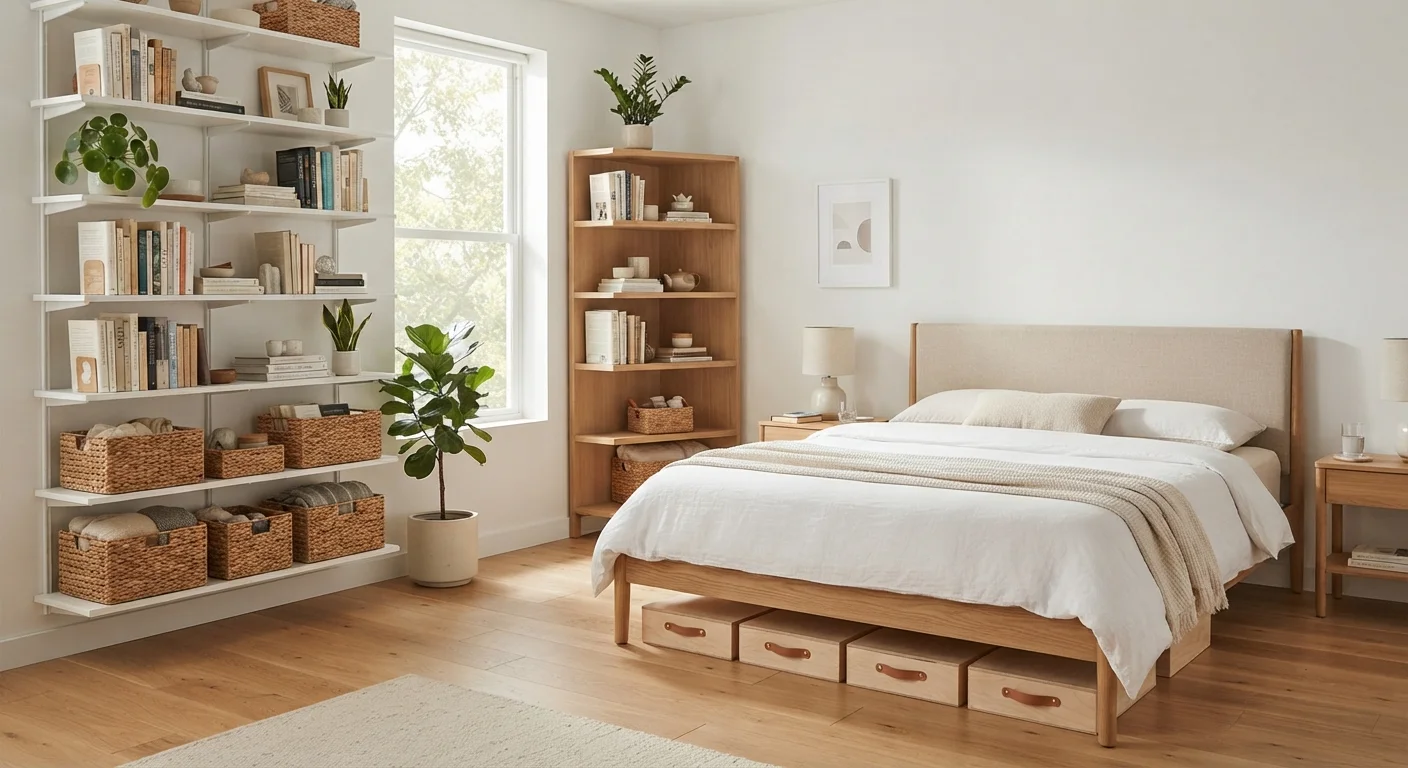
Photo: FaqsDrive.com | Smart Way To Search editorial
—— In This Article
Key Takeaways
- Vertical wall space above eye level is one of the most overlooked storage opportunities in any home.
- Dead corners can become functional zones with corner shelves, L-shaped units, or rotating trays.
- Under-bed, over-door, and stairwell areas together offer significant hidden storage capacity.
- Furniture with built-in storage cuts clutter without requiring additional pieces in a room.
- Measuring your target space before buying any storage product prevents costly mismatches.
Finding Storage That's Already There
Most homes have untapped storage potential hiding in plain sight — high wall space above furniture, the backs of doors, neglected corners, and tucked-away areas under beds or stairs. Using these zones effectively often requires far less investment than a renovation, and the results show up quickly in how functional a room feels day to day.
If you want a structured audit of your entire home before focusing on specific zones, the room-by-room home organization checklist is a practical place to start. The seven storage opportunities below apply to nearly any room layout, regardless of square footage.
Before You Mount Anything
Wall-mounted shelves must be secured to studs or with anchors rated for the weight you plan to store. Studs in American homes are typically spaced 16 or 24 inches apart. For heavy loads or unfamiliar wall materials — such as plaster in older homes — consulting a contractor before installation is the safer approach.
7 Storage Opportunities Most Rooms Already Have
Go Vertical with Wall-Mounted Shelving
Wall space above eye level — above sofas, desks, and dressers — rarely gets used. Floating shelves bring this area into play for books, baskets, or items accessed occasionally. A staggered shelf arrangement handles both display and practical storage without visually overwhelming the room.
Always anchor wall-mounted shelves to studs or use hardware rated for your intended load. If you're uncertain about your wall construction or how much weight a wall can support, consult a contractor before installing anything.
The wall above your sofa or desk is often the most overlooked storage area in any room.
Convert Dead Corners with Corner-Specific Storage
Corners are the most commonly wasted square footage in any room. A corner shelf unit — freestanding ladder-style or wall-mounted L-shaped — puts this angular space to work immediately. In kitchens, a rotating tray (often called a lazy Susan) inside a corner cabinet lets you reach items stored at the back without digging. Even a single bathroom corner shelf moves toiletries off countertops and keeps flat surfaces clearer.
A corner shelf unit transforms wasted angular space into a purposeful storage or display area.
Unlock the Space Under Your Bed
The area beneath a bed is one of the largest unused zones in most bedrooms. Low-profile bins with lids keep seasonal clothing or extra bedding dust-free and out of sight. Beds with built-in drawers take this further, providing easy access without pulling items from underneath. If your frame sits too close to the floor, bed risers can add several additional inches of usable clearance.
Under-bed space can hold a surprising amount — seasonal clothing, extra linens, or rarely used gear.
Install Over-Door Organizers
Every interior door offers unused vertical space on its back face. Over-the-door racks, hooks, and pocket organizers are typically tension-mounted, requiring no hardware or wall damage. Pantry doors work well for spices and small packets; bathroom doors for toiletries; closet doors for shoes and accessories. In a small kitchen, an over-door pantry organizer can free up meaningful cabinet space that's currently being used inefficiently.
Every door in your home represents a few square feet of hidden, vertical storage potential.
Make Stairwells and Hallways Work Harder
The triangular area under a staircase can house built-in drawers, open shelves, or a small closet, depending on the construction. Hallways often have bare wall space that goes completely unused — a narrow floating shelf or a row of sturdy hooks keeps entryway clutter from drifting into main living areas. A storage bench placed on a stair landing serves double duty as both seating and concealed storage.
Hallways and stair landings often contain more usable wall and floor space than people first realize.
Rethink Your Closet's Interior Layout
Standard closets — one hanging rod with one shelf above — leave the bottom half mostly empty and the upper area out of easy reach. Adding a second rod beneath the first doubles hanging capacity for shorter garments like folded shirts or jackets. Stackable bins or a small drawer unit on the closet floor makes use of leftover floor space. For unfamiliar organization terms like zoning, the key terms in home organization explains the concepts in plain language.
Most standard closets use only a fraction of their vertical depth — a second rod nearly doubles capacity.
Choose Furniture That Doubles as Storage
When floor space is limited, furniture that doubles as storage reduces visual clutter without requiring extra pieces. Ottomans with removable lids, storage benches, beds with built-in drawers, and lift-top coffee tables keep belongings hidden but accessible. This approach also challenges the common myth that more bins and baskets automatically produce a more organized home — sometimes one well-chosen furniture piece outperforms a dozen containers.
Furniture with built-in storage keeps essentials accessible without adding visual clutter to a room.
Measure Before You Buy
Before purchasing any storage product, measure the target space in all three dimensions: height, width, and depth. Note any nearby obstructions like outlets, light switches, or vents. Keeping those measurements on your phone prevents return trips and ensures what you bring home will actually fit and function as intended.
Building on Small Wins
Storage improvements don't need to happen all at once. Pick one zone, make a simple change, and evaluate how it affects the room's flow before moving to the next. If you're deciding between permanent built-in shelving and a more adaptable system, the guide to fixed vs. modular storage breaks down the practical trade-offs. For shared households, the organizing shared spaces guide addresses the added layer of coordinating storage systems across different habits and preferences.

Home & Garden Editorial Team
Home & Garden Editorial Team is the collective byline for our editorial team and contributor network. Articles published under this byline or an editorial pen name are researched, written, and reviewed according to our editorial standards for clarity, consistency, and independence before publication.
View author profile