
Teen Drivers and Graduated Licensing: What Parents Should Know
Graduated licensing systems exist to lower new-driver risk. This guide explains how they work and what supervision looks like.
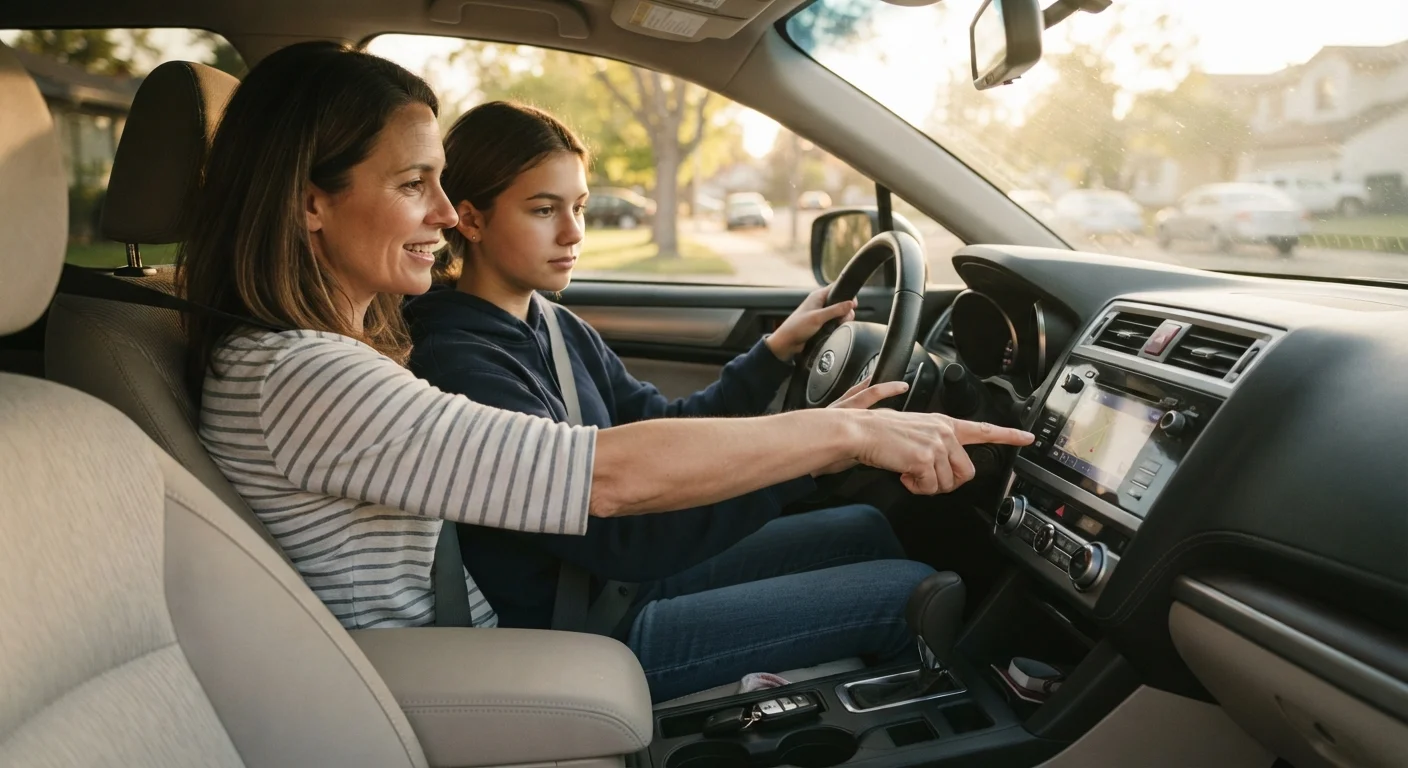
Photo: FaqsDrive.com | Smart Way To Search editorial
—— In This Article
Key Takeaways
- Every U.S. state uses a graduated licensing system, but exact rules differ — know your state's specific requirements.
- Most GDL systems have three stages: learner's permit, restricted license, and full license.
- Supervised driving hours are mandatory in most states and should be practiced in a wide variety of conditions.
- Passenger and nighttime restrictions during the intermediate stage address the highest-risk scenarios for new drivers.
- Parental involvement and consistent practice significantly lower crash risk for teen drivers.
- Teens who complete more supervised hours before licensing show measurably lower crash rates in their first independent year.
Why Graduated Licensing Exists
Motor vehicle crashes remain one of the leading causes of death among teenagers in the United States. New drivers face a combination of limited experience, still-developing judgment, and social pressures that make the first months behind the wheel genuinely high-risk. Graduated licensing was specifically designed to address that gap.
The core logic is straightforward: exposure to driving risk should increase gradually, not all at once. By requiring supervised practice before solo driving, and by restricting the highest-risk situations during the intermediate stage, GDL systems give new drivers time to build real competence before those training wheels come off.
Research consistently shows that states with stronger GDL laws — stricter hour requirements, lower nighttime curfews, tighter passenger limits — have lower teen crash rates than states with weaker provisions. The system isn't perfect, but the evidence behind it is solid.
~3x
Higher crash rate for 16-year-olds vs. experienced drivers
The CDC notes that teen drivers ages 16–19 are nearly three times more likely to be involved in a fatal crash per mile driven than drivers 20 and older.
50 states
States with some form of GDL law
All 50 U.S. states and the District of Columbia have enacted graduated driver licensing legislation, though requirements vary considerably.
Up to 40%
Reduction in fatal crashes linked to GDL
Studies reviewed by the Insurance Institute for Highway Safety suggest that comprehensive GDL programs have been associated with meaningful reductions in teen driver fatality rates.
The Three Stages Explained
While state details vary, the structure follows a consistent pattern across the U.S.
Stage 1: Learner's Permit
A teen passes a written knowledge test and receives a permit that allows driving only with a licensed supervising adult present. This stage typically lasts a minimum of six months, though many states extend it if violations occur. The goal is to accumulate supervised hours across a range of conditions — daylight, darkness, highways, local streets, and adverse weather.
Stage 2: Intermediate (Restricted) License
After meeting the minimum permit period and supervised-hour requirement, the teen takes a road skills test. If passed, they receive a license with specific restrictions. The most common are a nighttime driving curfew and a limit on teen passengers. These restrictions target two scenarios proven to dramatically increase crash risk: late-night driving and peer-passenger distraction. See our guide to how passengers affect vehicle behavior for more on why this matters.
Stage 3: Full License
Once the teen has held the intermediate license for the required period — typically six months to one year without violations — they become eligible for a standard license with no GDL restrictions. In most states, this happens around age 17 or 18.
What Meaningful Supervision Actually Looks Like
Logging hours is not the same as building skill. Parents who treat supervised drives as passive checkboxes miss the opportunity to shape genuine competence. Here's how to make practice count.
- Vary the conditions intentionally. Practice on interstates, at night, in rain, and in congested areas — not just quiet neighborhood streets. Our guide on driving in rain, snow, and fog explains what changes in those situations and why teens need exposure to them before driving solo.
- Debrief after each drive. Ask specific questions: What did you notice at that intersection? Why did you slow down there? Reflection accelerates learning faster than repetition alone.
- Model the behavior you expect. Teens notice when a parent speeds, uses a phone at the wheel, or tailgates. Inconsistency between what you say and what you do erodes the lessons.
- Address distractions explicitly. Phones, music, and friends are documented risk factors. Talk about them directly rather than assuming the teen already understands the stakes.
Exceed the Minimum Supervised Hours
State minimums are a floor, not a target. Many driving educators recommend 100 or more hours of supervised practice to build genuine confidence across a wide range of road conditions. Use a simple log — date, duration, conditions, and any notes — to track progress and spot gaps in experience.
Setting House Rules That Reinforce GDL
State law sets the floor — your family can set a higher bar. Many safety experts and pediatric organizations recommend that parents establish their own rules that mirror or exceed GDL restrictions, and that those rules be clearly discussed before the teen ever gets behind the wheel independently.
A written parent-teen driving agreement is one practical approach. It outlines expectations around passenger limits, curfew, phone use, and what happens if a rule is broken. Having the agreement in writing reduces ambiguity and gives both parties a shared reference point.
Consider keeping nighttime restrictions in place even after they technically expire under state law. Night driving carries distinct risks that a newly licensed teen hasn't yet had much exposure to. Extending your family's nighttime rule by a few months costs very little and adds meaningful protection.
As your teen demonstrates consistent judgment, you can relax restrictions gradually — mirroring the same logic that makes GDL effective in the first place. For a broader foundation, understanding defensive driving principles gives teens — and parents — a practical mindset for every drive.
Frequently Asked Questions

Automotive Basics Editorial Team
Automotive Basics Editorial Team is the collective byline for our editorial team and contributor network. Articles published under this byline or an editorial pen name are researched, written, and reviewed according to our editorial standards for clarity, consistency, and independence before publication.
View author profile