
Air Filters, Spark Plugs, and Belts: The Maintenance Items Drivers Forget Until Something Breaks
These components rarely announce their wear—until a breakdown. Learn what each one does, how long it typically lasts, and why replacing it on schedule matters.
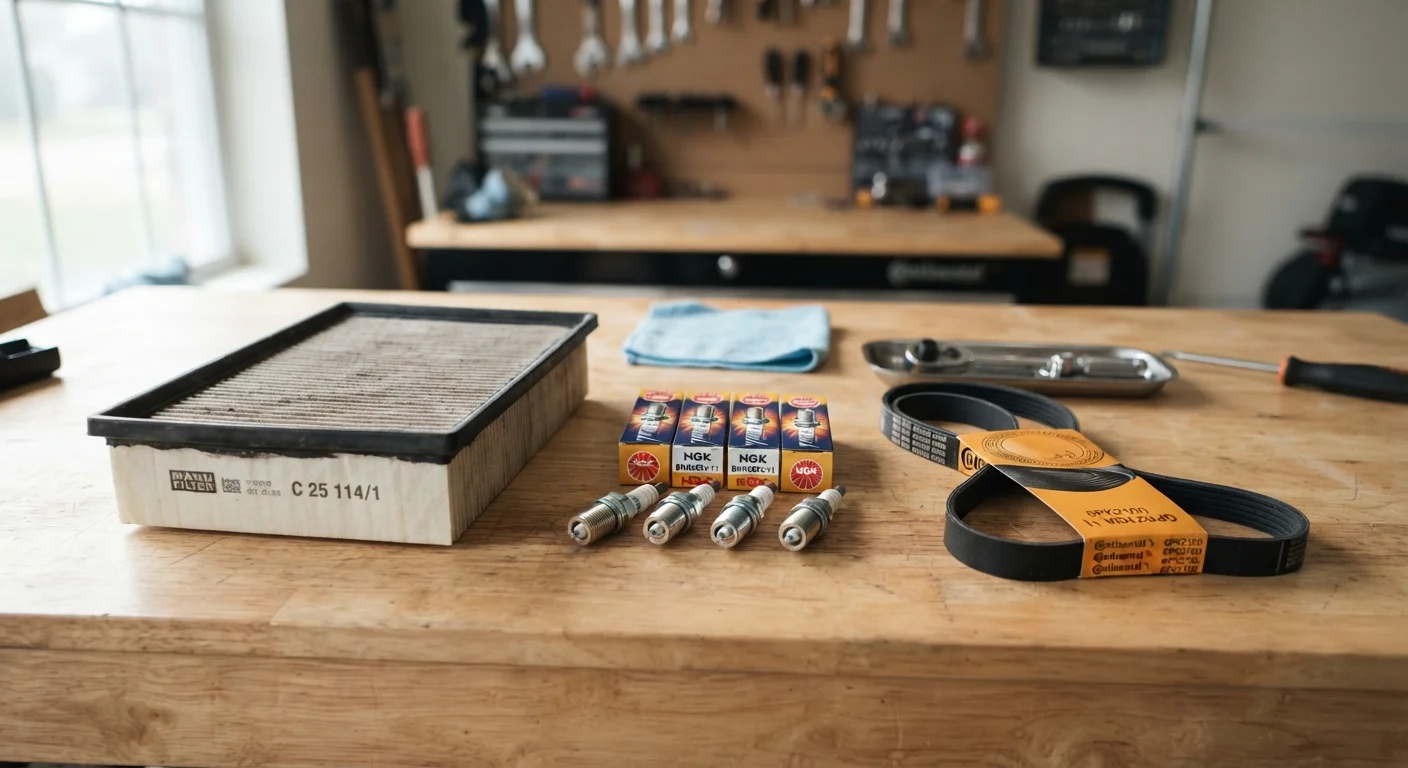
Photo: FaqsDrive.com | Smart Way To Search editorial
—— In This Article
Key Takeaways
- Air filters, spark plugs, and belts wear gradually - most drivers only notice them after a breakdown.
- Each component has a predictable service interval; following it prevents much larger repair bills.
- Your owner's manual is the most reliable source for replacement schedules specific to your vehicle.
- A mechanic can inspect these items during routine oil changes, catching problems early at low cost.
- Skipping these maintenance items can reduce fuel economy, engine performance, and vehicle reliability.
The Parts Nobody Thinks About - Until They Fail
Oil changes and tire checks get most of the attention when it comes to routine car care. But three other components - air filters, spark plugs, and drive belts - quietly degrade in the background until the day they cause a rough idle, a stall, or a tow truck call. The frustrating part? All three follow predictable wear cycles, meaning their failure is almost always preventable.
This guide breaks down what each component does, how long it typically lasts, and what happens when it's overdue for replacement. If you're building a broader maintenance habit, the Car Maintenance 101 guide is a strong starting point for understanding the full picture. For now, let's focus on these three often-overlooked items.
Always Defer to Your Owner's Manual
Service intervals in this article are general industry guidelines and vary by vehicle make, model, engine type, and driving conditions. Your owner's manual contains the maintenance schedule your manufacturer engineered specifically for your car. When in doubt, a qualified mechanic can help you interpret it for your situation.
Replacement intervals listed below are general guidelines. Always check your vehicle's owner's manual - or ask a qualified mechanic - for the schedule that applies to your specific make, model, and driving conditions.
Engine Air Filter
The engine air filter screens out dust, pollen, dirt, and debris before outside air enters the engine. Combustion requires a precise mix of air and fuel, and a clogged filter disrupts that balance by restricting airflow.
What goes wrong when it's neglected: A dirty air filter can reduce fuel economy, cause sluggish acceleration, trigger the check engine light, and - in severe cases - allow contaminants to reach engine components. The engine compensates for restricted airflow by working harder, which adds wear over time.
Typical service interval: Most manufacturers recommend replacing the engine air filter every 15,000 to 30,000 miles, though this varies significantly by environment. Drivers in dusty or rural areas may need to replace theirs more frequently. The filter is generally inexpensive and straightforward for a mechanic to swap out.
How to check: During a service visit, a mechanic can pull the filter and show you its condition. A new filter is typically white or light gray; a heavily used one will appear dark and visibly clogged with debris.
A clogged air filter forces the engine to work harder, hurting fuel economy and accelerating wear.
Cabin Air Filter
Separate from the engine air filter, the cabin air filter cleans the air that flows through your heating, ventilation, and air conditioning (HVAC) system into the passenger compartment. It catches dust, pollen, mold spores, and other airborne particles.
What goes wrong when it's neglected: A clogged cabin filter reduces airflow from vents, makes the HVAC system work harder, and can introduce unpleasant odors into the cabin. For passengers with allergies or respiratory sensitivities, a dirty cabin filter can noticeably worsen air quality inside the vehicle.
Typical service interval: Most manufacturers suggest replacing the cabin air filter every 15,000 to 25,000 miles, or roughly once a year for average drivers. Some vehicles make cabin filter access easy enough for owners to handle themselves; others require partial dashboard disassembly best left to a professional.
Why it's easy to forget: Because the cabin filter doesn't affect engine performance, there's rarely a dashboard warning when it's overdue. Reduced vent airflow or musty smells are often the first clues.
Cabin filter neglect reduces vent airflow and degrades the air quality passengers breathe inside the car.
Spark Plugs
Spark plugs ignite the air-fuel mixture inside each engine cylinder, producing the combustion that powers the vehicle. Every cylinder has one (and some engines use two), and they fire thousands of times per minute under extreme heat and pressure.
What goes wrong when they're neglected: Worn spark plugs cause misfires - incomplete combustion events that result in rough idling, hesitation during acceleration, reduced fuel economy, and increased emissions. In some cases, misfires can damage the catalytic converter, a repair far more expensive than a set of spark plugs.
Typical service interval: Standard copper spark plugs often require replacement around 30,000 miles. Iridium and platinum plugs - found in many modern vehicles - can last 60,000 to 100,000 miles or more. Your owner's manual will specify the type and interval for your engine.
The mileage trap: Because long-life plugs last so long, many drivers assume they never need attention. Checking them at the manufacturer's recommended interval, not just when a symptom appears, is the safer approach.
Worn spark plugs can cause misfires that ultimately damage the catalytic converter - a far costlier repair.
Serpentine Belt
The serpentine belt is a single, continuous loop of reinforced rubber that runs around several engine pulleys. It drives critical accessories including the alternator (which charges the battery), the power steering pump, and the air conditioning compressor.
What goes wrong when it's neglected: A worn serpentine belt can slip, squeal, or crack before it breaks entirely. When it does break, the alternator stops charging the battery, power steering may be lost, and the engine can overheat if it also drives the water pump - all potentially at highway speed. A belt failure rarely gives much advance notice.
Typical service interval: Most serpentine belts are designed to last 60,000 to 100,000 miles, though driving conditions and climate affect wear. A mechanic can inspect the belt for cracking, fraying, or glazing during routine service.
Why visual inspection matters: Rubber degrades from heat and age as well as mileage. A belt on an older, low-mileage vehicle can still be at risk. Time and miles together determine replacement need.
A broken serpentine belt can disable steering, charging, and cooling simultaneously - often without much warning.
Timing Belt (on vehicles that have one)
Not all vehicles use a timing belt - many modern engines use a timing chain instead - but those that do rely on it to synchronize the rotation of the crankshaft and camshaft, ensuring valves open and close at precisely the right moment during each combustion cycle.
What goes wrong when it's neglected: A timing belt failure is among the most serious mechanical events a driver can experience. In many engines, a snapped timing belt causes the pistons and valves to collide, resulting in severe internal engine damage that can cost thousands of dollars to repair - sometimes more than the vehicle is worth.
Typical service interval: Timing belt replacement is commonly recommended between 60,000 and 100,000 miles, depending on the manufacturer. Because timing belt failure is so consequential, following the replacement schedule is especially important. Check your owner's manual to confirm whether your vehicle has a belt or chain.
Worth knowing: Mechanics often recommend replacing the water pump and tensioners at the same time as the timing belt, since labor costs overlap and these components have similar service lives. Ask about this when scheduling the service.
A snapped timing belt can destroy an engine internally - this is one interval that should never be pushed past schedule.
Making Replacement a Habit, Not a Crisis
The common thread across air filters, spark plugs, and drive belts is that none of them give much warning before they cause a real problem. They don't leak visibly, they don't make an obvious noise on day one of wear, and most drivers have no reason to think about them - until performance suffers or something breaks entirely.
The practical fix is straightforward: tie these checks to service intervals you already keep. Ask a mechanic to inspect all three during your next oil change. Most shops will flag anything that's approaching its service limit without charging extra to look. Staying ahead of these items is one of the most cost-effective things a car owner can do - a point explored in more depth in The Real Cost of Skipping Routine Maintenance.
Build These Checks Into Existing Service Visits
You don't need a separate appointment to stay on top of air filters, spark plugs, and belts. Ask your mechanic to inspect all three during your next oil change - most will do so at no added cost. Catching a worn component early typically means a straightforward swap, not an emergency repair.
You can also build these into a seasonal schedule. The Annual Car Maintenance Checklist offers a month-by-month framework that makes it easy to stay on track without memorizing every interval.

Automotive Basics Editorial Team
Automotive Basics Editorial Team is the collective byline for our editorial team and contributor network. Articles published under this byline or an editorial pen name are researched, written, and reviewed according to our editorial standards for clarity, consistency, and independence before publication.
View author profile