
What Rabbits Eat: Understanding Hay, Pellets, and Fresh Greens
A rabbit's diet is 80% hay, but that's just the start. Here's how to build a balanced, safe feeding routine for your bunny.
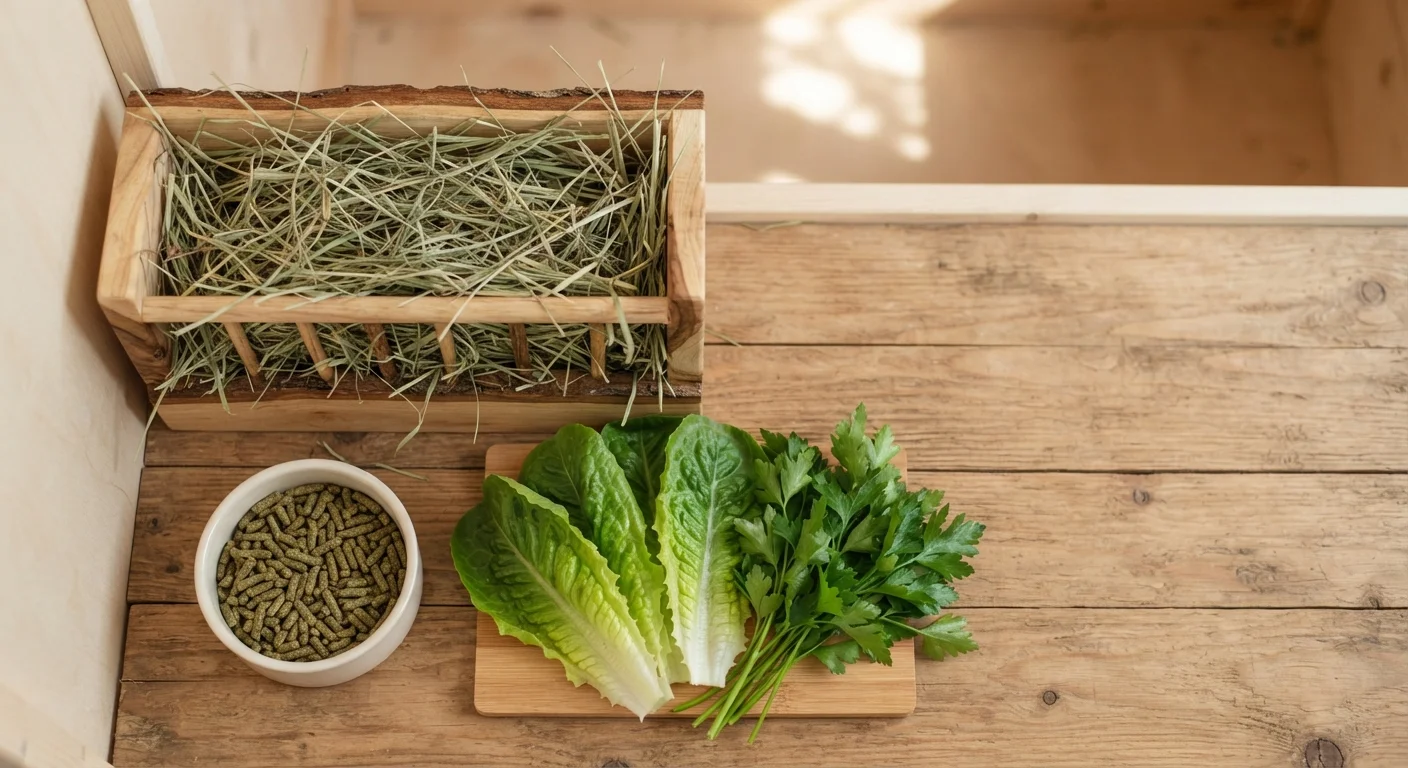
Photo: FaqsDrive.com | Smart Way To Search editorial
—— In This Article
Why Hay Is the Foundation of Every Rabbit's Diet
If you remember only one thing about feeding a rabbit, make it this: hay should make up roughly 80% of your rabbit's daily diet, and it should be available at all times. This isn't a suggestion — it's a nutritional necessity.
Rabbits are hindgut fermenters, meaning their digestive systems are built to process large amounts of fibrous plant material continuously. Hay keeps that system moving. Without enough fiber, rabbits are prone to GI stasis — a potentially life-threatening slowdown of the digestive tract. Hay also wears down a rabbit's continuously growing teeth, preventing painful dental problems over time.
Timothy hay is the most widely recommended choice for adult rabbits. Orchard grass and meadow hay are suitable alternatives and can add variety. Alfalfa hay is high in calcium and protein, making it appropriate for young rabbits (under 7 months) and pregnant or nursing does, but it's too rich for most healthy adult rabbits as a daily staple.
Store hay in a cool, dry, well-ventilated spot — never in sealed plastic bags, which encourage mold. Your rabbit's hay rack or pile should always be topped off. If you're still learning the basics of rabbit ownership, our guide to life with a house bunny covers daily care routines in full detail.
Pellets, Fresh Greens, and What to Avoid
Pellets and fresh greens play a supporting role in a rabbit's diet — important, but secondary to hay.
Pellets
Choose plain, timothy-based pellets without added seeds, dried fruit, or colorful bits. Those additions may look appealing but are high in sugar and can throw off your rabbit's gut balance. For a healthy adult rabbit, a rough guideline used by many rabbit rescues is about ¼ cup of pellets per 5 pounds of body weight per day — but your veterinarian can fine-tune this based on your rabbit's age, weight, and health status.
Fresh Greens
Leafy greens add variety, hydration, and micronutrients. Aim for roughly 1 cup of greens per 2 pounds of body weight daily, rotating through a mix of safe options. Good choices include:
- Romaine lettuce (avoid iceberg — low nutrition, high water)
- Cilantro
- Parsley (in moderation — higher in calcium)
- Arugula
- Kale and spinach (occasionally — high in oxalates)
- Basil and mint
Hindgut fermentation
A digestive process in which fiber is broken down by microbes in the large intestine. Rabbits rely on this system, which is why a high-fiber diet is critical to their health.
GI stasis
A dangerous slowing or stopping of the rabbit's digestive system, often triggered by insufficient fiber, stress, or dehydration. It can become life-threatening quickly and requires veterinary care.
Oxalates
Naturally occurring compounds found in some leafy greens like spinach and kale. In large amounts, they can interfere with calcium absorption, so these greens should be fed only occasionally.
Cecotropes
Soft, nutrient-rich droppings that rabbits produce and re-ingest directly from the hindgut. This is a normal, essential behavior — not something to discourage.
Introduce new greens slowly — one at a time, in small amounts — and watch for soft stools, which signal a food isn't agreeing with your rabbit.
What to Avoid
Several foods are genuinely dangerous for rabbits: onions, garlic, avocado, fruit seeds, chocolate, and any plant from the nightshade family. Carrots and fruit should be treated as occasional treats only — they're high in sugar. This is one of the most persistent myths in rabbit care, and our article on common rabbit care myths explains why it matters. Treats should make up no more than 1–2 tablespoons per day total.
Fresh water must always be available, either in a heavy ceramic bowl or a sipper bottle — many rabbits prefer bowls, which allow more natural drinking posture.
This article is for general informational purposes only and is not a substitute for advice from a licensed veterinarian. Always consult a vet familiar with small animals for guidance specific to your rabbit's health needs.

Pets & Animals Editorial Team
Pets & Animals Editorial Team is the collective byline for our editorial team and contributor network. Articles published under this byline or an editorial pen name are researched, written, and reviewed according to our editorial standards for clarity, consistency, and independence before publication.
View author profile