
Raw Diet vs. Commercial Kibble for Dogs
A balanced look at the nutritional philosophies, safety considerations, and practical trade-offs of raw feeding versus dry dog food.
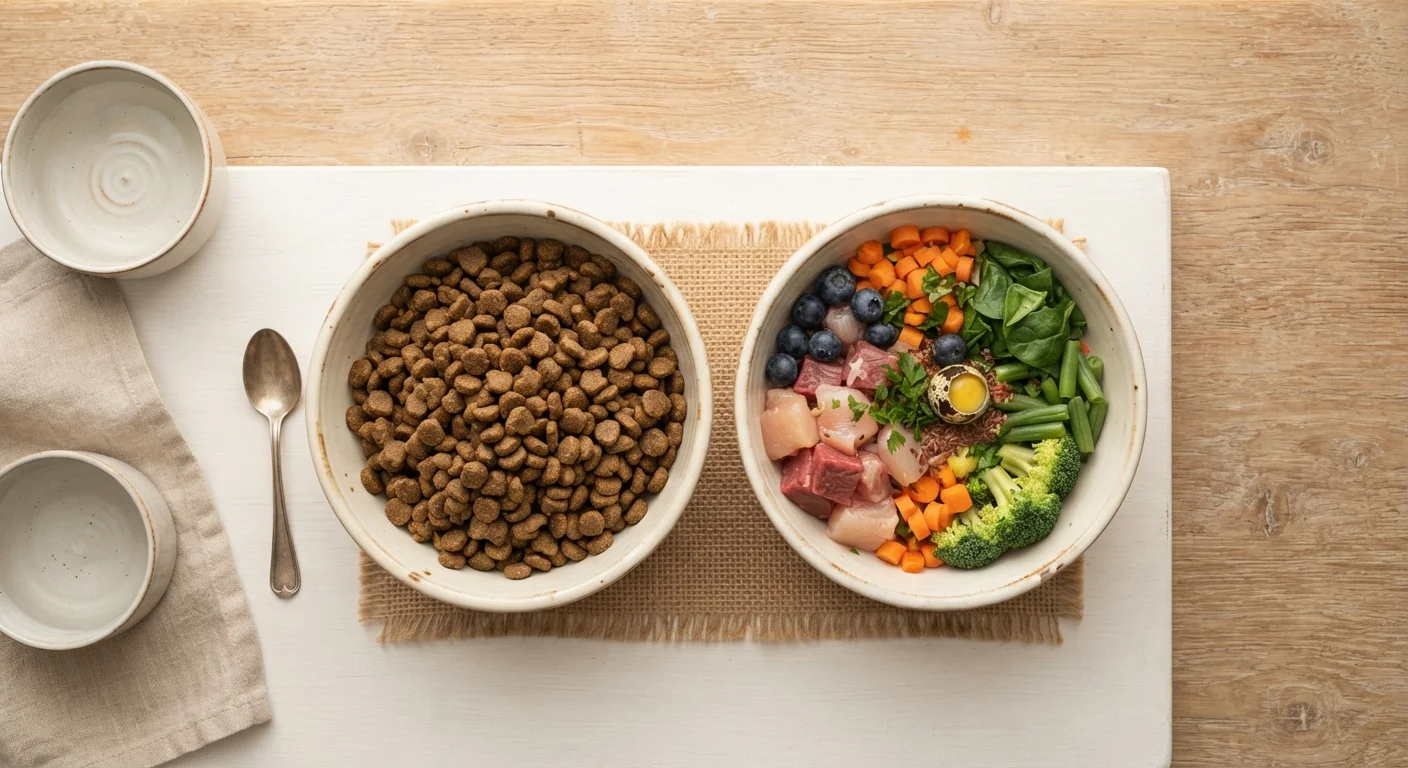
Photo: FaqsDrive.com | Smart Way To Search editorial
—— In This Article
Key Takeaways
- Raw diets can be nutritionally incomplete without expert guidance; kibble is formulated to AAFCO nutrient standards.
- Raw meat poses real pathogen risks for both dogs and the humans who handle their food.
- Commercial kibble is generally more affordable and easier to prepare than raw food options.
- Both approaches can support a healthy dog when properly implemented and veterinarian-approved.
- Always consult your veterinarian before making a significant change to your dog's diet.
Understanding the Two Approaches
Raw feeding — sometimes called the BARF diet (BARF) or a raw meat-based diet — centers on uncooked animal proteins: muscle meat, raw meaty bones, organ meats, and often fruits and vegetables. The core philosophy is that dogs thrive on minimally processed foods resembling what their wild ancestors would have eaten.
Commercial kibble takes a very different path. Dry dog food is cooked under high heat, processed into a shelf-stable form, and formulated to meet nutritional profiles defined by the AAFCO — the U.S. body whose voluntary standards are adopted by most states. When a bag reads "complete and balanced," it signals the food meets those established nutrient guidelines.
Neither approach is universally right. The best choice depends on your dog's health status, your household's lifestyle, and your comfort with food safety practices. For context on how a dog's living situation can shape its overall health, see how environment shapes a dog's health needs.
Nutritional Considerations
| Criterion | Raw Diet | Commercial Kibble |
|---|---|---|
| Nutritional completeness | Varies; requires expert formulation | Standardized to AAFCO guidelines |
| Processing level | Minimal; served uncooked | Cooked and extruded |
| Pathogen risk | Higher (Salmonella, Listeria) | Lower due to heat processing |
| Typical cost | Generally higher | Generally lower |
| Preparation time | Requires sourcing and prep | Measure and serve |
| Storage requirements | Freezer required | Shelf-stable |
Advocates of raw feeding argue that minimally processed food retains more natural enzymes and nutrients, with some owners reporting improvements in coat quality, digestion, and energy. However, peer-reviewed research directly comparing raw diets with well-formulated commercial kibble is limited and results are mixed — neither diet holds a clear, definitive edge in the current scientific literature.
A persistent concern with raw diets is nutritional completeness. Research has found that many homemade raw recipes — even those from widely circulated sources — can fall short on calcium, phosphorus, or essential trace minerals. These gaps compound over months. Working with a board-certified veterinary nutritionist before committing to a raw plan is strongly advisable.
Safety and Handling
Special Cases That Need Vet Input
Puppies, pregnant or nursing dogs, senior dogs, and those managing chronic health conditions have nutritional needs that differ meaningfully from healthy adult dogs. If your pet falls into any of these groups, talk with your veterinarian or a board-certified veterinary nutritionist before changing their diet. A plan that works well for one dog may be inadequate — or harmful — for another.
Raw meat carries microbial risks that cooked kibble does not. The FDA and the American Veterinary Medical Association (AVMA) both note that raw meat-based diets can harbor pathogens including Salmonella and Listeria. Dogs on raw diets can shed these bacteria in their stool even without appearing sick — a meaningful concern in households with young children, elderly family members, or immunocompromised individuals.
Kibble's high-heat cooking significantly reduces microbial risk. That said, dry food is not completely immune to safety concerns: contamination-related recalls do occur. Checking the FDA's publicly available pet food recall database periodically is a sound habit for any dog owner, regardless of which feeding approach they follow.
Cost, Convenience, and Final Considerations
Commercially prepared raw food — frozen or freeze-dried — typically costs more than dry kibble, especially for large breeds. A DIY raw approach can reduce cost but demands careful sourcing, freezer space, and consistent preparation time. For a realistic picture of what feeding a dog costs across different diet types, explore the full breakdown of dog ownership expenses.
Kibble is shelf-stable, easy to portion, and available nearly everywhere — practical advantages for new owners or busy households. If you're still building your feeding routines, common feeding mistakes new owners make covers the pitfalls worth knowing before bad habits set in.
Before switching to a raw diet — or making any significant dietary change — consult your veterinarian. They can assess your individual dog's health status and help you transition safely and confidently.
This article is for general informational purposes only and does not constitute veterinary advice. Always consult a licensed veterinarian before making significant changes to your dog's diet.

Pets & Animals Editorial Team
Pets & Animals Editorial Team is the collective byline for our editorial team and contributor network. Articles published under this byline or an editorial pen name are researched, written, and reviewed according to our editorial standards for clarity, consistency, and independence before publication.
View author profile