
Key Terms Every Home Organizer Should Understand
From 'zoning' to 'negative space,' a plain-language reference guide to the terminology used in home organization and decluttering.
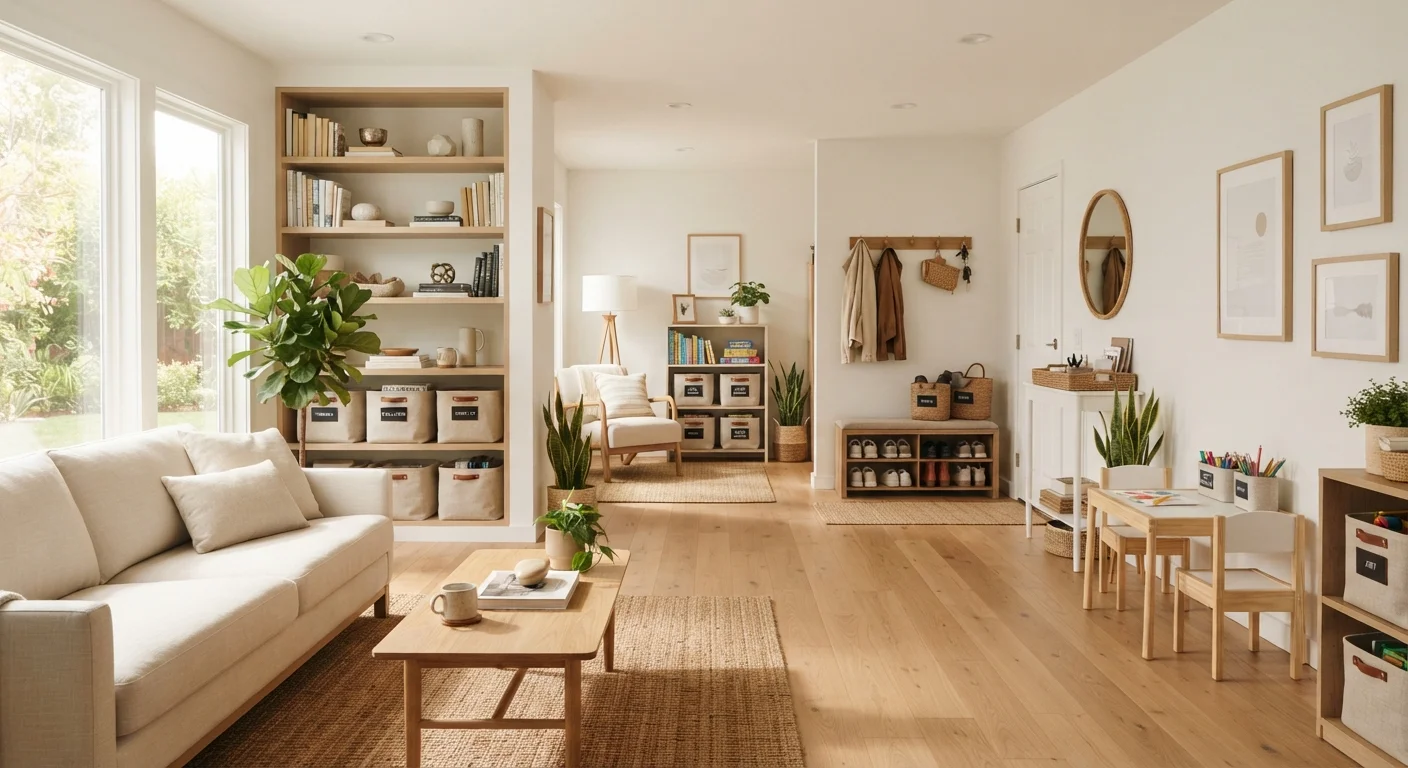
Photo: FaqsDrive.com | Smart Way To Search editorial
—— In This Article
Why Knowing the Language Matters
When you start researching home organization — whether through books, videos, or articles — you'll quickly encounter a set of terms that professional organizers use as shorthand. Words like zoning, negative space, and prime real estate might sound abstract at first, but they represent concrete ideas that can genuinely change how you approach a space.
Understanding this vocabulary does two things: it helps you absorb advice more quickly, and it gives you a common language to use when working with others — including a partner, housemate, or professional organizer. If you're starting from zero, our beginner's decluttering guide pairs well with this reference.
| What organizers mean by 'editing' | Intentionally reducing a category to only what you use and love |
| Most common organizing mistake | Buying storage containers before decluttering first |
| Prime real estate in a kitchen | Countertops and upper cabinet shelves at eye level |
| One-In, One-Out Rule purpose | Prevents clutter from re-accumulating after organizing |
| Negative space goal | Reduce visual noise and make spaces feel calmer |
| Zoning applies to | Any room — kitchens, bedrooms, garages, shared spaces |
Core Organizing Concepts Defined
The glossary below covers the terms you're most likely to encounter when learning about home organization. Each definition is written in plain language so you can apply the concept immediately — no prior experience required.
These concepts interconnect. For example, zoning works better when you apply like-with-like within each zone, and maintaining those zones long-term depends on having a reliable maintenance system. If you're ready to apply these ideas across your whole home, see our complete home organization guide.
Organizing Terms vs. Decorating Terms
Some terms — like 'negative space' and 'flow' — are used in both interior design and home organizing, but with slightly different meanings. In organizing, these concepts prioritize function and ease of use over aesthetics. Keeping that distinction in mind helps you apply each term correctly to your goals.
Putting the Terms Into Practice
Knowing the vocabulary is only useful if it changes how you act. Here are a few ways these terms translate into everyday decisions:
- Before buying any storage containers, edit your belongings first. Containers sized for your current clutter just preserve the problem.
- When setting up a room, identify zones before arranging furniture. Ask yourself what activities happen here, then design storage around those activities.
- Leave intentional negative space on shelves and in drawers. A half-full drawer is easier to maintain than a packed one.
- Apply the one-in, one-out rule for categories that tend to grow — clothing, books, kitchen gadgets, craft supplies.
For households where multiple people share the same spaces, these terms also provide a neutral framework for conversation. Discussing zones and flow is easier than debating whose stuff is causing the problem. Our article on organizing shared spaces explores this dynamic in depth.
25%
Of two-car garages that can't fit any cars
According to the U.S. Department of Energy, roughly one in four two-car garages is too cluttered to park a vehicle inside.
80%
Of clutter attributed to disorganization, not lack of space
Home organizing research commonly estimates that the majority of household clutter stems from unclear systems rather than insufficient storage.

Home & Garden Editorial Team
Home & Garden Editorial Team is the collective byline for our editorial team and contributor network. Articles published under this byline or an editorial pen name are researched, written, and reviewed according to our editorial standards for clarity, consistency, and independence before publication.
View author profile