
Capsule Closet vs. Full Wardrobe Organization: Two Approaches to Getting Dressed Easily
Should you pare down to a capsule wardrobe or master organizing a full one? A side-by-side look at both approaches and who each suits.
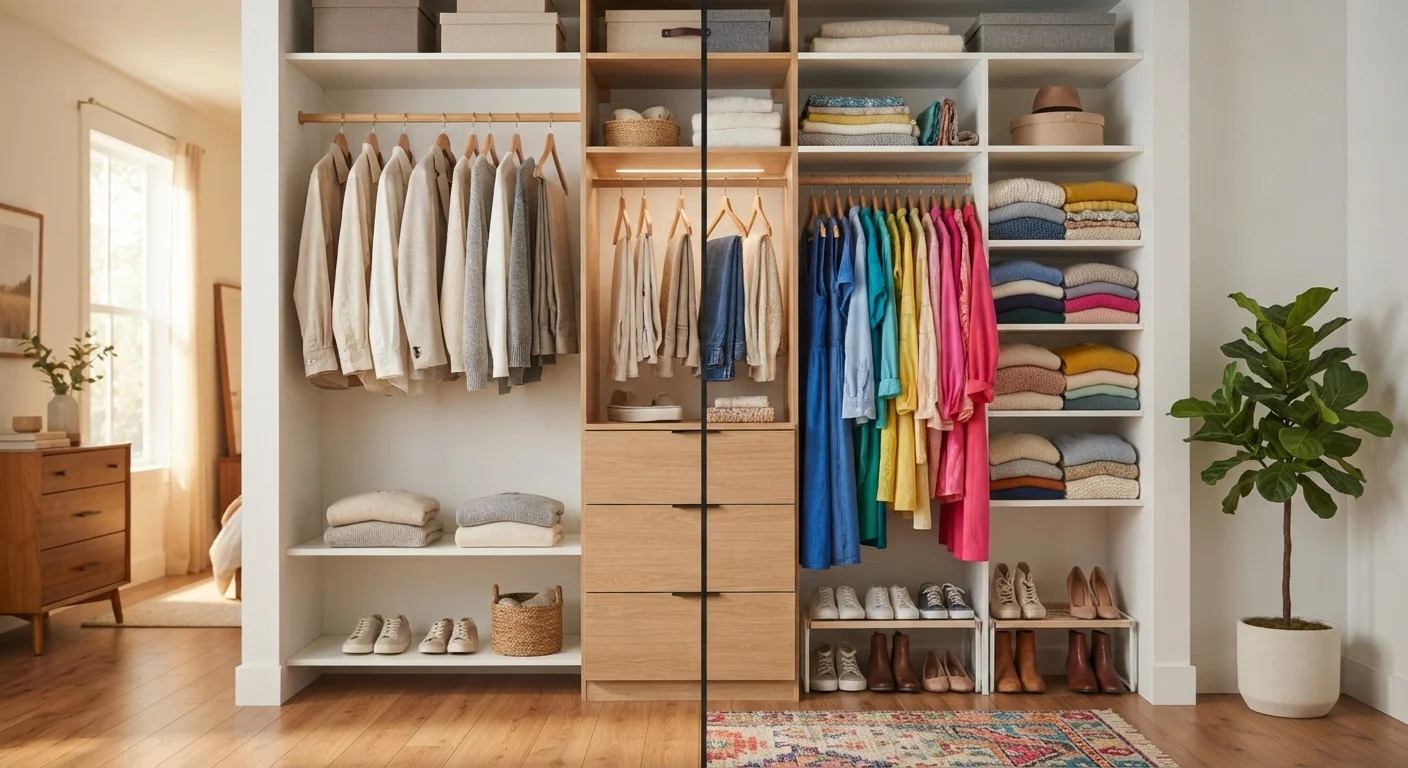
Photo: FaqsDrive.com | Smart Way To Search editorial
—— In This Article
Key Takeaways
- A capsule wardrobe works by limiting your clothing to a small, intentional set of versatile pieces.
- Full wardrobe organization keeps everything you own but uses systems to make it easy to find and use.
- Neither approach is universally better — the right fit depends on your lifestyle and preferences.
- Both methods reduce decision fatigue and morning stress when applied consistently.
- Starting small with a declutter is a useful first step regardless of which path you choose.
What Each Approach Actually Means
The phrase capsule wardrobe refers to a curated collection of clothing — typically 25 to 50 items — chosen because each piece works well with others and fits your everyday life. The goal is to own less so every item earns its place. A full wardrobe organization system, by contrast, doesn't ask you to reduce what you own. Instead, it applies structure — sorting by category, using consistent storage tools, and maintaining clear zones — so a larger collection stays easy to navigate.
Both approaches aim to solve the same frustration: staring into a closet full of clothes and feeling like you have nothing to wear. They just take different routes to get there. Understanding the mechanics of each helps you pick the one that fits your real habits, not just the one that looks good on social media.
Try a Two-Week Clothing Audit First
Before committing to either approach, track which items you actually reach for over two weeks. Turn all your hangers backward at the start, then flip them forward each time you wear something. After two weeks, you'll have a clear, unbiased picture of what you truly use — which makes the decision between capsule and full organization much easier.
The Capsule Wardrobe: Strengths and Trade-Offs
The capsule approach works especially well if you find decisions draining, live in a small space, or want to spend less time and money on clothing over time. When every item coordinates with the others, getting dressed becomes nearly automatic. Many people find this approach also helps with everyday spending habits, since owning fewer pieces reduces impulse purchases.
That said, the capsule method has real trade-offs. It requires an upfront commitment to sorting through and letting go of a significant portion of your current wardrobe — a process that can feel overwhelming. It also demands honest self-knowledge: you need to understand your actual daily life, not the life you imagine you live. Someone who works from home and rarely attends formal events may struggle to define what "essential" means for them. Seasonal variation is another complication — a true capsule wardrobe either rotates with the seasons or includes year-round versatile pieces, both of which require planning.
Don't Discard Items You May Regret Losing
Moving to a capsule wardrobe often involves letting go of clothing you've kept for years. Before donating or discarding anything, consider setting items aside in a box for 30 days. If you don't reach for something in that period, you're more likely to feel confident parting with it. Rushing the reduction process often leads to replacing items you removed — which defeats the purpose.
Full Wardrobe Organization: Strengths and Trade-Offs
If reducing what you own feels impractical or undesirable — perhaps because you have varied roles, enjoy fashion, or share a household with family members who each have different needs — organizing a full wardrobe is a more realistic path. Good organization doesn't require owning less; it requires knowing where everything is and being able to retrieve it quickly.
Effective full wardrobe organization typically involves grouping clothing by category (tops, bottoms, outerwear), then by color or frequency of use within each group. Consistent hangers reduce visual noise. Drawer dividers keep folded items from collapsing into chaos. Seasonal items stored in labeled bins free up prime closet real estate. For households navigating shared spaces with different habits, clear systems prevent confusion without requiring everyone to minimize.
The main challenge here is maintenance. A well-organized full wardrobe only stays that way if items are returned to their designated spots consistently. Without that habit, clutter creeps back quickly.
| Capsule Wardrobe | Full Wardrobe Organization | |
|---|---|---|
| Starting requirement | Significant decluttering upfront | Sort and systemize existing items |
| Space needed | Works well in small closets | Better suited to medium or large closets |
| Daily decision effort | Very low — pieces mix easily | Low when system is maintained |
| Clothing variety | Limited by design | High — keeps full range of clothing |
| Maintenance effort | Low once established | Moderate — requires consistent habits |
| Suitable for shared households | Challenging with multiple people | Easier to adapt for multiple users |
| Cost implications | May reduce clothing spending over time | Neutral — depends on storage tools used |
How to Decide Which Approach Fits You
Ask yourself a few practical questions before committing. How much space do you have? A small single closet naturally pushes you toward fewer items, making the capsule approach a logical fit. Do you have a consistent daily routine, or does your week vary significantly? Variable schedules often mean variable clothing needs, which can make a strict capsule frustrating. How do you feel about decluttering — is it freeing or anxiety-inducing? If the idea of letting things go stresses you out, starting with organization rather than reduction is a lower-pressure entry point.
If you've never organized a closet or home space before, the broader principles in our beginner's guide to home decluttering can help you get comfortable with the process before committing to either wardrobe method. Similarly, the lessons from fixed versus modular storage systems apply directly to closet planning — whether you're building a capsule setup or a fully organized full wardrobe.
Ultimately, the best closet system is the one you'll use every day. Start with a trial period of two to four weeks and observe whether the system reduces or adds to your morning stress.
~33%
Clothes worn regularly from the average wardrobe
Research and closet audits consistently suggest most people regularly wear only about a third of what they own, leaving the rest unused.
~10 min
Average time spent choosing an outfit daily
Studies on decision fatigue suggest routine choices like getting dressed consume meaningful mental energy over time, even when they feel minor.

Home & Garden Editorial Team
Home & Garden Editorial Team is the collective byline for our editorial team and contributor network. Articles published under this byline or an editorial pen name are researched, written, and reviewed according to our editorial standards for clarity, consistency, and independence before publication.
View author profile