
The Trade-Offs of Doing Your Own Tile Work
DIY tiling can save real money, but it's unforgiving of mistakes. Weigh the honest upsides and downsides before picking up a tile saw.
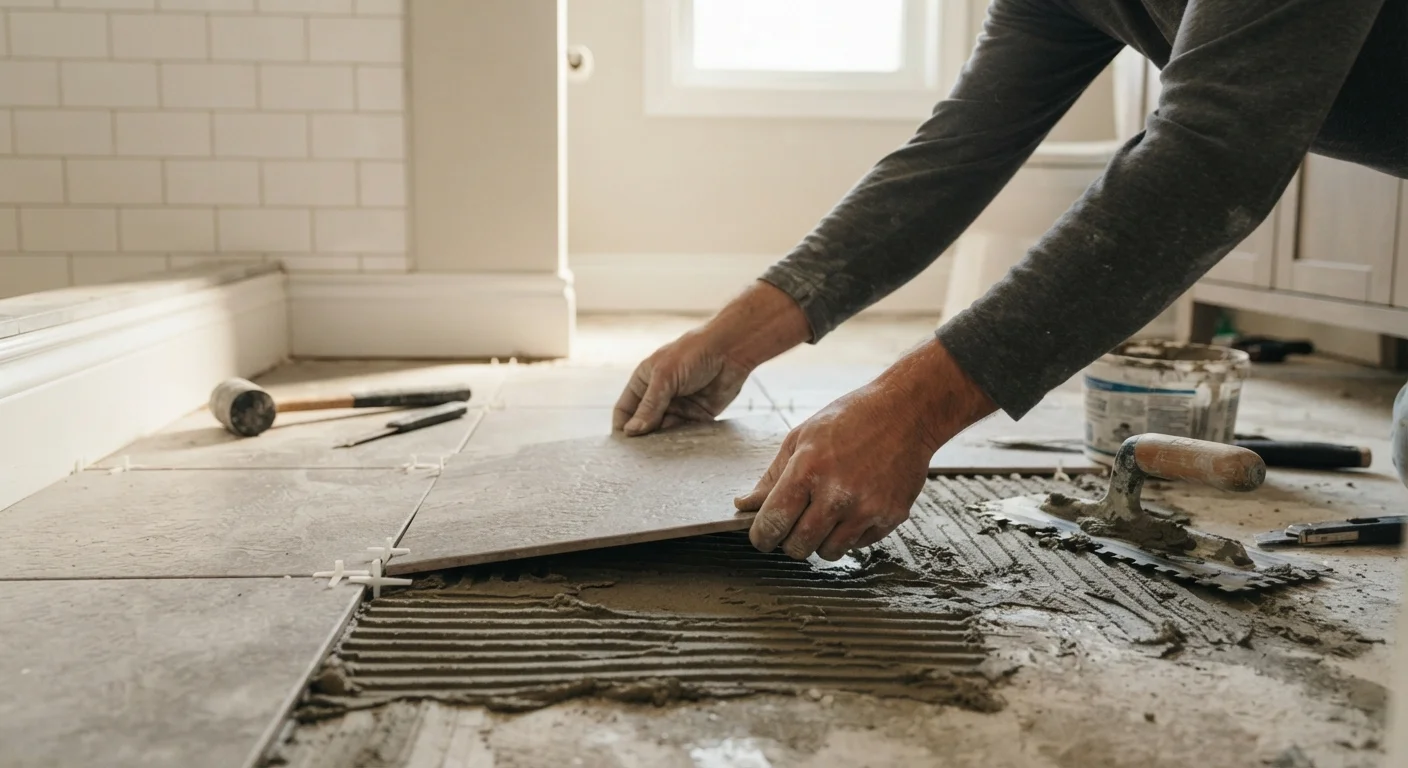
Photo: FaqsDrive.com | Smart Way To Search editorial
—— In This Article
Key Takeaways
- DIY tiling can save hundreds of dollars in labor costs on small to mid-sized projects.
- Mistakes in tile layout or adhesive application are difficult and costly to reverse.
- Most beginners underestimate the time, tool investment, and skill required for clean results.
- Simple, small-scale tile jobs like a kitchen backsplash are far more forgiving than floor work.
- Permits are rarely required for tiling, but wet areas like showers demand waterproofing expertise.
Significant labor cost savings on small projects
Professional tile installers typically charge per square foot for labor alone, which can add up to several hundred dollars even on a modest bathroom floor. Doing the work yourself redirects that cost toward materials or your next project.
Full creative control over layout and pattern
You decide the tile layout, grout color, and pattern without compromise. This is especially valuable for custom designs like herringbone or mixed-material installations that some contractors may charge a premium to execute.
Builds a transferable, reusable skill
Each successful tile project makes the next one faster and more confident. The techniques learned on a backsplash directly apply to floors, fireplace surrounds, and future renovations.
Work on your own schedule
DIY lets you tile evenings or weekends without coordinating contractor availability, which matters when your bathroom or kitchen is out of service during the project.
Satisfaction and genuine pride of ownership
Completing a tile job well produces a lasting, visible result in your home — something many homeowners cite as one of the most rewarding DIY experiences.
Mistakes are expensive and difficult to undo
Tiles bonded with thinset mortar are extremely hard to remove without breaking them. Crooked layout lines or incorrect adhesive coverage often require full demolition to correct properly.
Tool costs can erode your savings quickly
A wet tile saw, notched trowels, level, spacers, grout float, and other essentials add up — easily $150–$300 or more if you're purchasing rather than renting. For a single small project, those costs can narrow the savings margin significantly.
Time investment is routinely underestimated
Professionals move quickly because of experience and systems. Beginners commonly find that a job estimated at one weekend stretches to three, especially when accounting for drying and curing times between stages.
Layout errors compound fast across a surface
A slightly off-angle starting line becomes an obvious problem by the time you reach the opposite wall. Planning and dry-laying tiles before setting them is essential — a step many beginners skip.
Wet areas require waterproofing expertise
Showers and wet rooms need a proper waterproofing membrane beneath the tile surface. Applying this incorrectly is one of the most common and costly DIY tiling failures, leading to hidden structural moisture damage over time.
Physical demands are higher than expected
Floor tiling requires extended time kneeling on hard surfaces, mixing heavy materials, and making precise cuts repeatedly. This can be physically taxing and slow for those who aren't accustomed to it.
Why DIY Tiling Appeals to So Many Homeowners
Tile work sits in an interesting middle ground among home improvement tasks — it doesn't involve gas lines or structural load-bearing changes, yet it demands real craft. That accessibility makes it tempting for homeowners who want to cut labor costs and take ownership of their spaces. If you're weighing whether to pick up a tile saw, it helps to start with a clear-eyed look at what the project actually involves before committing. For a broader sense of how to approach a first DIY effort, see our guide to tackling your first weekend home improvement project.
Tiling covers a wide range of complexity. A straightforward subway-tile kitchen backsplash is a very different undertaking than a large-format tile bathroom floor with a shower niche. The trade-offs below apply most directly to typical residential projects — think bathrooms, laundry rooms, entryways, and kitchen surfaces.
The Real Advantages of Tiling It Yourself
There are genuine, substantial reasons homeowners choose to tile themselves — and they go beyond simply saving money.
Significant labor cost savings on small projects
Professional tile installers typically charge per square foot for labor alone, which can add up to several hundred dollars even on a modest bathroom floor. Doing the work yourself redirects that cost toward materials or your next project.
Full creative control over layout and pattern
You decide the tile layout, grout color, and pattern without compromise. This is especially valuable for custom designs like herringbone or mixed-material installations that some contractors may charge a premium to execute.
Builds a transferable, reusable skill
Each successful tile project makes the next one faster and more confident. The techniques learned on a backsplash directly apply to floors, fireplace surrounds, and future renovations.
Work on your own schedule
DIY lets you tile evenings or weekends without coordinating contractor availability, which matters when your bathroom or kitchen is out of service during the project.
Satisfaction and genuine pride of ownership
Completing a tile job well produces a lasting, visible result in your home — something many homeowners cite as one of the most rewarding DIY experiences.
$5–$15
Typical professional labor cost per square foot
Industry estimates from multiple home improvement sources suggest tile installation labor commonly ranges from $5 to $15 per square foot depending on complexity and region, separate from material costs.
10–15%
Extra tile recommended for cuts and waste
Most tiling guides recommend ordering 10–15% more tile than your measured square footage to account for cuts, breakage, and pattern matching — a budget factor beginners often overlook.
Beyond cost, DIY tiling gives you complete control over pacing and material choices. You can stop, reassess, and correct before grout sets. You also build a skill that transfers — once you've successfully tiled a backsplash, a bathroom floor becomes less intimidating.
The Honest Downsides You Should Know First
Tiling is unforgiving of shortcuts. Unlike painting, where a second coat can fix most problems, tile work that goes wrong typically requires demolition to correct. Understanding the downsides upfront is how you avoid costly mistakes.
Mistakes are expensive and difficult to undo
Tiles bonded with thinset mortar are extremely hard to remove without breaking them. Crooked layout lines or incorrect adhesive coverage often require full demolition to correct properly.
Tool costs can erode your savings quickly
A wet tile saw, notched trowels, level, spacers, grout float, and other essentials add up — easily $150–$300 or more if you're purchasing rather than renting. For a single small project, those costs can narrow the savings margin significantly.
Time investment is routinely underestimated
Professionals move quickly because of experience and systems. Beginners commonly find that a job estimated at one weekend stretches to three, especially when accounting for drying and curing times between stages.
Layout errors compound fast across a surface
A slightly off-angle starting line becomes an obvious problem by the time you reach the opposite wall. Planning and dry-laying tiles before setting them is essential — a step many beginners skip.
Wet areas require waterproofing expertise
Showers and wet rooms need a proper waterproofing membrane beneath the tile surface. Applying this incorrectly is one of the most common and costly DIY tiling failures, leading to hidden structural moisture damage over time.
Physical demands are higher than expected
Floor tiling requires extended time kneeling on hard surfaces, mixing heavy materials, and making precise cuts repeatedly. This can be physically taxing and slow for those who aren't accustomed to it.
Budget planning deserves special attention. Many first-timers focus on material costs while underestimating tool rental fees, adhesive, grout, backer board, and waste from cuts. Our article on how homeowners underestimate renovation costs walks through how to build a more accurate budget before you start.
When to Hire a Professional Instead
Some tiling scenarios genuinely call for a licensed installer, regardless of your skill level or budget goals.
- Shower enclosures and wet rooms: These require proper waterproofing membranes beneath the tile. A failure here causes hidden moisture damage that can rot framing and promote mold — repairs far exceed what you'd save on labor.
- Large-format tiles (24" or larger): These require very flat substrates, back-buttering technique, and often specialized trowels. Lippage (uneven tile edges) is highly visible and difficult to fix after the fact.
- Heated floor systems: Installing electric radiant heat under tile adds an electrical component that should be handled by a qualified professional in most jurisdictions.
- Structural or damaged subfloors: Tiling over a compromised substrate will cause cracks. A professional can identify and remediate issues that an inexperienced eye might miss.
Permits Are Rarely Required — But Check Anyway
In most U.S. jurisdictions, standard tile replacement on an existing surface does not require a building permit. However, if your project involves moving a drain, altering a wet-wall structure, or installing heated flooring with new electrical circuits, permit requirements may apply. Always verify with your local building department before starting, since requirements vary by municipality. Unpermitted work that should have been inspected can create complications when you sell your home.
If you're unsure where the line falls between manageable DIY and work that warrants a pro, it helps to think about the cost of the worst-case scenario — not just the best case. That same logic applies in other DIY domains; our piece on DIY car maintenance boundaries explores where similar lines exist for home mechanics.

Home & Garden Editorial Team
Home & Garden Editorial Team is the collective byline for our editorial team and contributor network. Articles published under this byline or an editorial pen name are researched, written, and reviewed according to our editorial standards for clarity, consistency, and independence before publication.
View author profile