
Essential Hand Tools Every DIY Homeowner Should Understand
A practical rundown of the hand tools that show up in almost every home repair job — what each does and when you'll actually reach for it.
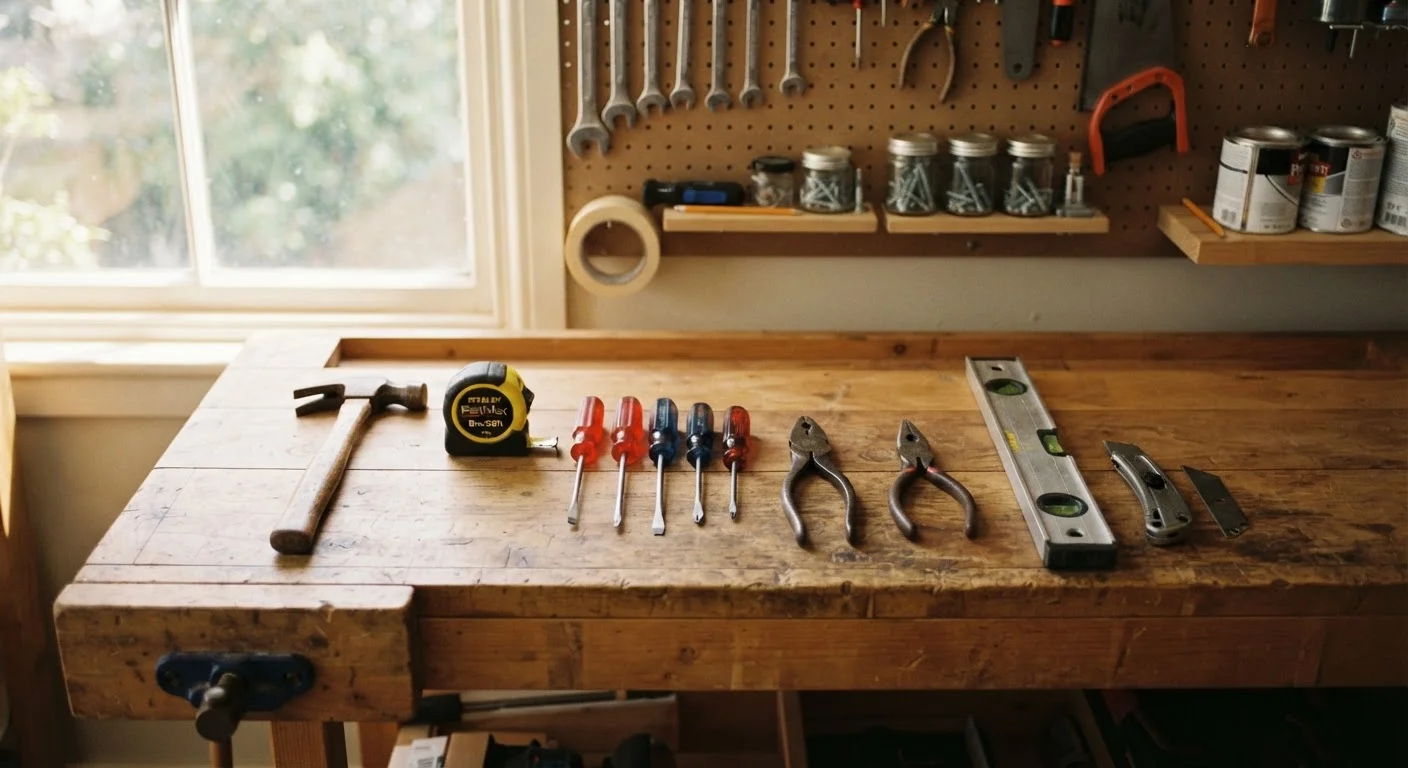
Photo: FaqsDrive.com | Smart Way To Search editorial
—— In This Article
Key Takeaways
- A small core set of hand tools handles the majority of common home repair and improvement tasks.
- Understanding what each tool actually does helps you work more safely and get better results.
- Quality matters more than quantity — a few reliable tools outperform a large drawer of poor-quality ones.
- Knowing your tools' limits is just as important as knowing how to use them.
- Many projects become manageable once you recognize which tool to reach for first.
Why Hand Tool Knowledge Pays Off
Walking into a hardware store without a clear sense of what you need — or why — is one of the most common early mistakes new homeowners make. The good news: most routine repairs, from hanging shelves to fixing a sticking door, rely on a surprisingly short list of hand tools. Understanding what each one does, and when to use it, builds confidence and helps you avoid the frustration of using the wrong tool for the job.
This isn't about owning every tool available. It's about recognizing the workhorses — the tools that earn their space in your toolbox by showing up on project after project. Whether you're preparing for your first weekend home improvement project or working through a prioritized list of repairs on a tight budget, the tools below are the ones you'll reach for most.
Claw Hammer
The claw hammer is the tool most people picture first, and for good reason. One side of the head drives nails; the curved claw on the other side pulls them out. A 16-ounce hammer strikes a practical balance between driving power and control for general household work.
You'll use it for hanging pictures, assembling flat-pack furniture, tacking trim, and a dozen small tasks every season. Hold the handle near the end — not the middle — for more force with less effort. Avoid using a hammer to strike anything other than nails, fasteners, or appropriate striking tools, as misuse can damage surfaces or the tool itself.
A 16-ounce claw hammer handles the vast majority of everyday household fastening tasks.
Screwdrivers (Flathead and Phillips)
Almost every screw you encounter in a home falls into one of two categories: slotted (flathead) or cross-shaped (Phillips). Having at least one medium flathead and one medium Phillips screwdriver gets you through most situations. A set covering a range of sizes is more versatile.
Using the wrong size screwdriver strips screw heads, making removal far harder later. Match the driver tip as closely as possible to the screw recess before applying torque. Screwdrivers are also useful for prying open paint cans or scoring materials lightly — but using them as chisels or pry bars damages the tip and reduces their effectiveness on screws.
Using the correct screwdriver size prevents stripped screws and saves significant frustration later.
Tape Measure
A tape measure is the foundation of nearly every project. Without accurate measurements, materials get cut incorrectly, shelves hang crooked, and furniture doesn't fit. A 25-foot locking tape measure handles most household tasks from furniture placement to curtain rod installation.
Reading fractional inches is the skill that trips up many beginners. The longest marks between inch numbers represent half-inches; progressively shorter marks divide down to quarters, eighths, and sixteenths of an inch. Taking a few minutes to practice reading these before starting a project pays off quickly. See our detailed guide on reading a tape measure for a clear breakdown.
Accurate measuring is the single habit that separates clean, professional-looking results from costly mistakes.
Utility Knife
A utility knife (sometimes called a box cutter) handles cutting tasks that scissors and saws aren't suited for: scoring drywall, trimming weatherstripping, opening packaging without damaging contents, and cutting carpet or flooring underlayment.
The blade retracts into the handle when not in use, which is an important safety feature — always retract it after each use. Replace blades regularly; a dull blade requires more force, which increases the risk of slipping. Always cut away from your body and keep fingers clear of the blade path.
Retracting the blade immediately after each cut is the most important utility knife safety habit.
Adjustable Wrench
An adjustable wrench (sometimes called a Crescent wrench, after one historical brand name) grips nuts and bolts across a range of sizes using a movable lower jaw. This makes it versatile enough to handle plumbing connections, furniture assembly, and fixture installation without needing a full socket set.
Always adjust the jaw to fit snugly against the fastener before turning — a loose fit rounds off the corners of nuts and bolts, making them much harder to remove later. Pull the wrench toward you rather than pushing it when possible, so that if it slips, your knuckles don't strike nearby surfaces.
A snug jaw fit before turning prevents rounding off fasteners and keeps work moving smoothly.
Needle-Nose Pliers
Needle-nose pliers have long, tapered jaws that reach into tight spaces where fingers or bulkier tools won't fit. They're useful for bending wire, retrieving dropped hardware from narrow gaps, holding small parts during assembly, and light gripping tasks.
They are not designed for heavy torque — forcing a stubborn fastener with needle-nose pliers risks bending the jaws or slipping and scratching surrounding surfaces. Use them for precision and access, not for the kind of force you'd apply with a wrench or standard pliers.
Needle-nose pliers excel at precision and access — not force or heavy gripping.
Level
A level tells you whether a surface or object is perfectly horizontal (level) or perfectly vertical (plumb). The tool contains a small liquid-filled vial with an air bubble; when the bubble sits centered between the marked lines, the surface is true.
You'll use it any time you hang shelves, mount a TV bracket, install curtain hardware, or set a door frame. Even a small error — a shelf that looks almost level — becomes obvious once objects are placed on it. A 24-inch level is a practical starting size for most household applications.
A shelf that looks nearly level will reveal its tilt the moment you set anything on it.
Putty Knife
A putty knife has a flat, flexible metal blade used for spreading and smoothing patching compounds, scraping loose paint or old caulk, and filling small holes in drywall or wood surfaces before painting. It's an essential prep tool — paint adheres far better to a properly filled and sanded surface than to bare damage.
Putty knives come in varying blade widths; a 3-inch and a 6-inch cover most situations. Keep the blade clean after each use to prevent dried compound from scratching surfaces on the next job. For anything beyond small cosmetic repairs, consult a professional to assess whether structural issues are present.
Proper surface prep with a putty knife is what makes a painted repair nearly invisible.
Building on the Basics
Once you're comfortable with these fundamentals, learning to use them precisely becomes the next step. Tools like the tape measure and level reward accuracy — a small misreading early in a project can mean rework later. Our guide on reading a tape measure, level, and stud finder correctly covers exactly the details beginners most often get wrong.
Start with Quality Over Quantity
Resist the temptation to buy a large bundled tool set at once. A smaller number of well-made individual tools will outlast and outperform a large collection of flimsy ones. Build your toolbox gradually as specific projects demand it — that way, every tool you own is one you've actually used and understand.
It's also worth knowing when hand tools reach their limit. Electrical work, structural modifications, and anything involving gas lines belong in the hands of licensed professionals. Understanding where that line falls — much like knowing when a building permit is required — protects both your home and your safety. Start with the tools above, learn them well, and your toolbox will serve you for decades.

Home & Garden Editorial Team
Home & Garden Editorial Team is the collective byline for our editorial team and contributor network. Articles published under this byline or an editorial pen name are researched, written, and reviewed according to our editorial standards for clarity, consistency, and independence before publication.
View author profile