
Common Myths About DIY Plumbing Fixes
Is plumber's tape a fix-all? Can you pour grease down the drain if you chase it with hot water? We separate plumbing fact from persistent fiction.
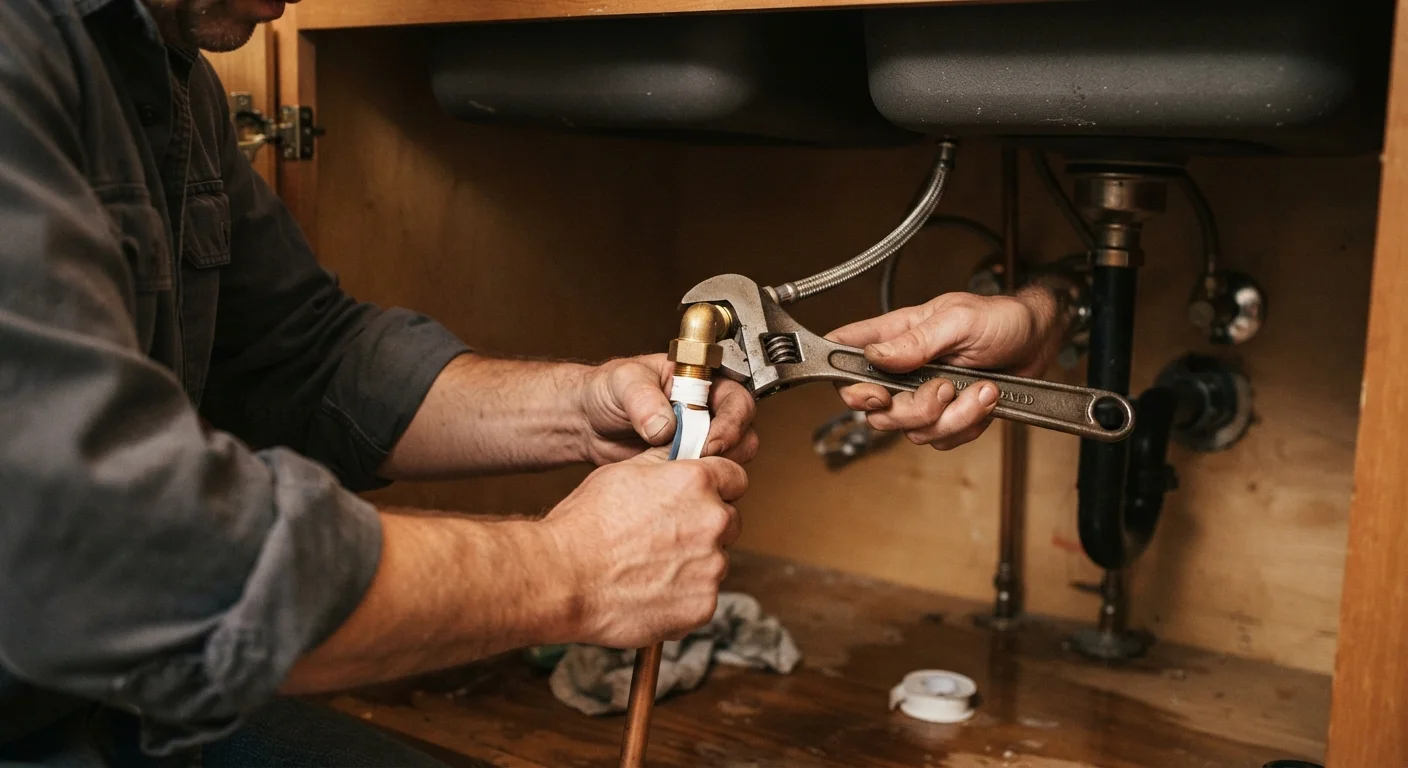
Photo: FaqsDrive.com | Smart Way To Search editorial
—— In This Article
Key Takeaways
- Plumber's tape seals threaded joints but cannot fix active leaks or cracks in pipes.
- Pouring grease down the drain — even with hot water — causes serious clogs over time.
- Not every plumbing job is DIY-friendly; some require licensed work and permits.
- Flushable wipes do not break down like toilet paper and frequently clog pipes.
- Chemical drain cleaners can damage pipes and rarely remove the full blockage.
Why Plumbing Myths Persist — and What They Cost You
Plumbing is one of those home systems that most people rarely think about until something goes wrong. That invisibility — pipes hidden behind walls, under floors, and beneath sinks — creates fertile ground for myths to take hold. Well-meaning advice passed down through families or shared online often contains enough partial truth to sound credible, even when the underlying guidance is wrong.
The stakes are real. Acting on a plumbing myth can mean a minor leak becomes a water-damage claim, or a slow drain turns into a complete blockage requiring professional snaking or pipe replacement. Understanding what's actually true helps you respond appropriately when small issues arise — and recognize when a task genuinely calls for a licensed plumber.
If you enjoy applying a practical, honest lens to DIY questions across your home, you might also appreciate our look at home organization myths that cost homeowners time and money.
Myth
Plumber's tape (Teflon tape) can fix almost any leaking pipe or fitting.
Fact
Plumber's tape is designed only to seal threaded pipe connections before assembly — it cannot stop an active leak in a cracked or damaged pipe.
Plumber's tape, also called PTFE or Teflon tape, works by filling the tiny gaps between threaded fittings when you wind it around the threads before joining them. Once a joint is already assembled and leaking, adding tape on the outside does nothing. And for any leak originating from a crack, a pinhole, or a worn gasket, tape is simply the wrong tool. A dripping fitting needs to be disassembled, dried, re-taped on the threads if appropriate, and reassembled correctly — or replaced entirely.
Myth
You can pour grease down the drain as long as you chase it with hot water.
Fact
Hot water temporarily keeps grease liquid, but it solidifies further down the pipe and accumulates into stubborn, pipe-coating clogs.
Cooking grease may look harmless when it flows as a warm liquid, but it cools rapidly as it travels through your plumbing. Once solidified, grease clings to pipe walls and traps food particles, eventually restricting or fully blocking flow. This is one of the most common causes of kitchen drain backups. The correct approach is to let grease cool in the pan, then scrape it into a sealable container and dispose of it in the trash.
Myth
"Flushable" wipes are safe to flush just like toilet paper.
Fact
Despite the label, most so-called flushable wipes do not disintegrate in water the way toilet paper does, and they are a leading cause of sewer blockages.
Toilet paper is specifically engineered to break apart rapidly when wet. Consumer and municipal water authority testing has consistently found that most flushable wipes remain largely intact after long periods in water. They catch on pipe irregularities and combine with grease and other debris to form blockages — sometimes called "fatbergs" in larger municipal systems. The only items that should be flushed are human waste and toilet paper.
Myth
Chemical drain cleaners are the safest and most effective way to clear a clog.
Fact
Chemical drain cleaners can damage pipes — especially older metal or PVC pipes — and often only partially dissolve a clog, allowing it to re-form quickly.
The active ingredients in chemical drain cleaners (typically lye or sulfuric acid) generate heat as they work. Over repeated use, that heat and caustic action can degrade PVC joints and accelerate corrosion in metal pipes. Beyond the pipe damage risk, chemical cleaners are also hazardous to skin and eyes and must be handled carefully. A standard cup plunger or a drain snake (also called a hand auger) physically removes the clog and is generally safer for your plumbing and your household.
Myth
If water is still draining — even slowly — there's no real clog to worry about.
Fact
A slow drain is an early warning sign of a partial blockage that will worsen over time if not cleared.
A drain that gurgling or empties noticeably slower than usual typically means debris, grease, or soap scum has begun to accumulate in the pipe. Ignoring it doesn't allow the problem to resolve on its own — buildup continues until the drain stops entirely or, worse, backs up. Addressing a slow drain early with a plunger or a manual drain snake is far simpler and less costly than dealing with a full blockage or a backup later.
Myth
Any plumbing repair is a reasonable DIY project if you watch enough tutorial videos.
Fact
Some plumbing work — including work involving gas lines, main sewer connections, or load-bearing wall penetrations — requires licensed professionals and, in many jurisdictions, permits.
Swapping out a faucet or replacing a toilet flapper are genuine beginner-friendly tasks. But work touching your home's main supply line, drain-waste-vent stack, or any gas-connected appliance involves real safety risk and is typically regulated. Many local building codes require permits for significant plumbing alterations, and unpermitted work can complicate home sales and insurance claims. When in doubt, consult a licensed plumber before starting. You can apply the same honest self-assessment framework described in our guide to DIY trade-offs to help decide where your comfort and skill level genuinely end.
Knowing When to Call a Professional
Even experienced DIYers have limits, and plumbing is a system where a misstep can mean flooding, contaminated water, or a failed inspection. The myth-busting above isn't meant to discourage you from handling simple repairs — it's meant to give you an accurate picture so you can make informed decisions.
Permits Are Required More Often Than You Think
Many homeowners assume permits only apply to major renovations, but replacing water heaters, moving drains, or adding new fixture lines often requires a permit in most U.S. jurisdictions. Unpermitted plumbing work can void homeowner's insurance coverage for related damage and create serious complications when you sell your home. Check with your local building department before starting any work beyond straightforward fixture repairs.
Basic tasks like replacing a faucet cartridge, fixing a running toilet, or clearing a drain with a plunger or manual snake are well within reach for most homeowners with a little preparation. But any job that touches your home's main shutoff, involves opening walls, connects to gas, or alters your drain-waste-vent system is worth a conversation with a licensed professional first. Verify whether your local jurisdiction requires a permit — requirements vary widely by municipality.
The same honest self-assessment applies whether you're doing plumbing, tiling, or mechanical work. Our guide to safe DIY car maintenance explores where that line falls in a different context, and the thinking translates well.
This article provides general home maintenance information for educational purposes only. Plumbing codes and permit requirements vary by location. Always consult a licensed, qualified plumber for repairs beyond basic maintenance, and verify local building code requirements before beginning any plumbing project.

Home & Garden Editorial Team
Home & Garden Editorial Team is the collective byline for our editorial team and contributor network. Articles published under this byline or an editorial pen name are researched, written, and reviewed according to our editorial standards for clarity, consistency, and independence before publication.
View author profile