
Organic vs. Synthetic Fertilizers: What Changes in Practice
Organic and synthetic fertilizers differ in how they work, how fast they act, and how they affect soil over time. Here's a balanced comparison.
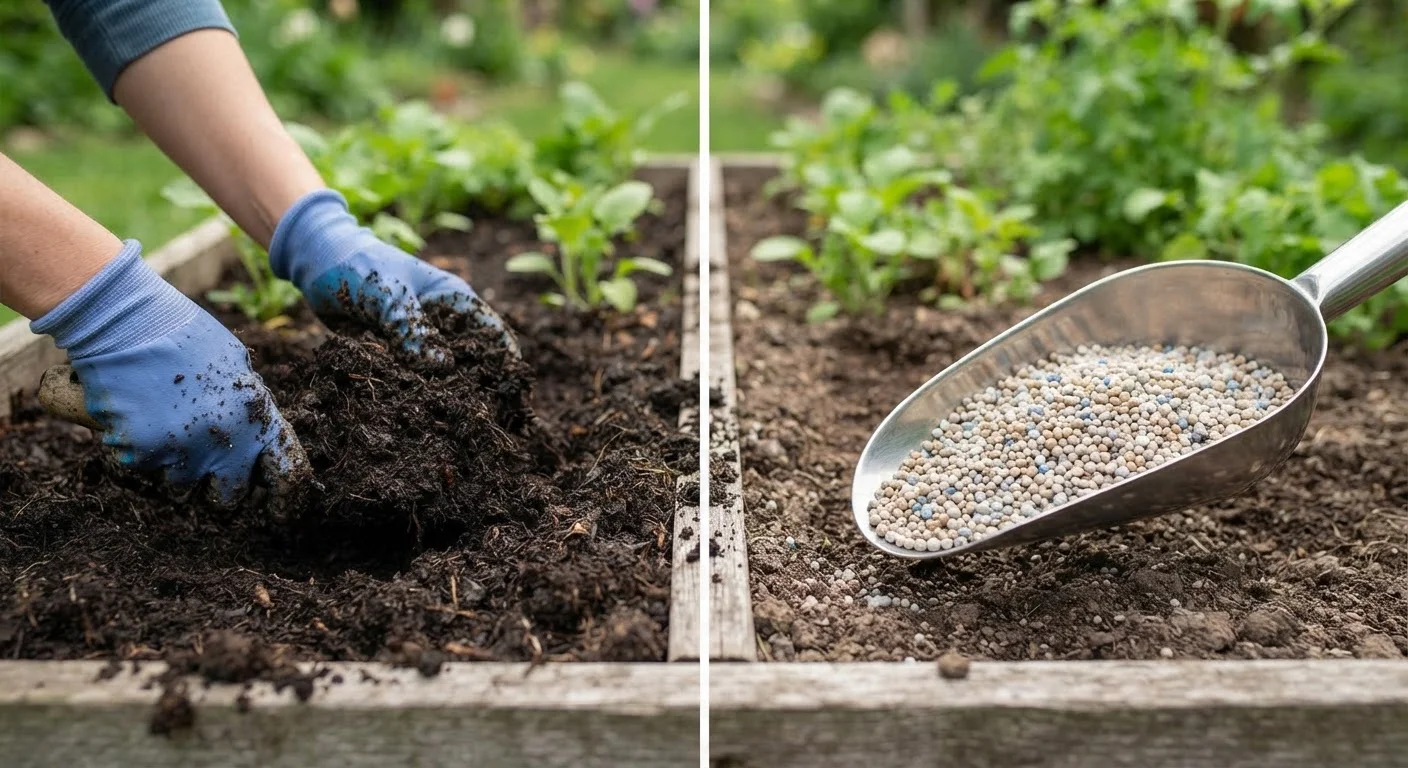
Photo: FaqsDrive.com | Smart Way To Search editorial
—— In This Article
Key Takeaways
- Organic fertilizers release nutrients slowly, feeding plants over weeks or months rather than all at once.
- Synthetic fertilizers deliver nutrients quickly and in precise amounts, making them easier to dial in short-term.
- Organic options typically improve soil structure over time; synthetic fertilizers generally do not.
- Both types carry risks of over-application; more is rarely better with either.
- Your garden's soil type and plant goals should guide which fertilizer makes more sense.
How Each Type Delivers Nutrients
The core difference between organic and synthetic fertilizers comes down to how nutrients reach plant roots. Organic fertilizers — made from materials like compost, bone meal, fish emulsion, or kelp — require soil microbes to break them down before plants can absorb the nutrients. This biological process takes time, often several weeks, but it also feeds the living ecosystem within your soil.
Synthetic fertilizers are manufactured to contain nutrients in forms plants can take up almost immediately. Nitrogen, phosphorus, and potassium are delivered in concentrated, water-soluble compounds. There is no waiting period for decomposition — nutrients become available quickly after watering or rainfall.
Understanding your soil's existing condition matters here. Learn how soil type affects nutrient retention before deciding how heavily to fertilize, since sandy soils drain nutrients faster while clay soils hold them longer.
| Criterion | Organic Fertilizers | Synthetic Fertilizers |
|---|---|---|
| Nutrient release speed | Slow (weeks to months) | Fast (days) |
| Soil structure improvement | Yes, over time | Generally no |
| Precision of nutrient content | Variable | Standardized on label |
| Risk of over-application | Lower, but still possible | Higher — can burn plants |
| Supports soil microbes | Yes | Minimally |
| Cost per application | Often lower long-term | Often lower upfront |
| Suitable for certified organic growing | Yes (if approved) | No |
What Changes in Practice for Your Garden
When you switch from one fertilizer type to the other, the practical experience in your garden shifts noticeably. With organic fertilizers, timing matters more — you typically apply them weeks before you need results, since breakdown depends on soil temperature, moisture, and microbial activity. In cooler spring soil, that process slows considerably.
Synthetic fertilizers give you more responsive control. If a vegetable crop looks pale and nitrogen-deficient mid-season, a synthetic application can visibly green up foliage within a week. That speed comes with a tradeoff: synthetic fertilizers are easier to over-apply, which can burn roots or wash into nearby waterways if used carelessly.
Over several growing seasons, gardeners using organic materials often notice improved soil texture — it crumbles better, drains while still retaining moisture, and supports more earthworm activity. Synthetic use alone does not produce these structural changes, though it does not necessarily degrade soil either if applied correctly and not in excess.
A Soil Test Can Guide Your Decision
Before choosing a fertilizer, consider getting a basic soil test through your local cooperative extension office. These tests measure existing nutrient levels and soil pH, helping you avoid adding what's already abundant. A soil test removes guesswork and makes either fertilizer type more effective and targeted.
For gardeners setting up new growing spaces, this choice intersects with your planting setup. Raised beds and in-ground plots have different fertilizer needs, particularly when fill soil lacks organic matter.
Choosing Based on Your Garden Goals
Neither fertilizer type is universally superior — the right choice depends on what you are trying to accomplish and how much time you have. Beginners often find it helpful to start with a balanced approach: incorporate compost into beds at planting time for long-term soil health, then use a modest synthetic supplement if a specific deficiency appears mid-season.
If you want to keep your garden fully organic — either for personal preference or to meet certified organic standards for edible crops — synthetic fertilizers are off the table entirely. In that case, planning ahead with organic amendments, cover crops, and compost becomes especially important. If speed and simplicity matter more than soil-building, synthetic fertilizers are a practical, widely available option.
~30%
Nitrogen lost to leaching from synthetic fertilizers
Research from university extension programs suggests roughly a third of synthetic nitrogen can leach past root zones before uptake, particularly in sandy or over-watered soils.
4–6 weeks
Typical organic fertilizer activation time in warm soil
Soil microbes break down organic matter more actively above 50°F; in cooler conditions, nutrient release slows significantly, affecting planting timing decisions.
Regardless of which type you use, always follow application rates on the label or recommendations from a soil test. Over-fertilizing with either type stresses plants and can harm surrounding soil biology or water quality.

Home & Garden Editorial Team
Home & Garden Editorial Team is the collective byline for our editorial team and contributor network. Articles published under this byline or an editorial pen name are researched, written, and reviewed according to our editorial standards for clarity, consistency, and independence before publication.
View author profile