
Home Workouts vs. Gym Memberships: Weighing the Real Trade-Offs
Space, cost, consistency, and motivation all factor in. A balanced look at exercising at home versus joining a gym to help you decide what fits your life.
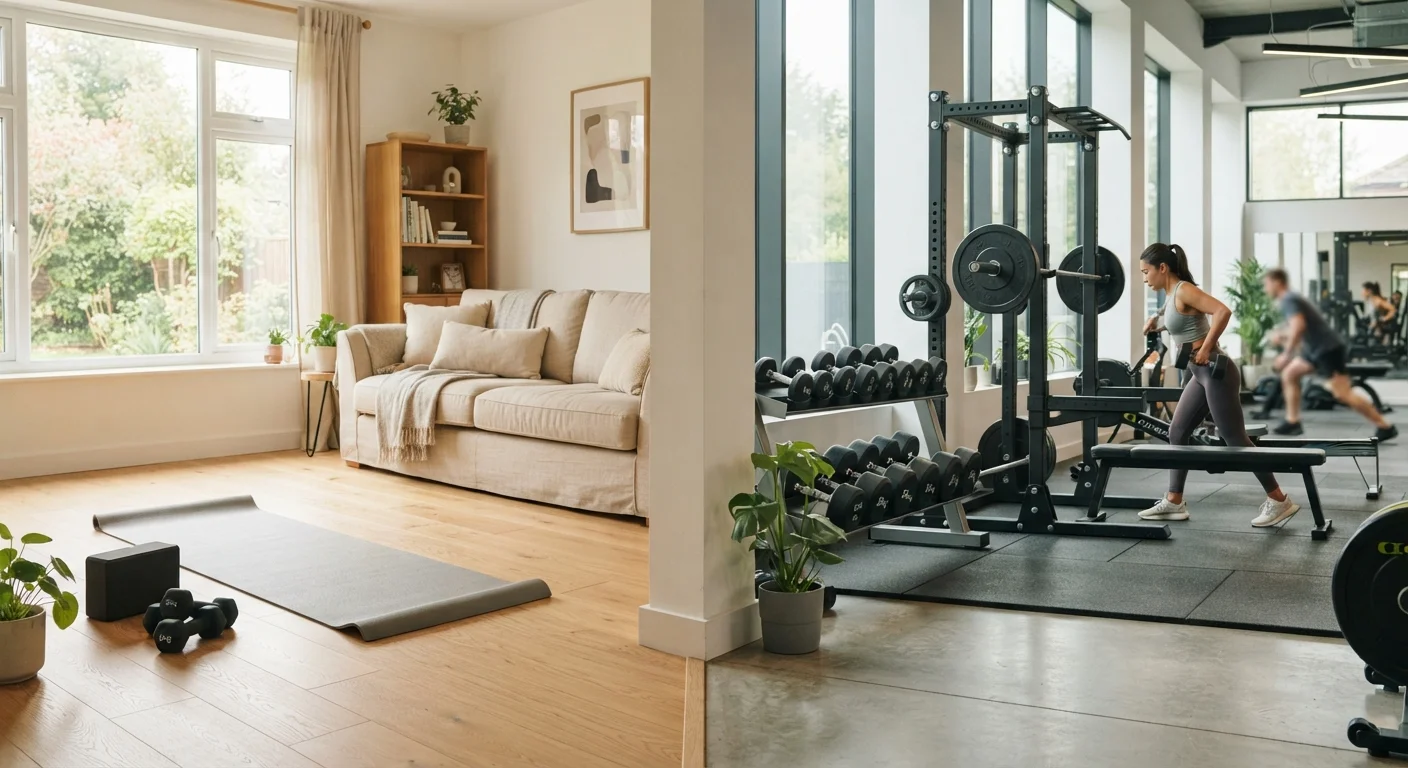
Photo: FaqsDrive.com | Smart Way To Search editorial
—— In This Article
Key Takeaways
- Home workouts eliminate commute time and cost barriers, making consistency easier for many beginners.
- Gyms offer access to varied equipment, professional guidance, and social accountability that homes typically can't match.
- Neither option is universally superior - your schedule, budget, and motivation style matter most.
- Hybrid approaches, alternating between home and gym, work well for many people long-term.
- Consistency over time matters far more than the setting where you exercise.
The Real Question Isn't Where - It's What Keeps You Moving
When you're starting a fitness journey, the home-versus-gym debate can feel like a big, consequential decision. The good news: research consistently shows that the type of exercise environment matters far less than simply moving your body regularly. What does matter is finding a setup that you'll actually stick with week after week.
That said, the trade-offs between working out at home and holding a gym membership are real - and worth thinking through honestly before you commit time or money. Understanding why many new exercisers abandon routines early can help you choose an environment that works with your habits, not against them.
| Home Workouts | Gym Membership | |
|---|---|---|
| Monthly Cost | Minimal to none after initial setup | Typically $10-$80+ per month |
| Convenience | Available anytime, no commute | Requires travel; subject to hours |
| Equipment Variety | Limited unless invested heavily | Broad range, regularly maintained |
| Social Accountability | Self-directed; low social pressure | Community, classes, trainers available |
| Privacy | High; exercise without observers | Shared public space |
| Expert Guidance | Online resources; no live coaching | Trainers and instructors on site |
| Flexibility for Beginners | Great for low-pressure starts | Classes offer structured onboarding |
Cost, Convenience, and the Commute Factor
Gym memberships across the U.S. typically range from around $10 per month at budget facilities to $80 or more at full-service clubs - and that's before factoring in enrollment fees or the cost of commuting. Over a year, even a modest membership can represent a meaningful household expense.
Home workouts, by contrast, require little to no ongoing cost. Bodyweight exercises - push-ups, squats, lunges, planks - require zero equipment and are genuinely effective for building strength and endurance, particularly for beginners. A modest investment in a few resistance bands or a pair of adjustable dumbbells can expand your options considerably.
The commute calculation is often underestimated. A 20-minute round trip to the gym five days a week adds up to over 85 hours annually. For many busy Americans, that friction quietly erodes follow-through. Home workouts eliminate that barrier entirely. Even short sessions at home can deliver meaningful fitness benefits, which makes convenience a genuine advantage, not a consolation prize.
Start With What Removes Friction
If you're new to exercise, choose the option that removes the most barriers to actually showing up. A gym membership you never use provides zero benefit, while a simple home routine done consistently can produce real, lasting results. Give yourself permission to start small and build from there.
Equipment, Variety, and Progress Over Time
One genuine advantage gyms hold is access to a wide range of equipment: free weights across a broad spectrum of loads, cable machines, cardio options, and specialized tools that would be impractical or expensive to replicate at home. For someone focused on progressive strength training - gradually increasing load as the body adapts - a gym's equipment range is a meaningful asset.
The physiological differences between cardio and strength training highlight why variety matters: each stimulus challenges the body differently. Gyms tend to support both modalities more fully than a typical home setup can.
That said, home exercisers can build impressive fitness with creativity. Online video platforms now offer structured programs in yoga, HIIT, Pilates, and bodyweight strength - many of them free. The variety gap between home and gym has narrowed considerably in recent years.
Watch for Equipment-Related Injury Risk
Using gym equipment incorrectly - particularly free weights and resistance machines - can increase injury risk. If you're new to strength training, consider a session or two with a certified personal trainer to learn proper form before training independently. At home, ensure your workout space is clear of hazards and that any equipment is in good condition.
Motivation, Accountability, and the Social Element
For many people, the gym's social environment is its most valuable feature. Working out around others creates a sense of shared effort, and access to personal trainers or group classes provides external structure that home environments simply can't replicate on their own. Group fitness classes in particular tend to support beginners well, offering both instruction and community.
Home workouts, however, suit self-directed learners and introverts who may find gym environments overstimulating or intimidating. Privacy allows for experimentation without self-consciousness - a meaningful factor for people just starting out.
The honest middle ground: many consistent exercisers use a hybrid model. A couple of gym sessions for heavier lifting or group classes, paired with home movement on other days, can offer the best of both worlds. Letting go of all-or-nothing thinking about exercise is often the first step toward building a routine that lasts.
This article is for general informational and educational purposes only and is not a substitute for professional medical advice. Consult a qualified healthcare provider before beginning any new exercise program, especially if you have existing health conditions.

Health & Wellness Editorial Team
Health & Wellness Editorial Team is the collective byline for our editorial team and contributor network. Articles published under this byline or an editorial pen name are researched, written, and reviewed according to our editorial standards for clarity, consistency, and independence before publication.
View author profile