
What a Timing Belt Does - and Why Its Failure Is So Catastrophic
The timing belt is small but critical. Learn what it synchronizes, why it fails, and the engine damage that follows when it does.
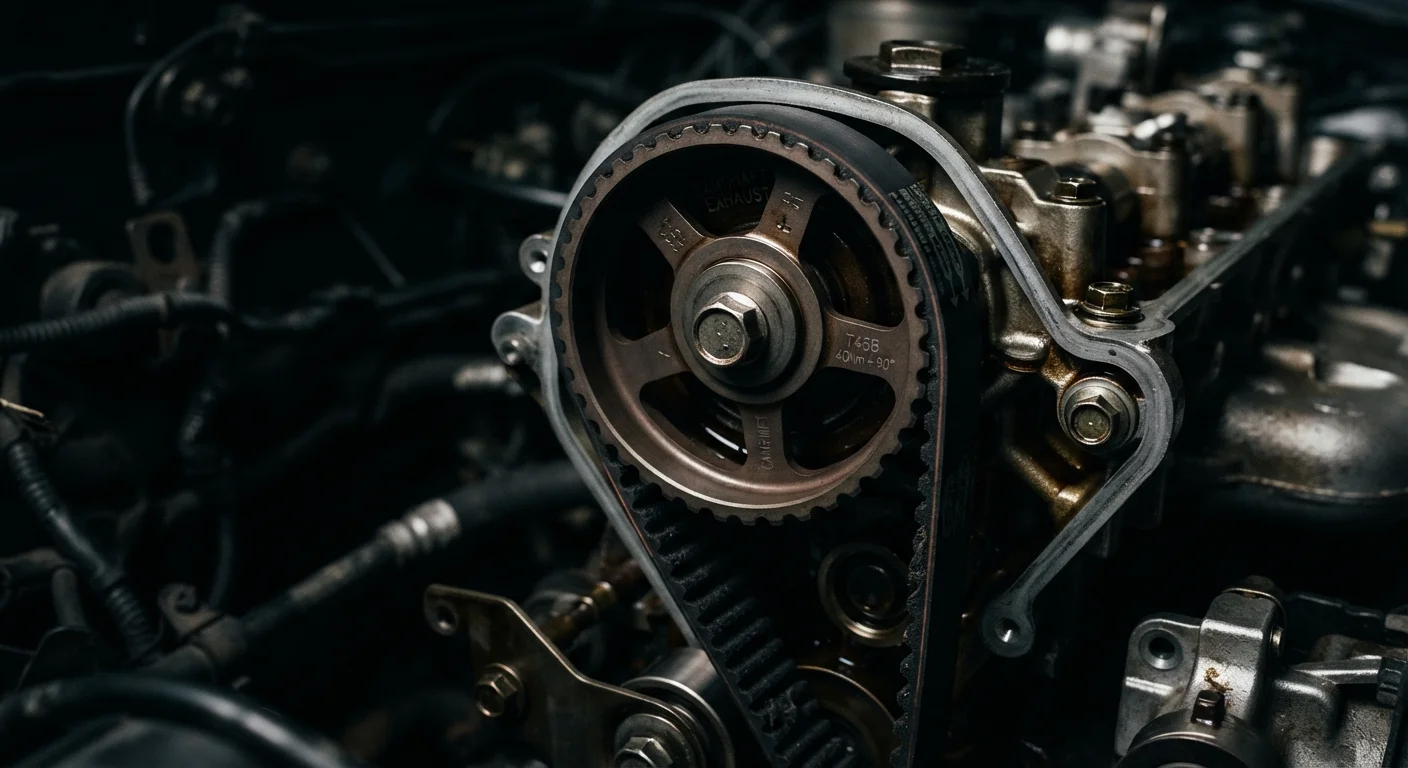
Photo: FaqsDrive.com | Smart Way To Search editorial
—— In This Article
Key Takeaways
- The timing belt synchronizes the crankshaft and camshaft so pistons and valves move in coordinated sequence.
- Most manufacturers recommend replacement every 60,000-100,000 miles, but always check your owner's manual.
- Timing belt failure in an interference engine typically destroys valves, pistons, or both - a repair that can cost thousands.
- There are usually few obvious warning signs before a timing belt snaps, making scheduled replacement essential.
- Replacing the belt on schedule is far less expensive than repairing the engine damage that follows a failure.
The Job of the Timing Belt
Inside every combustion engine, two major shafts must rotate in exact sync: the crankshaft, which is driven by the pistons moving up and down, and the camshaft, which opens and closes the engine's intake and exhaust valves. The timing belt is the link that keeps these two shafts perfectly coordinated - not approximately, but to the fraction of a millisecond.
When a piston rises on the compression stroke, the valves must be closed. When it descends on the intake stroke, the intake valve must be open to allow air and fuel in. The timing belt enforces this choreography by connecting the crankshaft and camshaft sprockets (toothed wheels) with a toothed rubber belt that cannot slip. Lose that synchronization and the engine's entire combustion cycle breaks down instantly.
Does Your Car Have a Timing Chain Instead?
Some vehicles use a metal timing chain rather than a rubber belt. Chains are designed to last the life of the engine with regular oil changes and generally do not have a scheduled replacement interval. Check your owner's manual or ask a mechanic - knowing which system your engine uses changes your maintenance picture significantly.
Why Failure Is So Destructive
Not all engines respond to timing belt failure the same way - and that distinction matters enormously for your repair bill. Engines fall into two categories:
- Non-interference engines: The pistons and valves have enough clearance that they never occupy the same space. If the timing belt snaps, the engine stalls and stops. Damage is limited to the belt itself - frustrating, but manageable.
- Interference engines: The pistons and valves are designed to use overlapping paths for efficiency. In these engines, if the timing belt fails while the engine is running, pistons slam directly into open valves at high speed. The result is bent or broken valves, damaged pistons, and sometimes a destroyed cylinder head - a repair that can easily exceed the value of an older vehicle.
Most modern engines are interference-type designs because they produce more power and efficiency. That means the stakes for skipping belt service are higher than ever. As our editorial team notes in The Real Cost of Skipping Routine Maintenance, deferred service on inexpensive components routinely leads to catastrophic repair costs.
$2,000-$5,000+
Typical engine repair cost after belt failure
Repair estimates for interference-engine damage from a timing belt failure - including valve, piston, and head work - commonly run well into the thousands at independent and dealer shops across the U.S.
$300-$1,000
Average proactive timing belt replacement cost
Proactive replacement cost varies by vehicle and regional labor rates but is consistently a fraction of post-failure repair bills, illustrating the financial logic of scheduled service.
When and How the Belt Wears Out
Rubber degrades over time through heat cycling, oil exposure, and simple mechanical stress. The belt's internal fibers weaken even when the exterior looks intact - which is why visual inspection alone is not a reliable safety check. Manufacturers account for this and publish mileage- and time-based replacement intervals, typically in the range of 60,000 to 100,000 miles, sometimes with a calendar limit of 7-10 years regardless of mileage.
The timing belt is part of a broader group of components that quietly wear in the background. Air Filters, Spark Plugs, and Belts explains how each of these components rarely announces its own decline - until a breakdown forces the issue.
Bundle Your Belt Service to Save on Labor
Accessing the timing belt requires significant disassembly. Most mechanics recommend replacing the water pump, belt tensioner, and idler pulleys at the same appointment. The incremental parts cost is modest compared to paying for the same labor a second time if a nearby component fails shortly after.
What Smart Belt Maintenance Looks Like
Because timing belt failure provides almost no warning, the replacement interval in your owner's manual is your primary defense. Here's how to approach it systematically:
- Find your interval: Look in the maintenance schedule section of your owner's manual. Note both the mileage and the time limit - whichever comes first applies.
- Replace related components at the same time: Labor to access the timing belt is significant. Mechanics routinely recommend replacing the water pump, tensioner, and idler pulleys simultaneously. Paying a modest amount more now avoids reopening the same area if one of those parts fails shortly after.
- Know your engine type: Ask your mechanic whether your engine is interference or non-interference. That answer shapes how urgently you should treat an overdue belt.
- Keep the receipt: Document when the belt was replaced so future owners - or a future mechanic - know what interval to plan against.
This article is for general informational purposes only. Always consult a qualified, licensed mechanic for maintenance decisions specific to your vehicle.
Frequently Asked Questions

Automotive Basics Editorial Team
Automotive Basics Editorial Team is the collective byline for our editorial team and contributor network. Articles published under this byline or an editorial pen name are researched, written, and reviewed according to our editorial standards for clarity, consistency, and independence before publication.
View author profile