
How a Car Battery, Alternator, and Starter Work Together
Starting your car involves three systems passing the baton. Understand how your battery, alternator, and starter depend on each other.
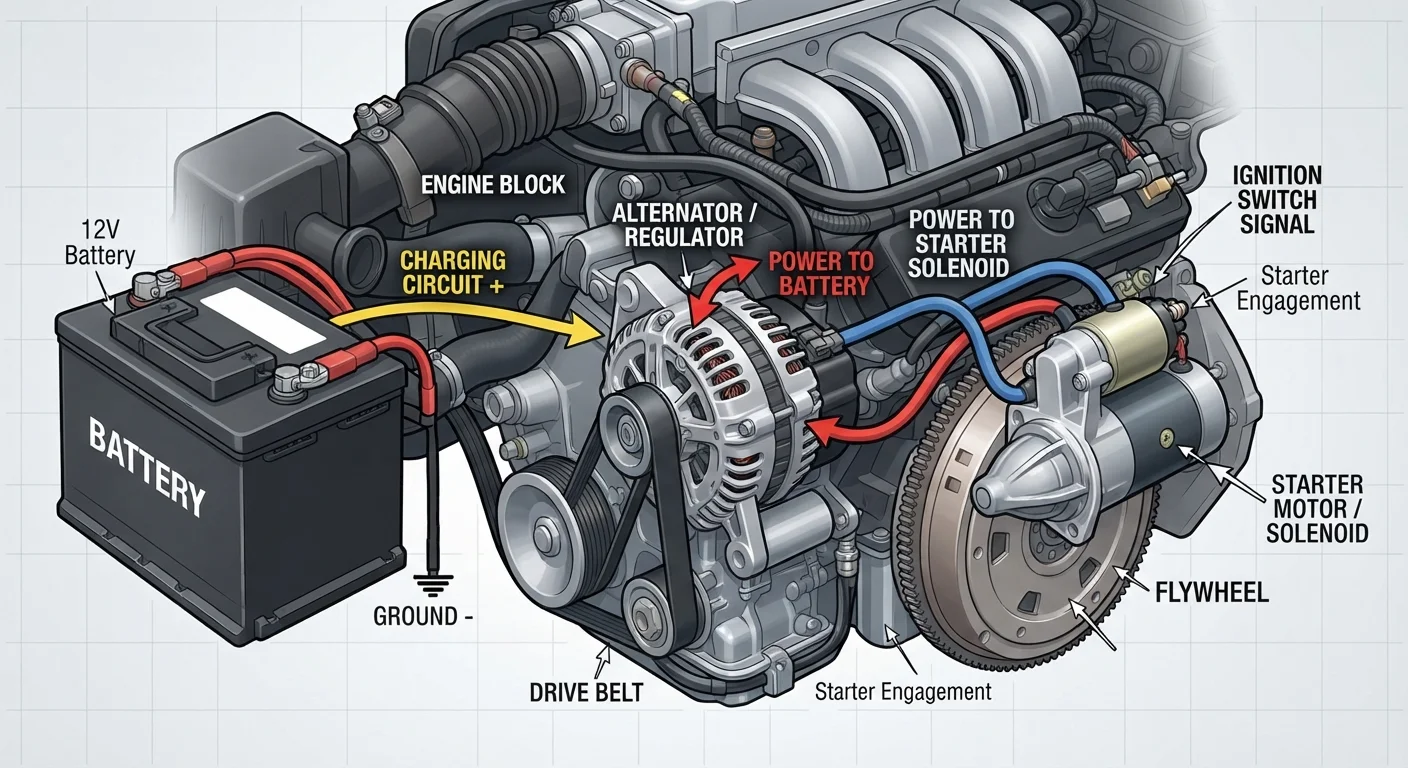
Photo: FaqsDrive.com | Smart Way To Search editorial
—— In This Article
Key Takeaways
- The battery, alternator, and starter each play a distinct role in a relay-style sequence.
- A failing component in this chain can mimic symptoms of another, making diagnosis tricky.
- The alternator recharges the battery while driving - it is not a backup battery.
- Short trips can prevent the alternator from fully recharging a depleted battery.
- Most mechanics can test all three components quickly and affordably before replacing anything.
The Starting Sequence: A Three-Way Handoff
Every time you turn your ignition key or press the start button, three components execute a precisely ordered handoff in under a second. Understanding that sequence demystifies a lot of what can go wrong.
Step 1 - The battery acts first. Turning the key sends a signal to the starter relay, which draws a large burst of electrical current from the battery. This is the battery's most demanding job: delivering hundreds of amps almost instantaneously.
Step 2 - The starter converts electricity into motion. That current powers a small but powerful electric motor - the starter - which spins a gear called a pinion. The pinion meshes with the engine's flywheel and physically cranks the engine until combustion takes over.
Step 3 - The alternator takes over. Once the engine is running, the alternator (driven by a belt connected to the engine) generates electricity to power the car's systems and replenish the charge the battery just spent. From this point on, the alternator is the primary electrical source - not the battery.
Think of it like a relay race: the battery runs the first leg, the starter carries the baton through ignition, and the alternator runs the rest of the race. Each depends on the previous runner having done their job.
What Each Component Actually Does
Breaking each part down makes it easier to recognize which one is struggling when something goes wrong.
3-5 years
Typical car battery lifespan
AAA recommends testing batteries annually after the three-year mark, as failure risk increases significantly with age.
13.5-14.5V
Normal alternator output voltage
A reading consistently below 13 volts while the engine is running suggests the alternator is undercharging the battery.
~1-2 sec
How long a starter should run per start
Starters are designed for brief, high-current bursts; prolonged cranking can overheat and damage the motor.
The Battery
A lead-acid car battery stores chemical energy and converts it to electrical energy on demand. Its two primary jobs are providing the initial burst to start the engine and acting as a voltage buffer that stabilizes the electrical system. Most car batteries last three to five years. See our guide to car battery basics for a closer look at what shortens battery life and how to spot decline early.
The Alternator
The alternator is essentially a generator. Its rotor spins inside a magnetic field to produce electricity - enough to run headlights, climate control, infotainment, and every other powered system in the car. A voltage regulator inside the alternator keeps output steady, usually around 13.5 to 14.5 volts, so sensitive electronics aren't damaged by spikes.
The Starter Motor
The starter is a high-torque electric motor designed for short, intense bursts. It only runs for the one or two seconds needed to crank the engine. Running a starter continuously (holding the key in the start position) overheats it quickly and can cause permanent damage.
When One Fails, the Others Get Blamed
Because these three components are so interdependent, a failure in one often produces symptoms that look like another is at fault. This is why automotive technicians test the full charging system - not just the battery - when diagnosing a no-start condition.
For example, an alternator that undercharges will slowly drain the battery over days or weeks. When the car finally won't start, the battery appears to be dead - and it is, but replacing it without fixing the alternator will leave you back in the same situation within weeks.
Similarly, a starter that draws too much current (called high amperage draw) puts unusual stress on the battery, which can shorten its lifespan. A mechanic can measure starter amperage draw during a load test to catch this before it causes compounding damage.
Test All Three Before You Replace Any
Most auto parts stores will test your battery, alternator output, and starter draw for free. Getting all three checked at once saves you from replacing one component only to find another was the real culprit. Always ask for a full charging system test, not just a battery check.
For a broader look at how vehicle systems interact and what maintenance checks protect them, the Car Maintenance 101 guide is a helpful next read.
Frequently Asked Questions

Automotive Basics Editorial Team
Automotive Basics Editorial Team is the collective byline for our editorial team and contributor network. Articles published under this byline or an editorial pen name are researched, written, and reviewed according to our editorial standards for clarity, consistency, and independence before publication.
View author profile