
Horsepower vs. Torque: The Difference That Actually Matters for Drivers
Automakers advertise both figures, but they describe very different things. Learn what horsepower and torque mean in real-world driving.
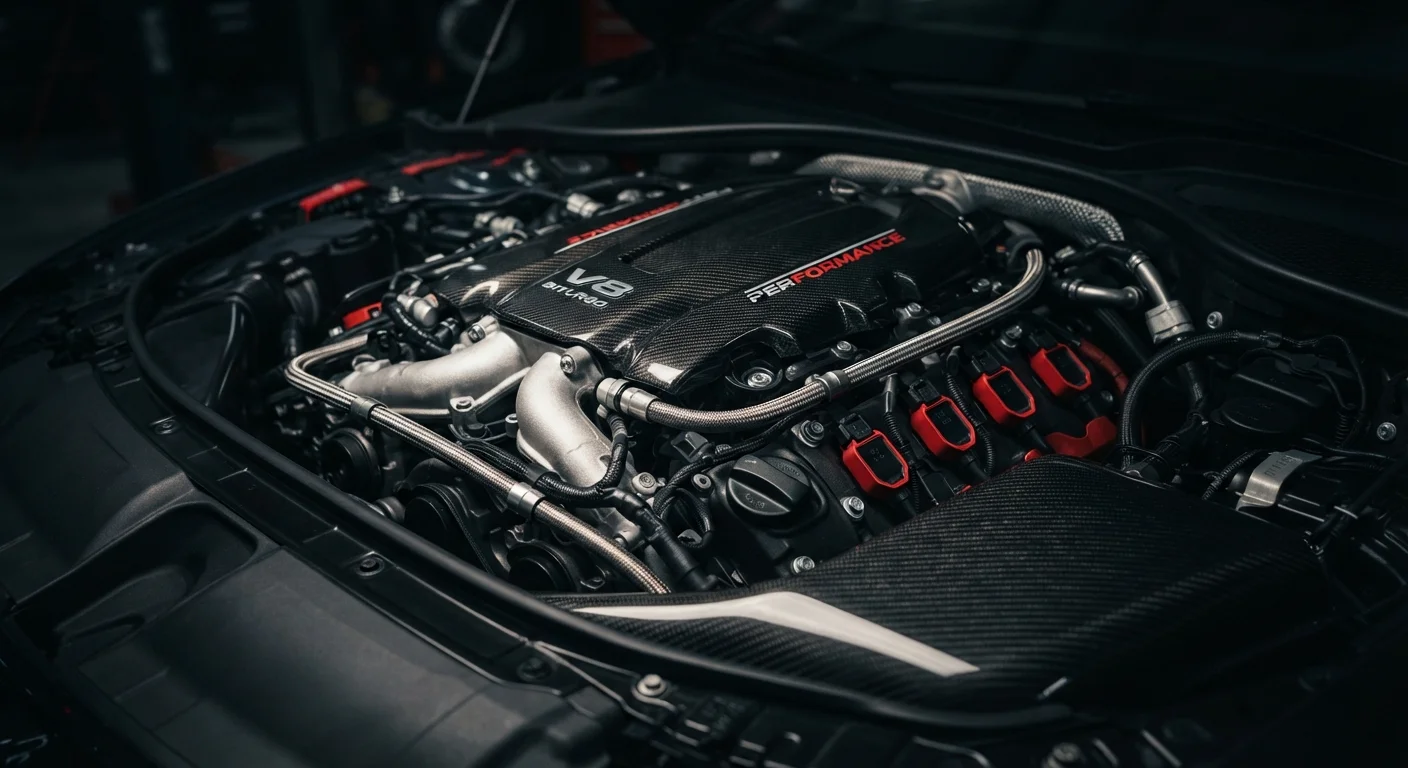
Photo: FaqsDrive.com | Smart Way To Search editorial
—— In This Article
Key Takeaways
- Torque is the rotational force an engine produces; horsepower is how quickly that force is delivered over time.
- High torque makes a vehicle feel strong at low speeds, while high horsepower sustains performance at higher speeds.
- Neither number alone tells the full story - peak RPM and drivetrain design matter just as much.
- Towing and hauling favor torque; track-style or sustained highway driving favors horsepower.
- Both figures interact with transmission, weight, and drivetrain to determine real-world performance.
What These Two Numbers Actually Measure
Walk into any dealership or read any automotive review, and you'll see two numbers listed prominently in a vehicle's specs: horsepower and torque. Automakers treat them as selling points, yet most drivers aren't entirely sure what either figure actually means on the road.
Torque is a measure of rotational force - specifically, how hard the engine twists the crankshaft. It's expressed in pound-feet (lb-ft) in the United States. Think of it like a wrench tightening a bolt: more torque means more turning force applied.
Horsepower is derived directly from torque. The mathematical relationship is: Horsepower = (Torque × RPM) ÷ 5,252. In other words, horsepower tells you how much work the engine can do over a given amount of time. James Watt coined the term in the late 18th century to compare steam engine output to draft horses - the unit stuck.
The critical insight is that these aren't competing measurements - they describe the same engine from two different angles. Torque is the force; horsepower is the rate at which that force is applied.
| Criterion | Horsepower | Torque |
|---|---|---|
| What it measures | Rate of work over time | Rotational force (twisting) |
| Unit (US) | hp (horsepower) | lb-ft (pound-feet) |
| When you feel it most | Higher speeds, sustained acceleration | Low speeds, off-the-line thrust |
| Best use case | Highway driving, top-end speed | Towing, hauling, city driving |
| Strong in these vehicles | Sports cars, high-revving engines | Diesel trucks, electric vehicles |
| Relationship to RPM | Peaks at higher RPM | Often peaks at lower RPM |
How Each One Feels Behind the Wheel
The difference between torque and horsepower becomes most obvious the moment you put the car in motion.
Torque is what you feel first. When you press the accelerator from a stop, the immediate shove pressing you into your seat is torque at work. Diesel engines and electric motors are known for delivering massive torque at very low RPMs, which is why diesel trucks pull heavy loads with ease and why electric vehicles feel so responsive off the line - peak torque is available almost instantly.
Horsepower is what sustains you. Once you're already moving at higher speeds, it's the horsepower figure that determines how quickly the vehicle continues to accelerate. That surge of power you feel when merging onto a freeway at 60 mph reflects the engine's horsepower working at higher RPMs.
A useful analogy: imagine arm-wrestling. Torque is how hard you can push at the start; horsepower is how long and fast you can keep pushing. A big diesel pickup may feel more forceful around town than a high-revving sports car, even if the sports car has more horsepower on paper.
0 RPM
When electric motors reach peak torque
Unlike combustion engines, electric motors deliver maximum torque instantly from a standstill, explaining their strong off-the-line feel.
5,252 RPM
RPM where horsepower equals torque
At exactly 5,252 RPM, the mathematical formula makes horsepower and torque numerically equal for any gasoline engine - a useful reference point on dyno charts.
~90%
Efficiency at which diesels deliver torque
Diesel engines are known for high thermal efficiency and strong low-RPM torque output, which is why they dominate commercial trucking and towing applications.
Understanding how power reaches your wheels is equally important. For a deeper look at how your drivetrain affects real-world performance, see our guide to AWD, 4WD, FWD, and RWD.
Why Peak Numbers Can Be Misleading
Manufacturers advertise peak horsepower and peak torque, but those peaks occur at specific engine speeds (RPM), not all the time. A vehicle might produce peak torque at 1,800 RPM and peak horsepower at 6,000 RPM. In everyday driving, you'll rarely hit either extreme consistently.
This is why two vehicles with identical horsepower ratings can feel dramatically different to drive. The shape of the power curve - how torque and horsepower build and fall across the RPM range - matters as much as the peak figure itself. An engine with broad, flat torque across a wide RPM band generally feels more responsive and easier to drive than one with a narrow, peaky powerband.
Vehicle weight also enters the equation. A lighter car with modest horsepower can feel quicker than a heavier vehicle with higher output. Transmission type and gear ratios further shape how power is delivered to the road.
Keeping your engine in peak operating condition also plays a role in how efficiently those numbers translate to real-world performance. Our overview of synthetic vs. conventional motor oil explains how oil choice affects engine health over time.
Dyno Charts: Seeing the Full Picture
A dynamometer (dyno) chart graphs both horsepower and torque across the full RPM range, revealing the actual power curve rather than just the peak numbers. Many automotive enthusiasts and tuners rely on dyno charts to understand how an engine truly behaves in real-world driving conditions. If you're comparing vehicles, looking up dyno data can give you a much clearer picture than the single peak figures in a spec sheet.

Automotive Basics Editorial Team
Automotive Basics Editorial Team is the collective byline for our editorial team and contributor network. Articles published under this byline or an editorial pen name are researched, written, and reviewed according to our editorial standards for clarity, consistency, and independence before publication.
View author profile