
What a Vehicle Emergency Kit Should Actually Contain
A breakdown of the items that genuinely matter in a roadside emergency, and why each one earns its space in your trunk.
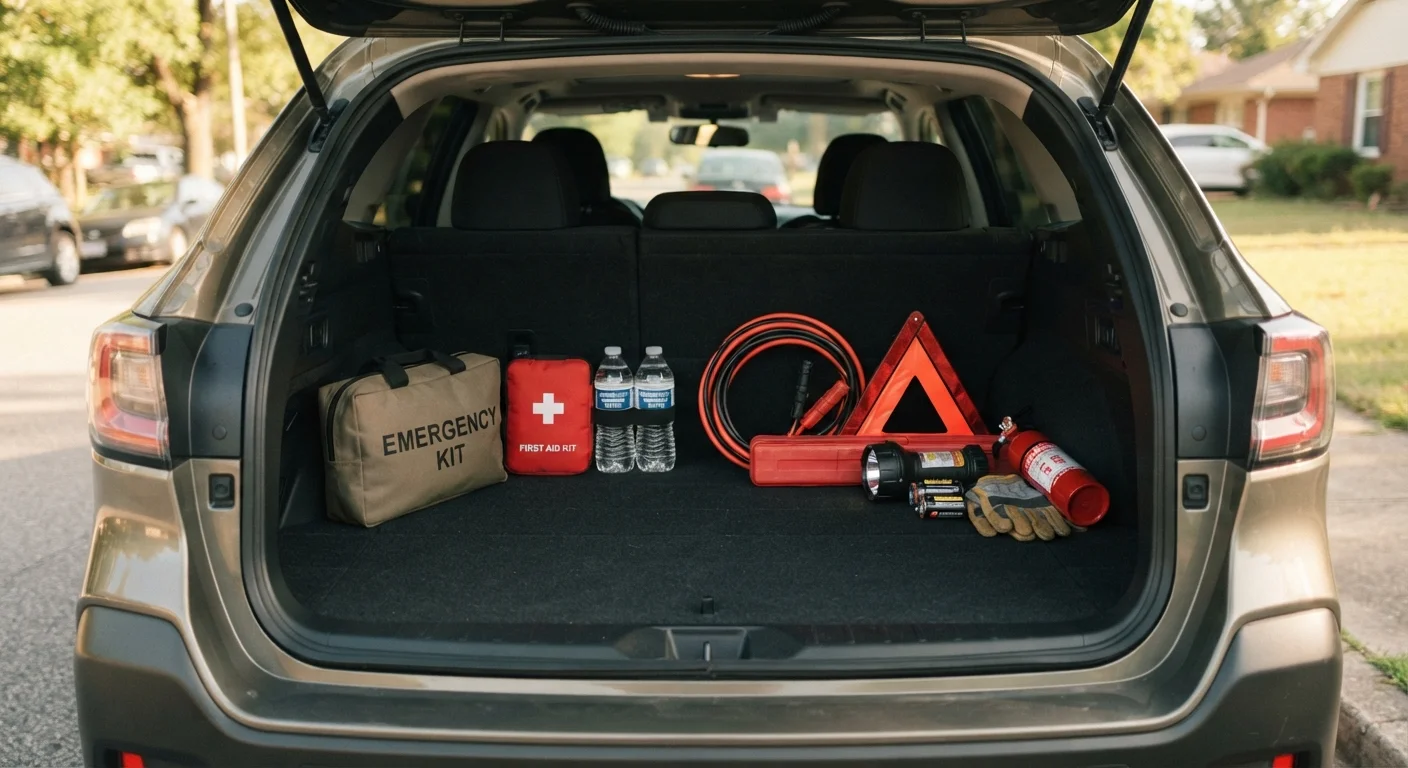
Photo: FaqsDrive.com | Smart Way To Search editorial
—— In This Article
Key Takeaways
- A vehicle emergency kit should address four core needs: safety visibility, basic repairs, communication, and personal survival.
- Jumper cables, a reflective triangle or flares, and a quality flashlight are non-negotiable starting points for any driver.
- Seasonal climate in your region should directly influence what you pack - a kit for Minnesota winters differs from one for Arizona summers.
- Check and refresh your kit's consumables - batteries, water, first aid supplies - at least once a year.
- A kit is only useful if it's accessible; store it where you can reach it even after a collision or trunk malfunction.
Why Most Drivers Underestimate This
Most drivers assume emergencies happen to other people - until the moment they're standing on a dark highway shoulder with a flat tire, a dead battery, or a steaming engine. A vehicle emergency kit doesn't prevent breakdowns, but it closes the gap between a manageable inconvenience and a genuinely dangerous situation.
The problem with many pre-packaged kits is that they're assembled to look comprehensive rather than to be useful. Cheap gloves, a tiny bandage assortment, and a flimsy poncho take up space without solving real problems. This list focuses on what actually earns its place in your trunk - item by item, with a clear reason for each one.
If you're planning a longer drive, pairing this kit with a broader readiness routine is smart. See our pre-trip safety walkthrough for a fuller picture of what to check before you leave home.
Jumper cables or a portable jump starter
A dead battery is among the most common roadside failures. Traditional jumper cables require a second vehicle, while a portable lithium jump starter - now widely available and compact enough to fit in a glove box - lets you restart a car independently. Either option is far better than none. If you carry cables, make sure they're at least 16 feet long with thick gauge wire (4 to 6 gauge handles most passenger vehicles). Check your owner's manual for the correct jump-start procedure for your specific car, as some vehicles have specific terminal locations or sequences.
A dead battery is one of the most common roadside failures - having jump-start capability is non-negotiable.
Reflective warning triangles or LED road flares
Visibility is your first line of defense when stopped on or near a road. Reflective triangles fold flat and are reusable; LED road flares are highly visible even in daylight and don't carry the fire risk of traditional flares. Place them at least 200 feet behind your vehicle to give oncoming traffic adequate warning. This step alone dramatically reduces the risk of a secondary collision - which is a significant danger in highway breakdowns. Bright orange or red is standard; avoid novelty versions that sacrifice reflectivity for compactness.
Placing warning triangles 200 feet behind your vehicle dramatically reduces the risk of a secondary collision.
A quality flashlight with spare batteries
Smartphone flashlights drain your battery - the same battery you may need to call for help. A dedicated LED flashlight with long runtime is a better tool for inspecting under the hood, reading a tire, or signaling for help at night. Keep spare AA or AAA batteries sealed in a small zip-lock bag within the kit. Headlamp-style flashlights are worth considering because they free both hands for changing a tire or checking engine components. Replace batteries annually regardless of whether they've been used, as they discharge slowly over time.
A dedicated flashlight preserves your phone battery for the calls that actually matter in an emergency.
A properly inflated spare tire, jack, and lug wrench
These three items are only useful together - and only if the spare is inflated. Many drivers discover mid-emergency that their spare is flat because it was never checked. Consult your vehicle systems guide or owner's manual for the recommended pressure for your spare, then check it every few months. Know where your jack points are before you need them; using a jack incorrectly on the wrong contact point can damage the vehicle or cause it to fall. Some compact vehicles carry a "donut" spare rated for limited miles and speeds - know those limits.
A spare tire is only useful if it's inflated - check the pressure at least every few months.
Basic first aid kit
Roadside incidents don't always involve just the car. A first aid kit should include adhesive bandages in multiple sizes, sterile gauze pads, medical tape, antiseptic wipes, nitrile gloves, and a pair of scissors or trauma shears. Pre-assembled kits from pharmacies often work well as a starting point, but check that they include gloves - they're frequently left out. If any family member takes regular medication, consider keeping a small emergency supply clearly labeled in the kit. For serious injuries, a kit buys time - call 911 first.
A first aid kit buys critical time - always call 911 first for any serious injury.
Water and a non-perishable snack
Waiting for roadside assistance in summer heat or winter cold can take an hour or more. A sealed bottle of water per person is a reasonable baseline; in hot climates or for longer trips, carry more. Compact, calorie-dense snacks like energy bars tolerate temperature swings better than most foods. Replace water annually - while sealed water doesn't technically expire, containers can degrade and leach materials over time in hot conditions. This isn't glamorous prep, but dehydration impairs judgment, and impaired judgment makes a manageable situation worse.
Dehydration impairs judgment - even a single water bottle per person can change the outcome of a long wait.
A warm blanket or emergency mylar blanket
Hypothermia is a real risk when a vehicle breaks down in cold weather, especially if the engine can't run safely. A compact mylar (space) blanket folds to the size of a wallet and reflects body heat back efficiently. A heavier wool or fleece blanket takes more space but provides more comfort for longer waits or for multiple passengers, including children. Drivers in northern states or high-altitude regions should weight this item heavily. Even in mild climates, nighttime temperatures can drop significantly - a blanket costs almost nothing and takes negligible space.
Even in mild climates, nighttime temperatures can drop fast - a blanket weighs almost nothing and could be critical.
Pen, notepad, and copies of key documents
After an accident or breakdown, you'll want to exchange information, document damage, or note a confirmation number from a roadside assistance call. Phones run out of battery; a pen and small notepad never do. Keep photocopies - not originals - of your insurance card, registration, and roadside assistance membership information in the kit. This redundancy matters most when your phone is damaged or dead. Some drivers also keep a written list of emergency contacts in the kit, since most people no longer have numbers memorized.
A pen, notepad, and document copies matter most when your phone is damaged or out of battery.
Putting It All Together
The goal isn't a kit that impresses - it's one you'll actually use. Keep items in a durable bag or bin that sits in the trunk but can be grabbed quickly. Avoid storing water or medications in areas that reach extreme temperatures, since heat degrades both.
Schedule an Annual Kit Review
Pick a recurring date - your birthday, the start of a new year, or the first day of daylight saving - and use it as a prompt to inspect your kit. Check battery charge, expiration dates on first aid supplies and food, and the inflation of your spare tire. Rotating these items on a schedule prevents the common failure mode: reaching for the kit and finding it depleted.
Once a year - a birthday or New Year's Day works as a simple trigger - pull the kit out, replace expired items, test batteries, and top off fluids. A kit that's never been opened in three years almost certainly has dead batteries and dried-out wipes.
For drivers interested in understanding their vehicle more deeply, the owner's manual is one of the most overlooked resources available. It can also tell you the correct jump-start procedure for your specific vehicle - some modern cars require a different sequence than the traditional method.

Automotive Basics Editorial Team
Automotive Basics Editorial Team is the collective byline for our editorial team and contributor network. Articles published under this byline or an editorial pen name are researched, written, and reviewed according to our editorial standards for clarity, consistency, and independence before publication.
View author profile