
Documents Every Traveler Should Gather Before Any Trip
A quick-reference guide to the ID, travel, and health documents you may need—domestically and internationally—before you hit the road.
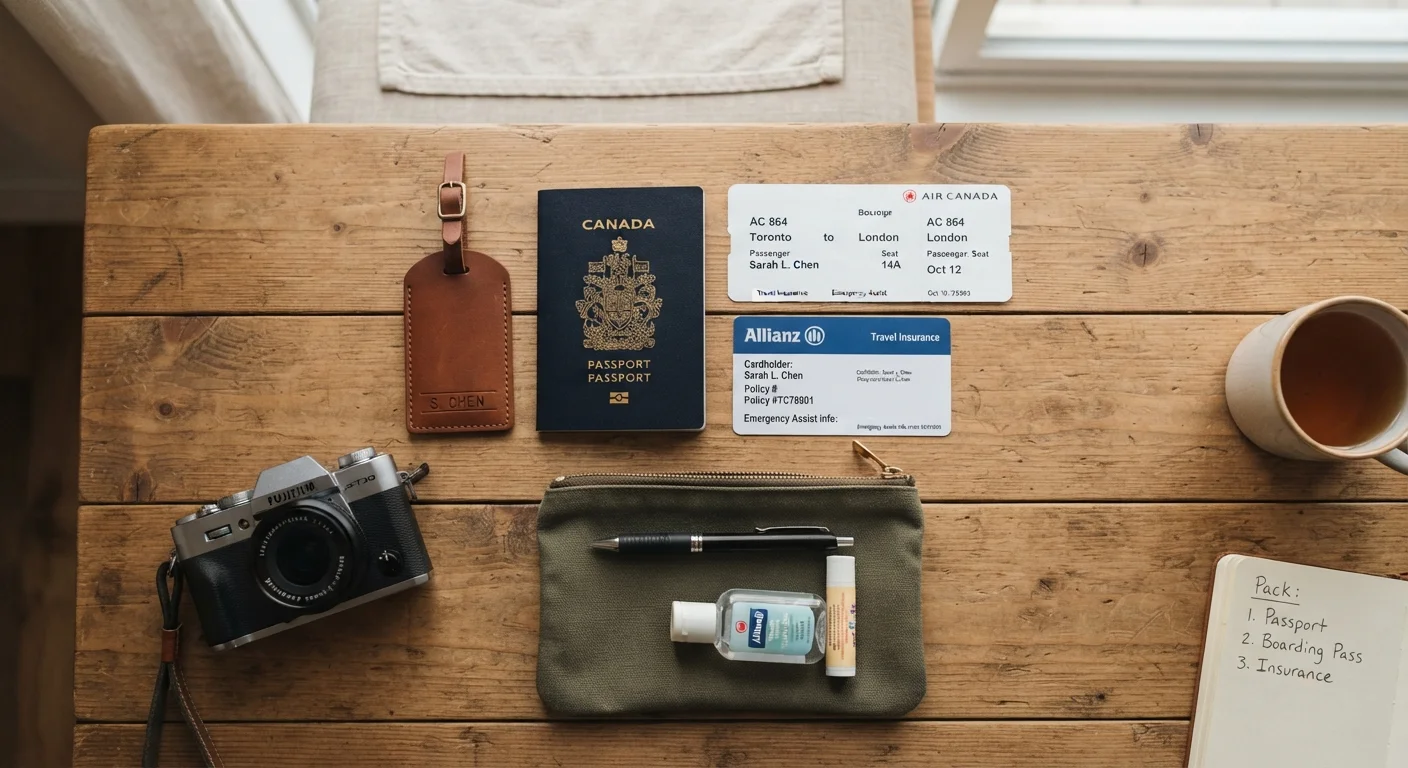
Photo: FaqsDrive.com | Smart Way To Search editorial
—— In This Article
Why Documents Matter Before You Pack a Single Shirt
Missing a document at the airport or border crossing can mean a missed flight, a denied entry, or a very expensive scramble. Whether you're driving two states over or flying internationally, a few key papers protect your safety, prove your identity, and unlock the experiences you've planned. Think of this guide as your lookup sheet — bookmark it, print it, or share it with travel companions.
For a broader pre-departure checklist that covers bookings, packing, and home prep alongside documents, see our complete pre-trip checklist.
| REAL ID Enforcement (domestic flights) | Required since May 7, 2025 (US Department of Homeland Security) |
| Passport validity buffer (most countries) | At least 6 months beyond travel dates (US State Department general guidance) |
| Standard US passport renewal processing | 6–8 weeks (routine); expedited options available (US State Department) |
| Documents to carry on your person | Passport, boarding pass, insurance card, visa (if applicable) |
| Backup copies recommended | Digital (cloud) + 1 physical copy stored separately |
Domestic Travel: What You'll Likely Need
Flying within the United States? Since May 2025, the TSA requires a REAL ID-compliant driver's license, state ID, or a federally accepted alternative (like a US passport) to board commercial flights. Check your card for a star symbol — that's the REAL ID mark. If yours doesn't have one, use your passport instead.
- REAL ID or passport — required at airport security for domestic flights
- Boarding pass — digital or printed; download it the night before
- Health insurance card — useful if you need urgent care away from home
- Roadside assistance card — critical for road trips; see our road trip safety walkthrough for a full vehicle checklist
- National park passes or timed-entry permits — many parks now require advance reservations; details at our national park pre-trip checklist
REAL ID
A federally compliant form of state-issued identification that meets standards set by the REAL ID Act of 2005. Cards display a star symbol in the upper corner. Required for domestic air travel in the US.
Visa
An official authorization — usually stamped or affixed in your passport — granted by a foreign country allowing you to enter, stay, or transit. Requirements vary widely by destination and nationality.
International Driving Permit (IDP)
A supplemental document that translates your valid US driver's license into multiple languages, recognized in over 150 countries. It must be used alongside your original license, not as a standalone ID.
Travel Insurance
A policy that may reimburse certain non-refundable trip costs or cover emergency medical expenses while traveling. Coverage terms and exclusions vary by policy — always read the policy details carefully.
Onward Ticket
Proof of a confirmed flight, bus, or ferry departing the country you're entering. Many border officers require this to confirm you don't plan to overstay your authorized period.
International Travel: The Expanded Document List
Crossing borders adds several layers to your document checklist. Start early — some items require weeks or months to obtain.
6+ months
Passport validity most countries require beyond your travel dates
The US State Department advises checking each destination's specific entry requirements well in advance of travel.
195+
Countries with unique visa or entry rules for US travelers
Requirements vary significantly by destination — always consult the official embassy and State Department resources before booking.
6–8 weeks
Routine US passport renewal processing time
According to the US State Department; expedited service and appointment-based urgent renewal are available for an additional fee.
- Passport — must be valid for at least six months beyond your travel dates in most countries. Renew early if it's expiring soon.
- Visa or entry authorization — requirements vary by destination and US citizenship status. Always verify with the official embassy website of your destination country and the US State Department before booking.
- Travel insurance documentation — proof of coverage can be required at some borders or for certain visa applications. Learn what policies typically cover at our travel insurance explainer.
- Vaccination or health records — some destinations require documented proof of certain vaccinations. Consult a travel medicine clinic or your healthcare provider well before departure.
- International driving permit (IDP) — required in some countries if you plan to rent or drive a vehicle.
- Hotel/accommodation confirmation — customs officers may ask where you're staying.
- Return or onward ticket — proof that you plan to leave is commonly requested at border control.
Entry rules, visa requirements, and health documentation requirements change frequently. Always verify current requirements with official government sources — the US State Department travel portal and your destination country's embassy — before travel.
Organizing and Protecting Your Documents
Gathering documents is only half the battle — keeping them accessible and secure during your trip matters just as much.
- Make digital copies: Scan or photograph every document and store them in a secure cloud folder or email them to yourself. This helps if originals are lost or stolen.
- Carry physical backups: A laminated copy of your passport photo page stored separately from your actual passport gives you an easy reference.
- Use a travel wallet or organizer: A single dedicated pouch prevents the frantic bag-search at security.
- Note emergency contacts: Write down your country's nearest embassy or consulate phone number for your destination, plus your travel insurance claims line.
For a deeper look at keeping all your trip information — flights, hotels, and documents — in one place, explore our guide to staying organized across bookings and travel docs.
Keep a Separate Emergency Info Card
Write your travel insurance policy number, the claims hotline, and the nearest US embassy or consulate number for your destination on a small card kept apart from your main wallet. If your phone dies or your bag is stolen, this card can be a lifeline. Update it for each new trip.

Travel & Trips Editorial Team
Travel & Trips Editorial Team is the collective byline for our editorial team and contributor network. Articles published under this byline or an editorial pen name are researched, written, and reviewed according to our editorial standards for clarity, consistency, and independence before publication.
View author profile