
Lifestyle Inflation: What It Is and How It Quietly Erodes a Budget
As income rises, spending often rises with it — sometimes faster. Learn what lifestyle inflation is and how to recognize it in your own spending patterns.
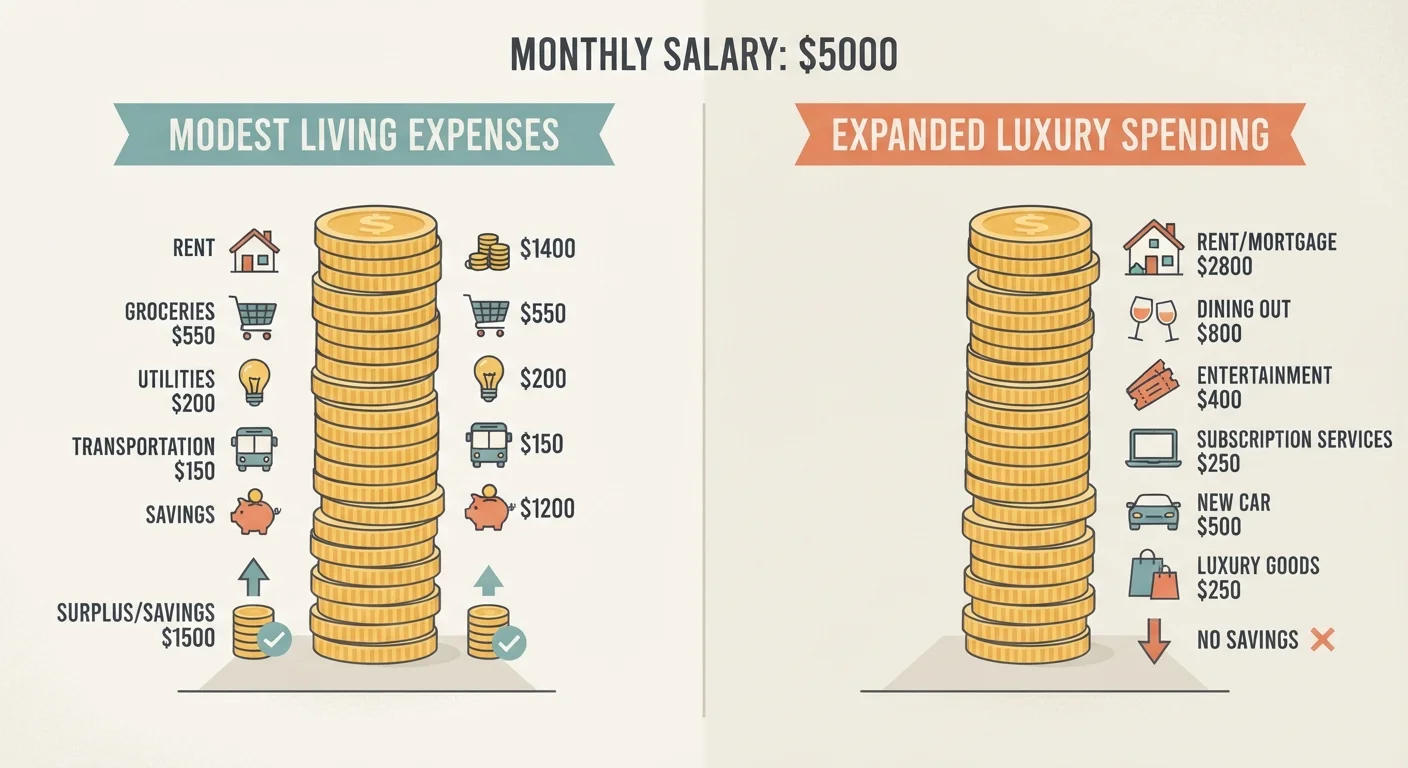
Photo: FaqsDrive.com | Smart Way To Search editorial
—— In This Article
Key Takeaways
- Lifestyle inflation occurs when rising income leads to proportionally higher spending rather than increased savings.
- The pattern often develops gradually through many small, individually reasonable upgrades.
- Earning more does not automatically improve financial security if expenses rise at the same rate.
- Recognizing the pattern early gives you more control over where the extra money actually goes.
- Intentional spending decisions — rather than automatic upgrades — are the most effective counter.
How Lifestyle Inflation Takes Hold
Getting a raise or landing a higher-paying job feels like a clear win. But for many people, the financial breathing room that was supposed to follow never quite materializes. Instead, a new car replaces a perfectly functional old one, dining out becomes the default rather than the treat, and the apartment that felt fine suddenly seems worth upgrading. None of these decisions feels reckless in isolation — and that's exactly what makes lifestyle inflation so hard to spot.
The mechanism is simple: as income increases, so does the baseline of what feels normal or acceptable. A $15 lunch seemed reasonable when you earned $35,000 a year. At $70,000, a $30 lunch at a sit-down spot starts to feel equally justified. Multiply that logic across housing, clothing, subscriptions, and travel, and the math shifts quickly.
What makes this pattern distinct from ordinary budgeting challenges is that it's self-reinforcing. The more accustomed you become to an upgraded lifestyle, the harder it is to scale back — which means financial flexibility actually shrinks even as income grows. For a broader look at how price forces outside your control compound this, see how economic inflation erodes purchasing power.
Lifestyle Inflation vs. Lifestyle Creep
The terms "lifestyle inflation" and "lifestyle creep" are often used interchangeably, and both refer to the same behavioral pattern. "Creep" emphasizes how gradual and incremental the process is — it doesn't require a single large decision, just many small ones over time. Either framing points to the same underlying dynamic: spending rising to match or exceed income growth.
Common Patterns Worth Recognizing
Lifestyle inflation rarely announces itself. It tends to arrive category by category, each upgrade feeling earned and reasonable at the time. Some of the most common patterns include:
- Housing upgrades: Moving to a more expensive home or apartment shortly after income increases, often before evaluating whether the extra cost is proportionate to the benefit.
- Subscription accumulation: Adding streaming services, premium apps, gym memberships, or delivery subscriptions one at a time until the monthly total becomes significant. Hidden recurring costs like these are easy to overlook in a budget.
- Vehicle upgrades: Trading in a reliable car for a newer or more expensive model tied to status rather than need.
- Food and dining: Shifting from cooking most meals at home to defaulting to restaurants, meal kits, or frequent takeout without tracking the cumulative cost.
These categories share a common thread: the spending feels proportionate to a new income level, making it psychologically invisible as a budget problem.
Why It Matters for Long-Term Financial Health
The core financial risk of lifestyle inflation is opportunity cost. Every dollar absorbed by upgraded spending is a dollar unavailable for building an emergency fund, reducing debt, or growing retirement savings. Over years, that gap compounds significantly.
Consider someone who receives a $1,000 monthly raise and, over six months, lets lifestyle upgrades absorb the full amount. By the end of one year, that's $12,000 that could have been redirected toward financial goals. Over a decade, accounting for even modest investment growth, the compounding difference becomes substantial — and this is general math, not a promise of specific outcomes.
~60%
Americans living paycheck to paycheck
Multiple consumer surveys, including reports from LendingClub and others, have consistently found that a majority of U.S. adults report spending most or all of their monthly income regardless of income level.
Less than 4%
U.S. personal savings rate at recent lows
The U.S. Bureau of Economic Analysis has tracked the personal saving rate falling well below historical averages in recent years, suggesting widespread spending-to-income ratios that leave little margin.
The good news is that awareness itself is useful. Recognizing the pattern doesn't require eliminating every upgrade — it requires making those upgrades deliberately rather than automatically. That's a distinction worth internalizing, and it connects directly to the habits covered in building habits that sustain a budget over time.
This article is for general informational and educational purposes only and does not constitute personalized financial advice. Consult a qualified financial professional for guidance specific to your situation.
Frequently Asked Questions

Smart Shopping Editorial Team
Smart Shopping Editorial Team is the collective byline for our editorial team and contributor network. Articles published under this byline or an editorial pen name are researched, written, and reviewed according to our editorial standards for clarity, consistency, and independence before publication.
View author profile