
Hamster Cages: Why Size and Setup Matter More Than You'd Think
A small cage can seriously stress a hamster. Learn what enclosure size, bedding depth, and enrichment your hamster actually needs to thrive.
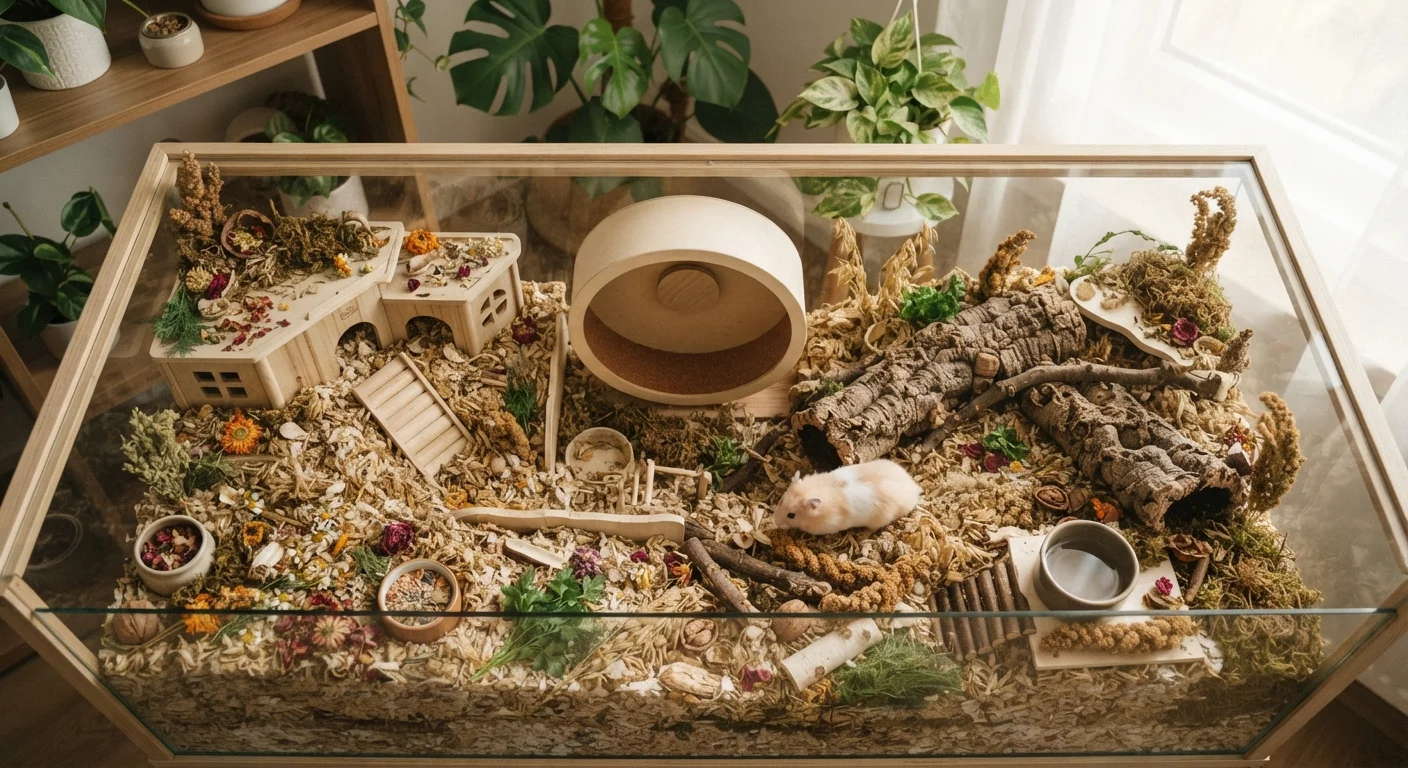
Photo: FaqsDrive.com | Smart Way To Search editorial
—— In This Article
Key Takeaways
- Most hamsters sold in small starter cages are housed in far too little space for their actual needs.
- Hamsters need at least 6–8 inches of bedding depth to support healthy burrowing behavior.
- A running wheel should be large enough that the hamster's back stays flat while running.
- Lack of space and enrichment can lead to repetitive, stress-related behaviors in hamsters.
- Syrian and dwarf hamsters have different size requirements — species matters when choosing a cage.
Why the Right Cage Size Is a Health Issue, Not Just a Preference
Walk into any pet store and you'll find rows of colorful, compact hamster cages. They look cheerful, and the price is often appealing for a first-time owner. But hamster welfare researchers and experienced keepers widely agree: most of those small cages aren't adequate for a hamster's needs.
In the wild, hamsters are surprisingly active animals. Syrian hamsters, for example, can travel several miles in a single night foraging for food. That instinct doesn't disappear in captivity. When a hamster can't roam, burrow, or explore, the result is chronic low-level stress — not just boredom.
Signs of an undersized or under-enriched environment include repetitive bar-biting, constant digging at cage corners, and pacing. These behaviors, called stereotypies, are widely recognized indicators that an animal's behavioral needs are not being met. They're not personality quirks — they're distress signals.
For guidance on choosing the right hamster species before committing to a cage, see our guide to Syrian vs. dwarf hamsters — species size directly affects the enclosure size you'll need.
800+ sq in
Recommended minimum floor space for Syrian hamsters
Many animal welfare and exotic pet organizations cite 800 square inches of unbroken floor space as a baseline minimum for Syrian hamsters — equivalent to roughly a 40-gallon breeder tank.
6–12 in
Recommended bedding depth for burrowing
Hamster welfare advocates and researchers commonly recommend at least 6 inches of substrate, with deeper sections of 10–12 inches where enclosure height allows.
5+ miles
Estimated nightly distance wild hamsters travel
Studies of wild Syrian hamsters have documented travel distances of several miles per night, underlining why an adequate wheel and space are essential in captivity.
Bedding Depth: The Element Most Owners Underestimate
If there's one setup element that surprises new hamster owners, it's bedding depth. Many cages come packaged with an inch or two of substrate — barely enough to absorb waste, let alone support burrowing.
Hamsters are obligate burrowers. Digging and constructing tunnels is a core natural behavior, and denying it causes measurable stress. To allow this properly, aim for at least 6 inches of bedding across the floor, with a section 10–12 inches deep if your enclosure allows.
Safe bedding options include:
- Paper-based bedding — soft, absorbent, and widely available
- Kiln-dried aspen shavings — natural and generally considered safe
Avoid cedar and pine shavings, which release aromatic oils that can irritate a hamster's respiratory system. Also skip cotton floss-style bedding — it can wrap around limbs or be ingested and cause blockages.
Test Your Bedding Depth Before Adding Your Hamster
Before your hamster moves in, fill the enclosure and try pressing your hand into the bedding — it should compress but not bottom out against the cage floor. If you can feel the bottom, add more. Hamsters will immediately begin constructing tunnels, so depth matters from day one.
Wheels, Hides, and the Enrichment Your Hamster Actually Needs
A hamster cage should function as a habitat, not just a container. That means including items that let your hamster express natural behaviors every day.
The Running Wheel
This is non-negotiable. Syrian hamsters need a wheel with at least a 10–11 inch diameter; dwarf hamsters generally need 8 inches. The most important thing to check: when your hamster runs, their back should be flat, not arched. A wheel that's too small forces an unnatural spinal curve and can cause long-term discomfort.
Solid-surface wheels are preferable to wire or mesh styles, which can catch tiny feet and cause injuries.
Hiding Spots
Hamsters are prey animals and feel safest with enclosed spaces to retreat into. At minimum, provide one wooden or ceramic hide large enough for your hamster to turn around in comfortably. Many hamsters will use their hide as a nesting chamber, dragging in bedding to create a snug sleeping area.
Foraging Opportunities
Instead of placing all food in a bowl, scatter some of it through the bedding. This encourages natural foraging behavior and provides meaningful mental stimulation. Tunnels and chew items add further variety.
For a broader look at how to keep small pets mentally active, our small pet enrichment guide covers hamsters alongside other species.
Choosing and Evaluating an Enclosure
When evaluating any cage, prioritize floor space over height. Hamsters live on the ground — vertical height matters far less than horizontal room to roam. A tall cage with a small footprint may look impressive but won't serve your hamster well.
Common enclosure types include:
- Aquariums and terrariums — excellent for holding deep bedding; good ventilation is essential
- Wire-topped cages with deep bases — allow airflow while containing substrate
- Bin cages — large plastic storage bins modified with ventilation panels; a popular DIY option that can offer generous floor space at lower cost
Avoid enclosures with very narrow bar spacing that could trap limbs, or those with multiple small platforms as the primary floor space — hamsters don't naturally climb like gerbils or rats.
Whatever enclosure type you choose, the guiding principle remains the same: more space, deeper bedding, and thoughtful enrichment produce a calmer, healthier hamster. A well-set-up cage isn't a luxury — it's the foundation of responsible hamster ownership.
This article provides general educational information about hamster housing and is not a substitute for advice from a qualified exotic animal veterinarian. If you notice signs of illness or significant behavioral changes in your hamster, consult a vet with small mammal experience.
Frequently Asked Questions

Pets & Animals Editorial Team
Pets & Animals Editorial Team is the collective byline for our editorial team and contributor network. Articles published under this byline or an editorial pen name are researched, written, and reviewed according to our editorial standards for clarity, consistency, and independence before publication.
View author profile