
Crate Training Done Right
A step-by-step walkthrough for introducing your dog to a crate humanely, so they see it as a safe space rather than a punishment.
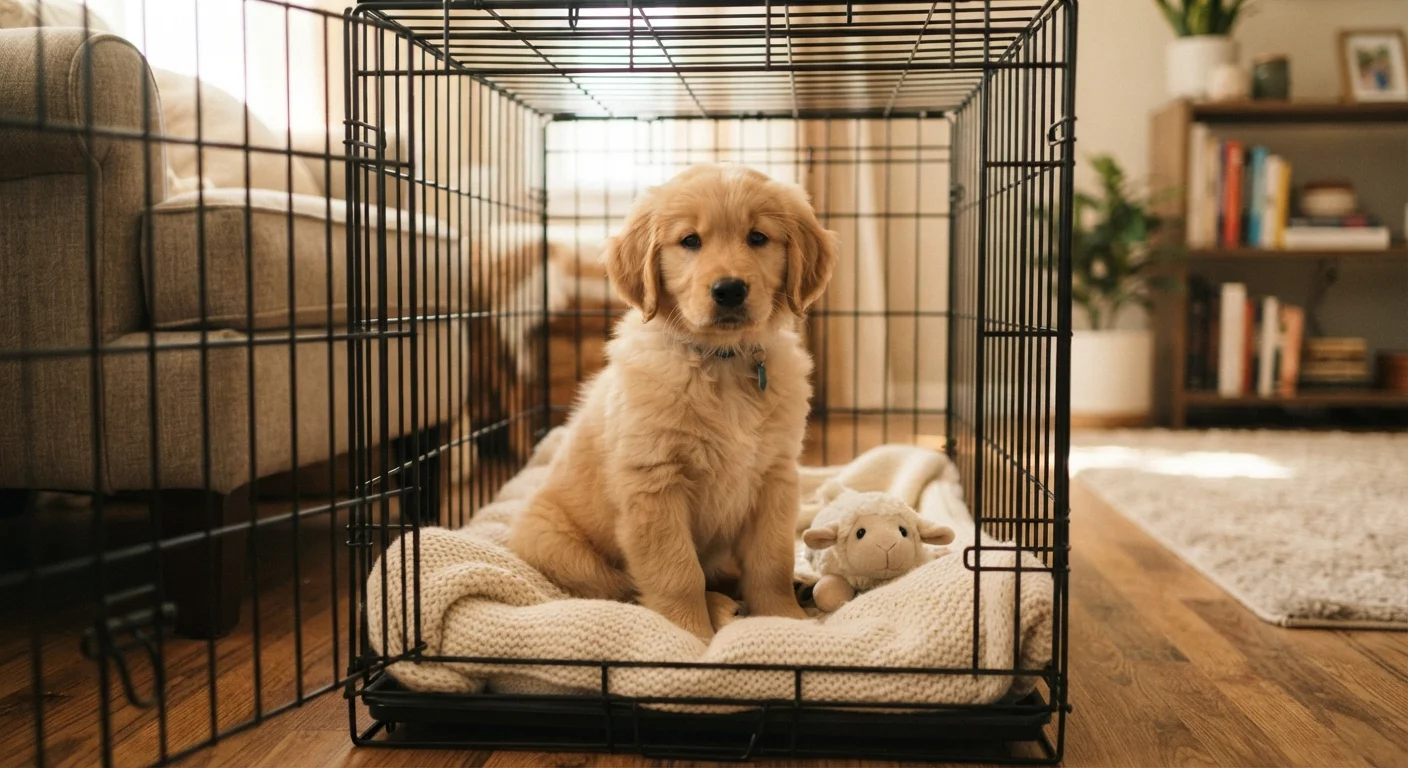
Photo: FaqsDrive.com | Smart Way To Search editorial
—— In This Article
Key Takeaways
- A crate mimics a dog's natural instinct to seek a small, safe den — it is not a punishment.
- Introducing the crate gradually over days or weeks produces lasting comfort.
- Never force your dog into the crate; positive associations built slowly are more durable.
- Crate time should be age-appropriate — puppies cannot hold their bladder as long as adult dogs.
- Choosing the right crate size is critical; too large can undermine house-training progress.
Why Crate Training Works
Dogs are descended from den-dwelling animals. A properly sized crate taps into that instinct, giving your dog a predictable, enclosed space that feels safe rather than isolating. Far from being cruel, crate training — done humanely — can reduce anxiety, speed up house-training, and prevent destructive behavior when you cannot supervise directly.
The key word is humanely. A crate becomes a problem only when it is used as punishment, when the dog is left inside for too long, or when the introduction is rushed. This guide walks you through each phase so neither of those mistakes happens.
If you are also navigating the early days of dog ownership, our guide to bringing a dog home for the first time covers the broader context that crate training fits into. And if you are curious about training myths — like whether a crate is somehow unkind — common dog training myths debunked addresses those head-on.
What you will need
What You Will Need
Before starting, gather the right tools. Skimping on crate size or skipping comfort items will slow the process considerably.
Dog Crate
The primary containment space; should be large enough for the dog to stand, turn around, and lie down comfortably, but not so large that a puppy can eliminate in one corner and sleep in another.
Soft Crate Bedding or Mat
Makes the crate floor comfortable and encourages the dog to view the space as a resting spot rather than a bare enclosure.
High-Value Training Treats
Used to build positive associations with entering and staying in the crate; small, soft pieces work best to keep sessions moving.
Chew Toy or Food-Stuffed Puzzle
Gives the dog a mentally engaging activity inside the crate, extending calm time without frustration.
Crate Cover or Blanket
Draping a blanket over three sides of a wire crate creates a more den-like, visually enclosed environment that many dogs find calming.
Step-by-Step: Introducing the Crate
Work through these steps at your dog's pace. Some dogs move from Step 1 to Step 6 in a few days; others need a week or more per phase. Both timelines are normal.
Place the Crate and Let Curiosity Do the Work
Set the crate in a room where the family spends time — a living room or bedroom works well. Leave the door open and allow your dog to sniff and explore it on their own terms. Do not coax or push. Place a treat or two just inside the entrance so the dog discovers them independently. Repeat over a few hours or days until the dog approaches the crate without hesitation.
Feed Meals Near — Then Inside — the Crate
Begin feeding your dog's regular meals beside the crate. After one or two meals with no anxiety, move the bowl just inside the entrance. Gradually move it further back over several meals until the dog eats comfortably at the rear of the crate with the door still open.
Close the Door Briefly — Then Open It
Once your dog eats calmly inside the crate, close the door gently while they finish their meal. Open it immediately when they are done. Over the following meals, leave the door closed for a minute or two after the meal ends, then gradually extend that time by a minute or two each session.
Build Up Time With You in the Room
Practice closing the crate door while you sit nearby reading or watching TV. Use a treat-stuffed toy to keep the dog occupied. Start with five minutes and increase to 30 minutes over several sessions. Your presence during this phase reassures the dog that being crated does not mean being abandoned.
Practice Short Absences
Once the dog rests calmly for 30 minutes while you are in the room, begin leaving briefly — step outside or into another room for five to ten minutes. Return calmly without making a fuss. Gradually extend absences to 30 minutes, then an hour. At this stage, crating during your actual departures is reasonable.
Introduce Overnight Crating
Place the crate in or near your bedroom for nighttime crating — this is especially important for puppies who need to hear and smell you to feel secure. Puppies generally need a bathroom break every few hours overnight; plan for it. Adult dogs with established bladder control can typically sleep through the night once comfortable in the crate.
Make the Crate Part of Daily Life
Once your dog is comfortable, keep the crate available with the door open even when it is not being used for training. Many dogs choose to nap inside on their own, which is a sign the training has succeeded. A crate that stays out becomes a retreat, not a restriction.
Troubleshooting Common Setbacks
Even with the best approach, setbacks happen. Here is how to handle the most common ones:
- Whining at night: Confirm the dog does not need a bathroom break first. If the bladder is fine, wait for a brief pause in the whining before opening the crate — opening during active crying accidentally rewards the behavior.
- Refusing to enter: Go back to an earlier phase. Toss high-value treats inside without closing the door for several days until enthusiasm returns.
- Excessive drooling or panic: This may indicate separation anxiety rather than crate resistance. Consult a certified professional dog trainer or a veterinary behaviorist before continuing.
Consistency across everyone in the household matters enormously. If one person lets the dog skip the crate at bedtime while another enforces it, the training signal becomes confusing. For a broader look at responsible dog ownership — including setting household routines — see our complete dog ownership guide.
Do Not Use the Crate as Punishment
Sending a dog to the crate as a consequence for bad behavior teaches them to associate it with negative emotions, which directly undermines all the trust you have built. The crate should always be a neutral-to-positive space. If your dog needs a time-out, use a calm, matter-of-fact approach — not frustration or anger.

Pets & Animals Editorial Team
Pets & Animals Editorial Team is the collective byline for our editorial team and contributor network. Articles published under this byline or an editorial pen name are researched, written, and reviewed according to our editorial standards for clarity, consistency, and independence before publication.
View author profile