
Laminate Flooring vs. Hardwood: What Actually Holds Up Over Time
Both look great at install — but moisture, foot traffic, and refinishing potential tell a different story. Here's how they compare over the long run.
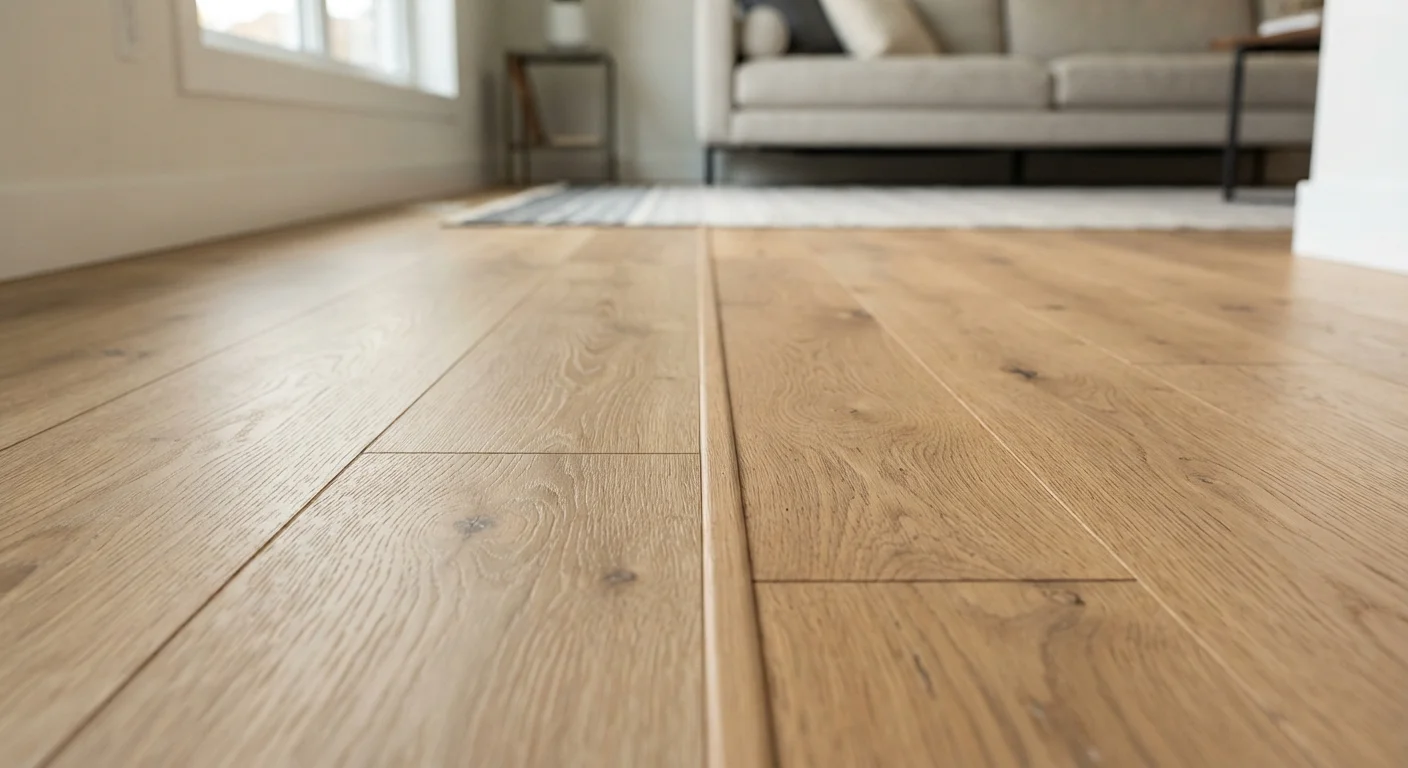
Photo: FaqsDrive.com | Smart Way To Search editorial
—— In This Article
Key Takeaways
- Hardwood can be sanded and refinished multiple times, dramatically extending its lifespan.
- Laminate resists scratches better day-to-day but cannot be repaired once the surface layer wears through.
- Moisture is laminate's biggest weakness; hardwood can also warp but is more forgiving when properly sealed.
- Hardwood typically adds more resale value to a home than laminate flooring.
- Laminate is generally less expensive to purchase and install, making it attractive for budget-conscious projects.
How Each Floor Is Built
Understanding what these floors are made of helps explain how they behave over time. Hardwood flooring is milled from solid timber — typically oak, maple, or hickory — and ranges from ¾ inch to thinner engineered planks that bond a real wood veneer over plywood layers. Because it's natural wood all the way through, a solid hardwood floor can be sanded down and refinished repeatedly over its lifetime.
Laminate flooring is a manufactured product. It consists of a high-density fiberboard (HDF) core topped with a photographic image layer — a high-resolution print of wood grain — sealed beneath a clear aluminum oxide wear layer. That wear layer is what gives laminate its scratch resistance. However, because the visible "wood" is just a printed image, there is no material to sand away and resurface if the surface is damaged.
Durability: Scratches, Dents, and Daily Wear
On a day-to-day basis, laminate often wins the scratch battle. The aluminum oxide wear layer is rated using the AC system, with AC3 suitable for most residential use and AC4–AC5 designed for heavy residential or light commercial traffic. Pet claws, dragged furniture, and dropped items leave less visible damage on laminate than on unfinished or lightly finished hardwood.
Hardwood, particularly softer species like pine or cherry, dents and scratches more readily. However, here's the critical difference: hardwood can be repaired. A professional refinish — or even a DIY sand-and-restain on solid floors — can make a worn hardwood floor look brand new. Laminate cannot be refinished. Once the wear layer is compromised, the floor must be replaced.
Choose Harder Wood Species for Busy Homes
Harder wood species such as white oak, hickory, and Brazilian cherry score higher on the Janka hardness scale and resist everyday denting far better than softer options like pine or cherry. If you're choosing hardwood for a busy household with kids or pets, species selection matters as much as finish quality. Ask your flooring supplier for the Janka rating before committing to a species.
Harder wood species such as white oak, hickory, and Brazilian cherry score higher on the Janka hardness scale and resist everyday denting far better than softer options. If you're choosing hardwood for a busy household, species selection matters as much as finish quality.
Moisture and Where You Can Install Each
This is where the two materials diverge most sharply. Solid hardwood and moisture are a problematic combination. Excessive humidity causes wood to expand; dry conditions cause it to contract. In areas with significant seasonal humidity swings, poorly acclimatized or unprotected hardwood can cup, gap, or warp. That said, properly sealed hardwood in a climate-controlled home holds up well in living rooms, bedrooms, and dining rooms for decades.
Laminate's HDF core is even more vulnerable to standing water. A spill that sits too long — or a slow appliance leak — can cause the core to swell irreversibly. Many laminate products are marketed as "water-resistant," meaning the surface sheds moisture briefly, but sustained exposure remains a risk. Neither material is recommended for full bathrooms or laundry rooms. For kitchens, both require careful installation and prompt cleanup of spills.
Watch for Slow Leaks Beneath Both Floor Types
Appliance leaks from dishwashers, refrigerators, or washing machines are a leading cause of floor damage in kitchens and laundry areas. Both laminate and hardwood can sustain significant hidden damage before visible warping appears. Inspect supply lines periodically and address any moisture under your flooring promptly to prevent structural damage to the subfloor as well.
Lifespan, Refinishing, and Long-Term Value
A well-maintained solid hardwood floor can last 50 to 100 years. It may be refinished every 7 to 10 years depending on traffic, with solid ¾-inch planks typically allowing 3 to 5 complete sanding cycles over a lifetime. Engineered hardwood allows fewer refinishes due to its thinner veneer layer.
Quality laminate floors typically carry manufacturer warranties ranging from 10 to 30 years, and realistic lifespans of 15 to 25 years under normal residential use. After that, the floor generally needs full replacement — there's no option to renew it in place.
| Laminate | Hardwood | |
|---|---|---|
| Scratch resistance | High (wear layer) | Moderate (species-dependent) |
| Moisture tolerance | Low — swells with sustained moisture | Low — warps without sealing |
| Refinishable | No | Yes — multiple times |
| Typical lifespan | 15–25 years | 50–100 years |
| Upfront cost | Lower | Higher |
| Resale value impact | Moderate | Strong |
| DIY installation | Easier (click-lock) | More difficult |
From a home resale perspective, real hardwood consistently ranks as a desirable feature among buyers. Laminate is generally viewed as a functional but lower-tier finish. Just as the sheen of an interior paint finish signals quality — as explored in our guide to interior paint finishes — flooring material communicates lasting value to future buyers.
Cost and Installation Considerations
Laminate typically costs less per square foot for both materials and installation. Its click-lock installation system makes it accessible for confident DIYers, and floating floors don't require adhesive or nailing. Hardwood installation — especially nail-down or glue-down methods — generally requires more skill and often professional help. Acclimating hardwood to your home's humidity before installation is essential and adds time to the project.
Factor in long-term costs when comparing. Hardwood's refinishing costs over decades can add up, but they're far less than replacing an entire floor. If you're renovating a space you plan to occupy for many years, hardwood's upfront premium often pays off. For short-term stays or rental properties, laminate's lower cost and adequate durability can make more practical sense.

Home & Garden Editorial Team
Home & Garden Editorial Team is the collective byline for our editorial team and contributor network. Articles published under this byline or an editorial pen name are researched, written, and reviewed according to our editorial standards for clarity, consistency, and independence before publication.
View author profile