
Caulk vs. Weatherstripping: Sealing Your Home Against Drafts
Two common air-sealing methods, two different jobs. Find out which one belongs around windows, doors, and other gaps in your home.
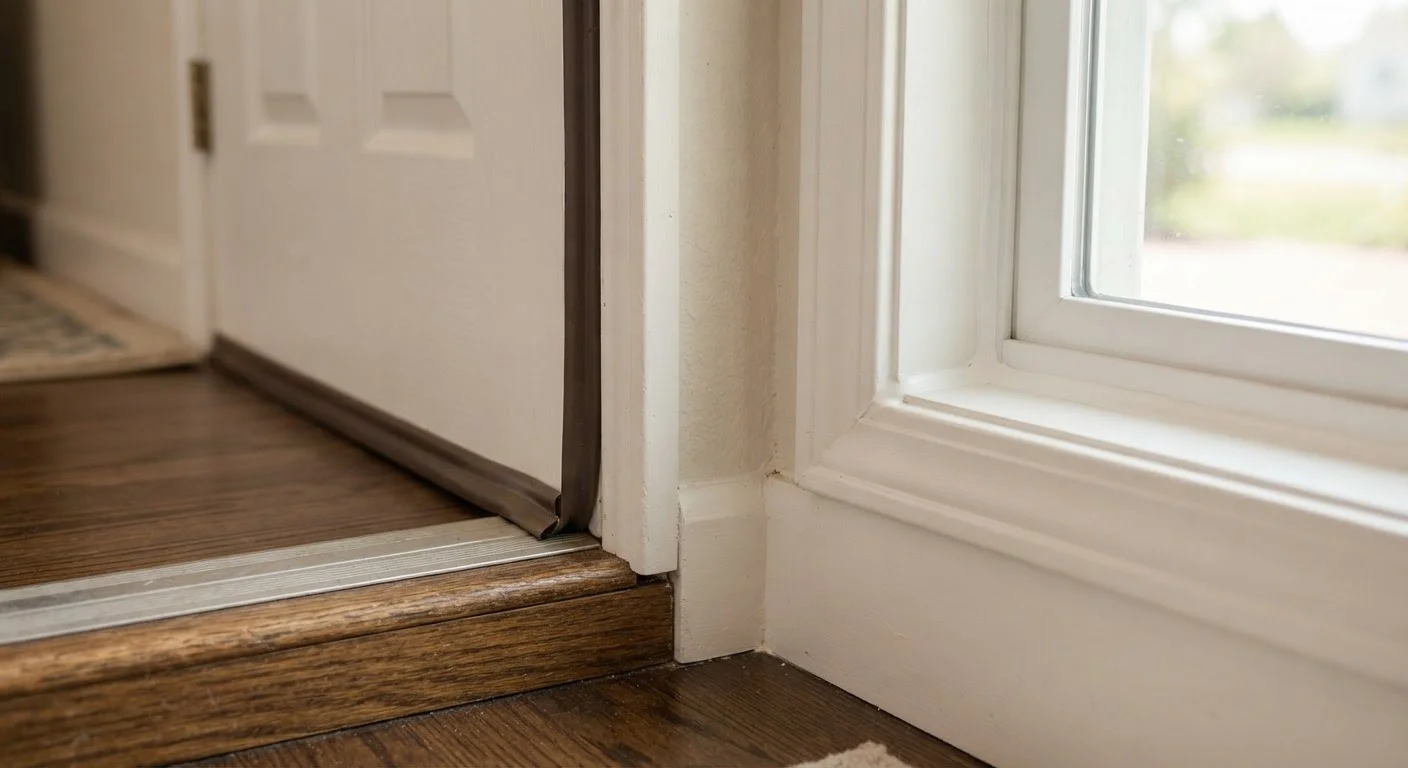
Photo: FaqsDrive.com | Smart Way To Search editorial
—— In This Article
Key Takeaways
- Caulk is designed for stationary gaps; weatherstripping handles moving parts like door edges and operable windows.
- Using the wrong product in the wrong place leads to premature failure and wasted effort.
- Both materials are inexpensive and well-suited to DIY installation without special tools.
- Combining caulk and weatherstripping on the same door or window is often the correct approach.
- Air sealing is one of the most cost-effective ways to reduce household energy loss.
Why Air Sealing Matters
Drafts aren't just uncomfortable — they represent real energy loss. The U.S. Department of Energy has noted that air leaks in a typical home can account for a significant portion of heating and cooling costs. Before reaching for insulation, addressing the actual gaps where outside air enters is often the more immediate fix.
Caulk and weatherstripping are the two main tools for this job, and they are genuinely complementary — not interchangeable. Understanding the difference comes down to one simple question: does that gap move?
For a broader look at where heat escapes in your home beyond just gaps and cracks, see our full-picture insulation overview.
| Criterion | Caulk | Weatherstripping |
|---|---|---|
| Best application | Fixed, stationary gaps and cracks | Moving parts — doors, operable windows |
| Flexibility after curing | Firms up; minimal flex | Compresses and rebounds repeatedly |
| Typical locations | Window frames, door trim, baseboards | Door stops, sweeps, sash edges |
| Skill level required | Beginner-friendly with practice | Very beginner-friendly |
| Tool needed | Caulk gun, smoothing tool | Scissors or utility knife, tape measure |
| Lifespan (typical) | 5–20 years depending on product | 1–5 years depending on material and use |
| Paintable | Yes (latex types) | Generally no |
Where Each Product Belongs
Caulk is a flexible sealant — usually silicone, latex, or a blend — that is applied as a paste and cures into a firm bead. It excels at sealing joints between two surfaces that are permanently fixed to each other, such as:
- Where a window frame meets the interior wall or exterior siding
- Where door trim (called casing) meets the wall surface
- Gaps around pipes, wires, or conduits that pass through walls
- Cracks along baseboards or between the floor and wall
Because cured caulk is rigid, it will crack and fail if applied to a surface that flexes or moves repeatedly. Never apply caulk to the edges of a door itself or to a window sash that opens.
Weatherstripping is designed for exactly that scenario — moving parts. It comes in several forms: foam tape, V-strip (tension seal), door sweeps, and bulb seals. Each type is chosen based on how much friction, compression, and wear the location will experience. Common placements include:
- The door stop (the strip your door presses against when closed)
- The bottom of a door, via a door sweep or threshold seal
- The top and sides of operable casement or double-hung windows
25–30%
Heating/cooling energy lost to air leaks
The U.S. Department of Energy estimates that air infiltration through gaps and cracks can account for 25–30% of a home's heating and cooling energy use.
$200–$600
Estimated annual savings from air sealing
ENERGY STAR has reported that sealing leaks and adding insulation can save homeowners a meaningful portion of their annual energy bills, though savings vary widely by home size and climate.
How to Apply Each One Correctly
Applying caulk is straightforward with a little preparation. Clean and dry the surface, then cut the caulk tube tip at a 45-degree angle. Apply steady pressure to the caulk gun while moving it along the gap at a consistent pace. Smooth the bead with a damp fingertip or a caulk tool, then allow it to cure according to the manufacturer's instructions before painting or exposing it to moisture.
Key tip: Gaps wider than about half an inch may need a foam backer rod inserted first to give the caulk something to bond to and prevent it from sinking inward.
Installing weatherstripping varies by type. Adhesive foam tape — the most beginner-friendly option — simply peels and sticks along the door stop. V-strip is folded into a tension seal and tacked or glued into the channel between the door and frame. Door sweeps are screwed to the bottom interior face of the door. In all cases, measure the full perimeter before cutting, and test the door's closure to confirm a snug but not resistant fit.
Common Mistakes to Avoid
Even experienced DIYers run into the same pitfalls with air sealing. Here are the most frequent errors:
- Caulking a moving joint: The caulk will crack within one season. If the surface moves, use weatherstripping.
- Skipping surface prep: Caulk won't bond properly to dirty, wet, or previously painted surfaces. Clean and dry before applying.
- Over-compressing foam weatherstripping: If the door is too hard to close, the seal is too thick. Use a thinner profile or a more durable material like V-strip.
- Ignoring the threshold: The gap at the bottom of a door is often the largest single air leak. A door sweep or adjustable threshold seal makes a noticeable difference.
- Using interior-only caulk outdoors: Standard latex caulk breaks down in UV light and temperature swings. For exterior applications, use a product rated for outdoor use.
This article is for general informational purposes. Always verify local building codes before beginning home improvement projects, and consult a licensed professional for work involving structural, electrical, or gas systems.

Home & Garden Editorial Team
Home & Garden Editorial Team is the collective byline for our editorial team and contributor network. Articles published under this byline or an editorial pen name are researched, written, and reviewed according to our editorial standards for clarity, consistency, and independence before publication.
View author profile