
Plant-Based Protein Sources and How They Stack Up
Legumes, nuts, seeds, and grains all contribute protein. See how plant sources compare on completeness and quantity.
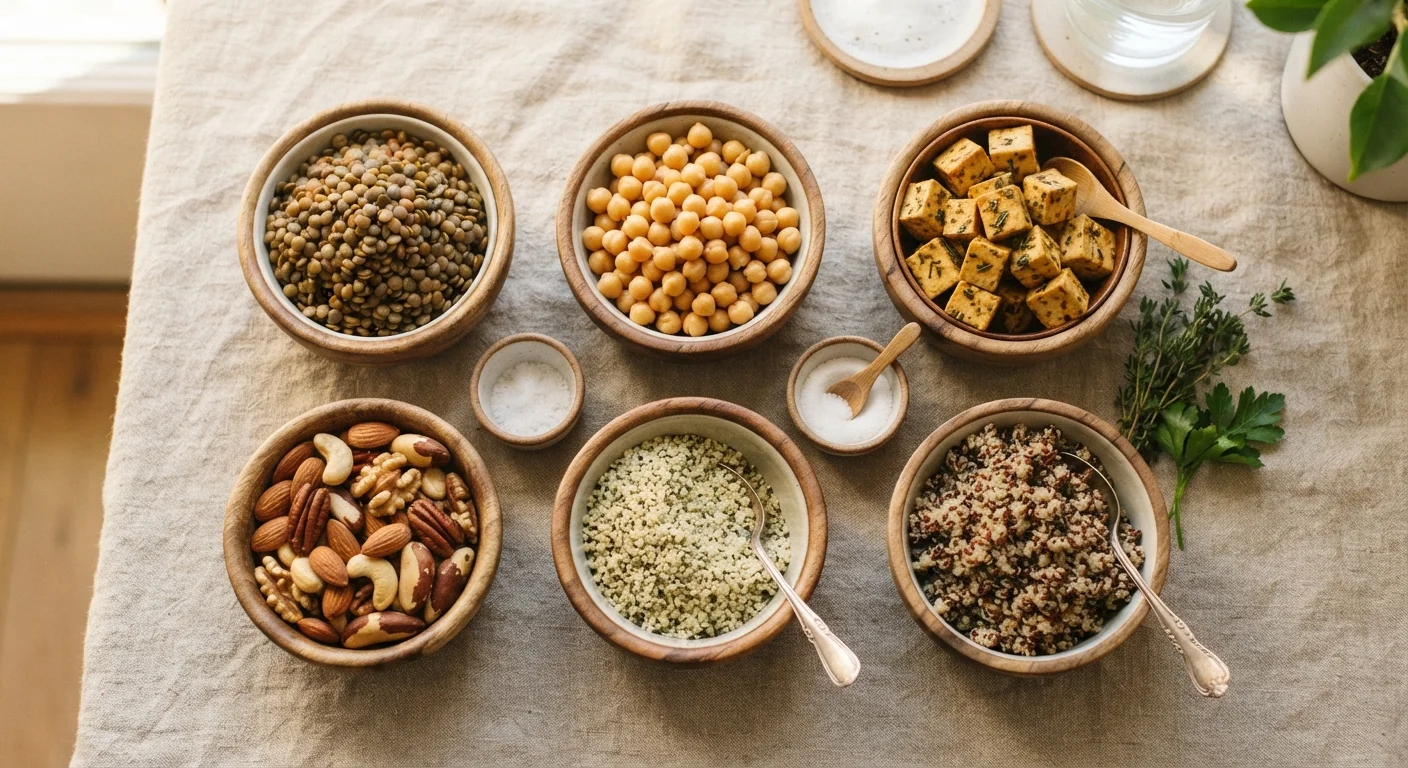
Photo: FaqsDrive.com | Smart Way To Search editorial
—— In This Article
Key Takeaways
- Soy foods, quinoa, and hemp seeds are among the few plant sources that supply all nine essential amino acids.
- Legumes tend to deliver the highest protein per serving among common plant food groups.
- Eating a variety of plant proteins throughout the day naturally covers the full amino acid spectrum.
- Complementary pairings like beans and rice work well, but they don't need to happen at the same meal.
- A registered dietitian can offer personalized guidance if you have specific health or dietary goals.
What Makes a Protein 'Complete'?
Protein is assembled from amino acids - around 20 different compounds the body uses to build and repair tissue, support immune function, produce enzymes, and carry out a wide range of daily processes. Nine of these are classified as essential because the body cannot manufacture them on its own; they must come from food. A protein source that delivers all nine essential amino acids in adequate proportions is called a complete protein.
Among plant foods, soy products - tofu, tempeh, and edamame - are well established as complete proteins. Quinoa and hemp seeds also supply all nine essential amino acids, though concentrations vary. Most other plant proteins are incomplete: legumes tend to be relatively low in the amino acid methionine, while most grains fall short on lysine.
"Incomplete" doesn't mean "inadequate," however. The Academy of Nutrition and Dietetics has noted that a well-varied plant-based diet can meet protein needs for most healthy adults. For an accessible overview of how protein fits into everyday eating, see our guide to building a balanced plate.
Comparing the Major Plant Protein Groups
Each plant protein category brings a distinct nutritional profile. The comparison below highlights how legumes, soy foods, nuts and seeds, and whole grains measure up across the criteria most relevant to everyday eating decisions - from amino acid completeness to the supporting nutrients they bring to the table.
| Legumes | Soy Foods | Nuts & Seeds | Whole Grains | |
|---|---|---|---|---|
| Complete protein? | No (most varieties) | Yes | Hemp & chia: yes; others vary | No (quinoa: yes) |
| Relative protein per serving | Moderate to high | High | Low to moderate | Low to moderate |
| Key complementary nutrients | Fiber, iron, folate | Calcium, iron, healthy fats | Healthy fats, zinc, magnesium | B vitamins, fiber, manganese |
| Typical amino acid gap | Low in methionine | None significant | Varies by source | Low in lysine |
| Culinary versatility | High | High | Moderate to high | High |
Among these groups, legumes and soy foods tend to deliver the greatest protein density per serving. Nuts, seeds, and whole grains generally contribute lower but still meaningful protein amounts, while providing healthy fats, fiber, and micronutrients that complement the other groups well.
The Power of Pairing Plant Proteins
Because most plant proteins are incomplete on their own, one practical strategy is combining complementary sources - foods whose amino acid strengths offset each other's gaps. Beans and rice is the classic example: legumes are rich in lysine but lower in methionine, while grains offer the reverse. Together, they cover what neither provides alone. Other natural pairings include hummus with whole-wheat pita or lentil soup alongside a whole-grain roll.
Soy foods sidestep the pairing question entirely, since they supply all nine essential amino acids on their own - part of what makes tofu, tempeh, and edamame popular anchors in plant-based eating.
Earlier nutrition guidance suggested these combinations had to happen within the same meal. More current thinking from nutrition researchers indicates the body draws on amino acids consumed throughout the day, making it less critical to pair sources at every sitting. A relaxed approach focused on variety is both easier to sustain and nutritionally well-supported.
Keep It Simple With Variety
Instead of focusing on perfect pairings at every meal, aim to rotate among different plant protein groups throughout your day. Breakfast might include oats topped with hemp seeds, lunch a lentil soup, and dinner a tofu stir-fry with brown rice. This kind of natural rotation covers the full spectrum of essential amino acids without any need for careful tracking or calculation.
Building Your Plant Protein Routine
No single plant food "wins" across every measure - and that's actually good news. Building a protein-sufficient diet is less about finding one superfood and more about rotating among several dependable sources. Legumes bring dense protein and fiber; soy foods offer complete amino acid coverage; nuts and seeds deliver healthy fats alongside minerals like zinc and magnesium; whole grains provide B vitamins and steady energy throughout the day.
Rotating through these groups across the week - in soups, grain bowls, salads, stir-fries, and snacks - naturally creates the amino acid variety that nutrition research supports. If you have specific health goals, dietary restrictions, or existing medical conditions, consulting a registered dietitian is the best path to guidance tailored to your individual needs.
This article provides general nutrition information and education only. It is not a substitute for personalized advice from a qualified healthcare or nutrition professional.

Health & Wellness Editorial Team
Health & Wellness Editorial Team is the collective byline for our editorial team and contributor network. Articles published under this byline or an editorial pen name are researched, written, and reviewed according to our editorial standards for clarity, consistency, and independence before publication.
View author profile