
Building a Balanced Plate: A Starting Point for Everyday Eating
A practical introduction to portioning food groups at meals without rigid rules or calorie counting.
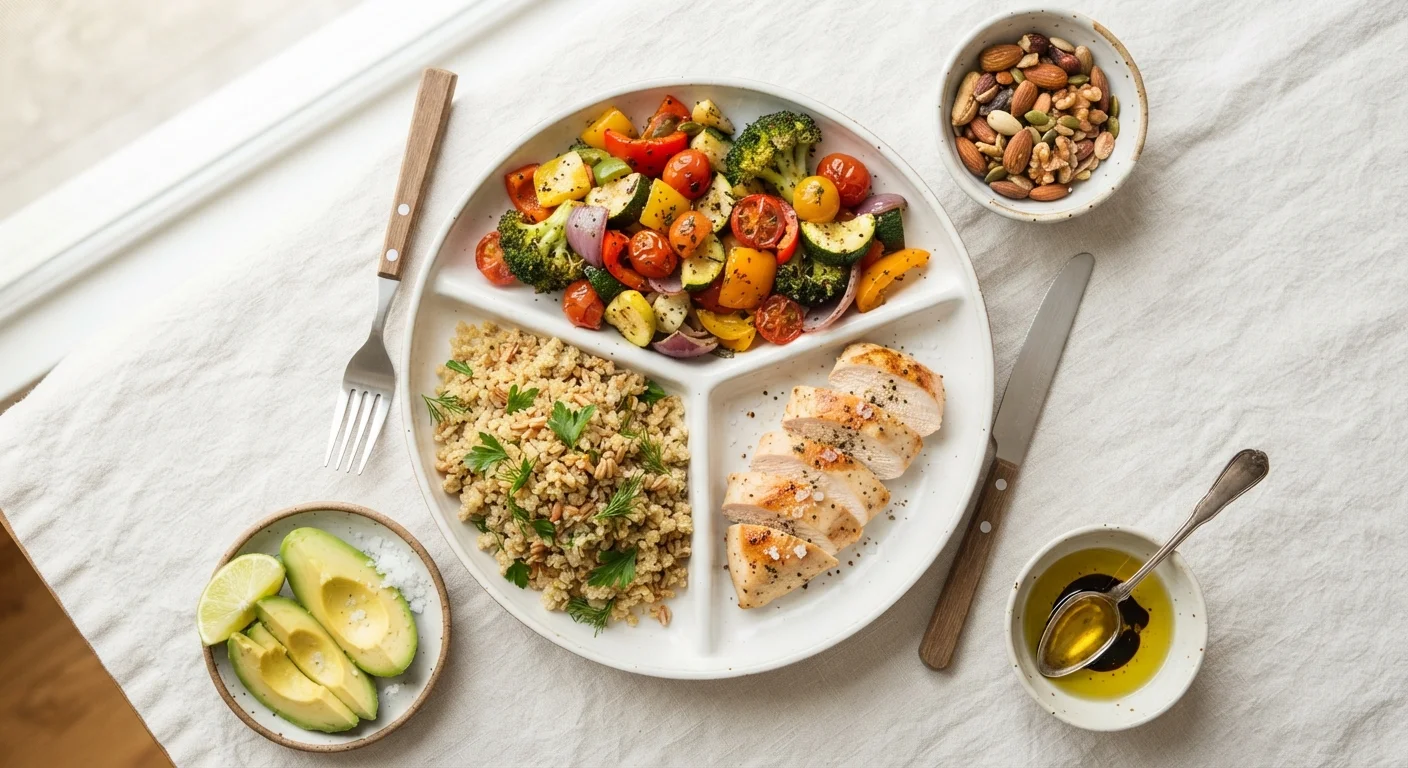
Photo: FaqsDrive.com | Smart Way To Search editorial
—— In This Article
Key Takeaways
- A balanced plate is built around proportions, not calorie counts or rigid dietary rules.
- Vegetables and fruit ideally fill about half the plate, with whole grains and protein splitting the rest.
- Healthy fats are a valuable, not optional, part of a well-rounded meal.
- The plate method adapts naturally to bowls, wraps, soups, and mixed dishes - not just formal plated meals.
- Nutrition patterns across weeks and months matter far more than any single meal.
What a Balanced Plate Really Means
A balanced plate isn't a rigid formula - it's a flexible way of thinking about how different foods work together to nourish your body at each meal. Rather than tracking grams or counting calories, the goal is simply to make sure a variety of food groups show up regularly throughout your day.
Nutrition researchers and organizations like the USDA point to proportion-based thinking as a practical, sustainable starting point for most healthy adults. If eating well has felt complicated or overwhelming, this article introduces one of the most widely used frameworks - the plate method - and shows how to apply it at everyday meals, without prescribing exactly what you must eat.
The Food Groups Worth Making Room For
Plate method
A visual tool for portioning meals by dividing a plate into sections for different food groups, without needing to measure or count calories.
Whole grains
Grains that retain their bran and germ layers - such as brown rice, oats, and whole-wheat bread - providing fiber and nutrients that are largely removed in refined grain products.
Dietary fiber
A type of carbohydrate found in plant foods that the body cannot fully digest. It supports digestive health and contributes to feelings of fullness after eating.
Healthy fats
Fats primarily from plant and fish sources - such as olive oil, nuts, and avocado - that nutrition research associates with cardiovascular and brain health.
Legumes
A family of plants including beans, lentils, chickpeas, and peas. They are rich in protein, fiber, and a range of vitamins and minerals, making them a versatile food group.
Macronutrients
The three main energy-providing nutrients found in food: carbohydrates, protein, and fat. A balanced plate aims to include all three in reasonable proportions at each meal.
Four broad categories form the foundation of most balanced-eating frameworks:
- Vegetables and fruit supply vitamins, minerals, and dietary fiber. Choosing a variety of colors is a simple way to capture a broader range of nutrients.
- Whole grains - such as brown rice, oats, quinoa, or whole-wheat bread - provide sustained energy and fiber that supports digestive health.
- Protein foods - including legumes, eggs, fish, poultry, and plant-based options like tofu - support muscle maintenance and help you feel satisfied after meals.
- Healthy fats from sources like olive oil, nuts, seeds, and avocado support nutrient absorption and heart health.
Dairy or fortified plant-based alternatives are frequently noted as useful sources of calcium and vitamin D, though they aren't required at every meal for a plate to be balanced.
A Simple Visual Framework to Get Started
The plate method translates these food groups into a simple visual guide - no measuring tools required. Picture a standard dinner plate:
- Fill roughly half with vegetables and fruit.
- Reserve about one quarter for a whole grain or starchy vegetable, such as sweet potato.
- Use the remaining quarter for a protein food.
- Add a small amount of healthy fat - a drizzle of olive oil, a handful of nuts, or a few avocado slices.
The USDA's MyPlate initiative uses a similar proportional model. Harvard's Healthy Eating Plate, developed independently by nutrition researchers, echoes the same structure while placing additional emphasis on whole grains and healthy oils over refined carbohydrates. Both function as starting points you can adapt to your own food preferences and cultural traditions - not strict rules to follow flawlessly.
Making It Work at Real-World Meals
Keep versatile staples on hand
Stocking a few reliable items - canned legumes, frozen vegetables, a whole grain like oats or brown rice, and a bottle of olive oil - means you can assemble a roughly balanced plate even on the busiest evenings. Variety within each food group matters more than sourcing anything exotic or expensive.
Meals don't always arrive on a dinner plate, and the framework doesn't require them to. A bowl of oatmeal topped with berries and walnuts covers several food groups at once. A grain bowl with roasted vegetables, chickpeas, and a tahini drizzle works equally well. The plate method's principles translate naturally to wraps, soups, stir-fries, and sheet-pan dinners.
When stocking your kitchen, keeping a variety of food groups on hand makes balanced meals easier to pull together without daily planning effort. It's also worth knowing that small everyday eating habits - like skipping meals or eating while distracted - can quietly erode even well-intentioned nutrition patterns.
USDA MyPlate
The U.S. Department of Agriculture's MyPlate initiative offers a free interactive visual guide and practical meal-building tips organized by food group - a useful companion to the plate method concepts covered here.
Harvard Healthy Eating Plate
Developed independently by nutrition researchers at Harvard T.H. Chan School of Public Health, this resource explains proportional eating with evidence-based detail on food quality, healthy fats, and whole grains.
Dietary Guidelines for Americans
The federal government's science-based nutrition guidelines, updated every five years, provide the research foundation behind mainstream recommendations on food groups, eating patterns, and nutrient needs.
Perfection Isn't the Goal
Special populations need tailored guidance
General frameworks like the plate method are intended for healthy adults and are not appropriate as standalone guidance for children, pregnant or nursing individuals, older adults with complex needs, or anyone managing a chronic health condition. If any of these apply to you or someone in your care, please consult a registered dietitian or qualified healthcare provider before making significant dietary changes.
No single meal defines your overall health - nutritional patterns across weeks and months are what research consistently points to as meaningful. Some meals will be more balanced than others, and that's entirely normal. Think of the plate method as a compass, not a contract.
To take the next step, sustainable long-term eating habits offer a natural continuation. If calorie counting has ever seemed like the only valid approach, a closer look at energy balance may offer useful perspective on what that framework can and cannot tell you.
This article provides general nutrition information for educational purposes only and is not a substitute for personalized advice from a registered dietitian or qualified healthcare provider. Please consult a healthcare professional before making significant changes to your diet, especially if you have an existing health condition.
Frequently Asked Questions

Health & Wellness Editorial Team
Health & Wellness Editorial Team is the collective byline for our editorial team and contributor network. Articles published under this byline or an editorial pen name are researched, written, and reviewed according to our editorial standards for clarity, consistency, and independence before publication.
View author profile