
Eating Patterns Around the World: What Nutrition Science Observes
Mediterranean, Japanese, and other traditional diets are often studied for health outcomes. Here's what researchers see.
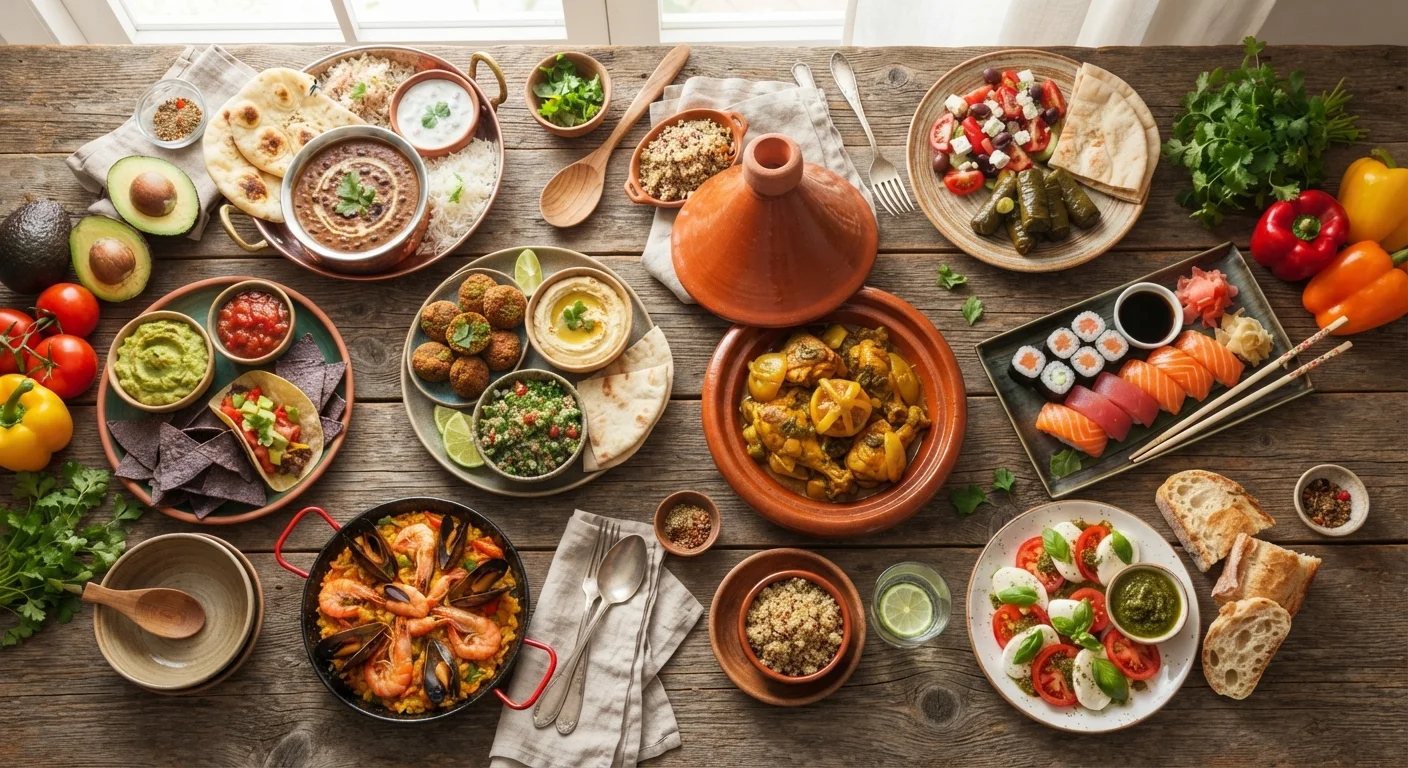
Photo: FaqsDrive.com | Smart Way To Search editorial
—— In This Article
Key Takeaways
- Several traditional diets share common traits: abundant plants, minimal processing, and moderate portions.
- No single world diet is universally 'best' - cultural context, food access, and individual health matter greatly.
- Nutrition science observes patterns across populations; individual needs always warrant personalized guidance.
- Shared habits like eating socially and avoiding ultra-processed foods appear across many studied diets.
- Researchers caution that isolated nutrients rarely explain a diet's full health association - the whole pattern matters.
Why Researchers Study How the World Eats
Walk into any grocery store and you'll find shelves dedicated to diets with names attached to regions: Mediterranean, Nordic, Japanese, Indian. These aren't just culinary labels - they're the subject of serious nutritional epidemiology, the branch of science that looks for connections between what populations eat and how their health unfolds over time.
What researchers consistently find isn't a single "winning" diet. Instead, they observe clusters of common habits across very different food cultures that seem to be associated with favorable health outcomes. Importantly, these are observational findings - they show correlations, not guaranteed causes, and they describe populations, not prescriptions for individuals.
Understanding what these patterns share can still be genuinely useful for everyday eaters. Think of it less as a rulebook and more as a collection of clues about what a varied, sustaining way of eating might look like. For a practical starting point in your own kitchen, see our guide to building a balanced plate.
The Mediterranean Pattern
Perhaps the most widely studied eating pattern in nutritional science, the traditional Mediterranean diet is characterized by abundant vegetables, fruits, legumes, whole grains, nuts, and olive oil, with moderate fish consumption and limited red meat and sweets. Large longitudinal studies, including the PREDIMED trial published in the New England Journal of Medicine, have associated this pattern with lower risk of cardiovascular events in high-risk adults.
Researchers point out that no single ingredient - not olive oil alone, not red wine - explains the association. It's the overall pattern that appears meaningful.
The Mediterranean pattern's strength lies in its whole - not any single ingredient.
Traditional Japanese Eating
Japan, particularly the Okinawa region, has attracted research attention for its historically high concentration of older adults in good health. Traditional Okinawan eating was low in calories relative to volume, high in vegetables and legumes (especially sweet potato and soy), and low in saturated fat.
Broader traditional Japanese eating emphasizes variety in small portions, fermented foods, fish, rice, and a cultural practice called hara hachi bu - eating until about 80% full. Researchers observe this mindful approach to quantity alongside food quality, though they note that diet is just one of many factors in population longevity.
Eating until roughly 80% full is a cultural norm researchers frequently note in traditional Japanese communities.
The Nordic Diet
Developed partly as a research framework, the traditional Nordic diet emphasizes whole grains like rye and oats, fatty fish, root vegetables, berries, and rapeseed (canola) oil - reflecting what northern European populations historically ate. Studies have associated this pattern with improved cholesterol markers and reduced markers of inflammation.
The Nordic pattern is a useful reminder that "healthy eating" doesn't require Mediterranean sunshine or imported ingredients. Locally adapted, plant-forward diets can share many of the same structural qualities regardless of geography.
Healthy eating patterns can look very different across climates and still share the same core principles.
Traditional Indian Dietary Patterns
India's culinary traditions are extraordinarily diverse, but many traditional regional diets share a foundation of legumes, vegetables, whole grains, and spices. Lentils, chickpeas, and regional greens provide plant-based protein and fiber. Spices like turmeric, cumin, and ginger are under active research for their bioactive compounds, though scientists caution that food-quantity exposure differs greatly from isolated supplement doses.
Researchers also note that rapid dietary shifts in urban India - toward more ultra-processed and fast food - have been associated with rising rates of metabolic conditions, underscoring how much the pattern as a whole matters.
India's urbanization and diet shift offer researchers a real-time view of what happens when traditional patterns change.
The DASH and MIND Dietary Frameworks
Not all studied patterns are rooted in a single geography. The DASH diet was developed through clinical research specifically targeting blood pressure, emphasizing vegetables, fruits, whole grains, and low-fat dairy while limiting sodium and saturated fat. The MIND diet combines Mediterranean and DASH elements with a focus on foods associated in observational research with brain health, such as leafy greens, berries, and nuts.
Both demonstrate that nutrition science doesn't only look backward at tradition - it also constructs and tests eating frameworks prospectively. For a practical way to stock your kitchen with these principles in mind, our nutrition-minded grocery checklist can help.
Research-designed frameworks like DASH show that evidence-based eating patterns can be built, not just observed.
What These Patterns Can - and Can't - Tell You
One of the most important things nutrition scientists emphasize is that you can't transplant a diet out of its cultural context and expect identical results. Food is embedded in lifestyle: how long meals last, who prepares them, how much physical activity surrounds them, and even how stressed or connected people feel while eating.
Take Inspiration, Not Imitation
You don't need to overhaul your entire way of eating to draw on what research observes in these global patterns. Small, consistent shifts - adding more vegetables, choosing whole grains more often, cooking at home more frequently - can move your overall diet in a broadly favorable direction. Focus on the pattern over time, not perfection at any single meal.
That said, the shared threads across these studied patterns - generous vegetables and legumes, minimally processed whole grains, healthy fats from natural sources, and modest animal protein - align well with broad dietary guidance from established health organizations. If you're curious about weaving some of these principles into daily life, our article on sensible long-term eating habits offers grounded, non-prescriptive strategies. And if certain habits are quietly working against your intentions, this overview of undermining habits is worth a read.
This article is for general informational and educational purposes only and is not a substitute for personalized medical or dietary advice. Please consult a qualified healthcare provider or registered dietitian for guidance specific to your health needs.

Health & Wellness Editorial Team
Health & Wellness Editorial Team is the collective byline for our editorial team and contributor network. Articles published under this byline or an editorial pen name are researched, written, and reviewed according to our editorial standards for clarity, consistency, and independence before publication.
View author profile