
Suspension Geometry and Why Potholes Feel the Way They Do
Your suspension does far more than absorb bumps. Discover how shocks, struts, and geometry work together to keep your car stable.
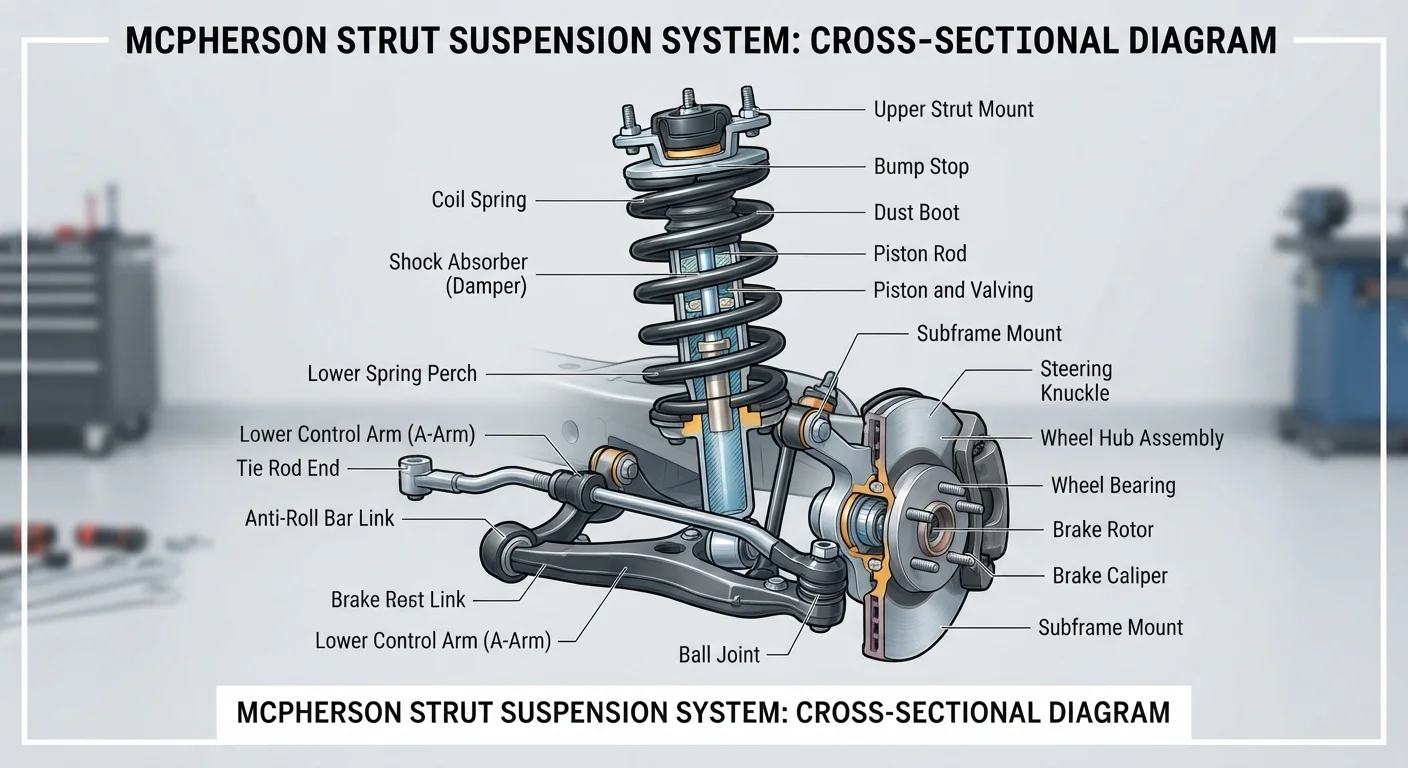
Photo: FaqsDrive.com | Smart Way To Search editorial
—— In This Article
Key Takeaways
- Suspension geometry controls how your wheels make contact with the road at all times.
- Shocks and struts dampen spring oscillation - without them, your car would keep bouncing.
- A pothole's jarring impact comes from rapid, uncontrolled wheel movement through worn or overwhelmed components.
- Alignment angles like camber and toe affect both handling feel and tire wear patterns.
- Worn suspension parts make road impacts feel harsher and can reduce your ability to steer safely.
The System Behind Every Bump You Feel
When your front tire drops into a pothole, several things happen in milliseconds. The wheel plunges downward, the spring compresses to absorb the energy, and the shock absorber converts that energy into heat so the spring doesn't keep bouncing. Meanwhile, control arms - the rigid links connecting your wheel hub to the car's frame - guide exactly how the wheel moves through that impact. Every component is choreographed, and the quality of that choreography is what engineers call suspension geometry.
Geometry isn't a single number. It's a collection of measurements that define your wheel's orientation in three dimensions. The three most important are:
- Camber: The tilt of the wheel when viewed from the front. Slight negative camber (top of wheel leaning inward) helps tires stay flat during cornering.
- Toe: Whether the front edges of the tires point slightly inward (toe-in) or outward (toe-out) when viewed from above. Toe affects straight-line stability and turn-in response.
- Caster: The angle of the steering axis when viewed from the side. Positive caster helps the steering wheel return to center after a turn.
These angles interact constantly. When you hit a bump, the suspension moves through its range of motion and the geometry changes dynamically - intentionally. Engineers design this movement, called suspension travel, so the tire maintains good contact with the road throughout.
What Shocks and Struts Actually Do
Springs alone would make your car unrideable. Without damping, a single bump would send the car into a prolonged, sickening series of oscillations. Shock absorbers - and their close cousin, the strut - solve this by resisting the spring's natural tendency to bounce back. Inside each unit, hydraulic fluid is forced through tiny valves as the suspension compresses and extends. That resistance is what turns kinetic energy into heat and stops the bouncing after one or two controlled cycles.
Strut Replacement Requires Realignment
Any time struts are replaced, schedule a four-wheel alignment immediately after. The strut is part of the steering geometry, so installing new units without realigning can leave your wheels at incorrect angles - accelerating tire wear and compromising handling even with brand-new parts.
A strut is structurally different from a standalone shock absorber because it also acts as a pivot point for steering and bears some of the vehicle's weight. Replacing struts is more involved than replacing shocks and usually requires a wheel alignment afterward to restore geometry.
As shock absorbers wear - typically over many years and tens of thousands of miles - they lose their damping ability. The result isn't just a bouncier ride; it's reduced control. A worn shock absorber allows the tire to skip or "chatter" over rough surfaces instead of maintaining consistent road contact, which lengthens stopping distances and reduces steering precision.
Why Potholes Hit Differently
A pothole is essentially an abrupt drop followed by an equally abrupt ledge. Your tire falls into the void, then slams into the far wall as the car moves forward. The speed of that impact is what strains suspension components - especially if the shock absorber can't respond fast enough or the geometry forces the wheel into an awkward angle at the moment of impact.
~$3B
Annual vehicle damage from potholes in the U.S.
The American Automobile Association has estimated that pothole damage costs U.S. drivers roughly $3 billion per year in vehicle repairs.
50,000+ miles
Typical shock absorber service interval
Many manufacturers suggest inspecting shock absorbers and struts around every 50,000 miles, though actual wear depends heavily on road conditions and driving habits.
Vehicles with sport suspensions (stiffer springs, firmer shocks) feel potholes more sharply because less energy is absorbed before the chassis receives it - that's intentional for handling, but it trades comfort. Luxury vehicles use softer spring rates and sometimes adaptive damping systems that electronically adjust resistance in real time. Neither is universally better; they reflect different engineering priorities.
Tire condition plays a role here too. Properly inflated tires act as the first layer of suspension, cushioning minor impacts before they reach the springs. An underinflated tire deforms unevenly and transfers more shock energy directly to the wheel and suspension components. For more on how tires interact with your vehicle's handling system, see our guide to tire pressure and tread basics.
When to Have Your Suspension Inspected
Suspension wear is gradual, which makes it easy to normalize. Drivers often adapt to a worsening ride without realizing how much handling has changed. A few clear signals that warrant a professional inspection:
- The car bounces more than once or twice after hitting a bump
- You hear clunking, creaking, or knocking over uneven roads
- The steering wheel vibrates at highway speeds
- The front end dips significantly under braking
- Tires show uneven wear patterns - more on the inside or outside edges
Alignment vs. Suspension Inspection: Not the Same Thing
A wheel alignment adjusts the angles of your tires to factory specifications - it's a calibration service. A suspension inspection checks the physical condition of components like ball joints, tie rod ends, bushings, and shock absorbers. Both are important, but one doesn't replace the other. If worn parts are found during an inspection, they should be replaced before an alignment is performed.
Suspension inspection is particularly valuable after a hard pothole hit, a curb strike, or any collision, even a minor one. A qualified mechanic can check alignment angles, inspect bushings and ball joints, and test shock absorber function with straightforward physical tests. Restoring proper geometry through a wheel alignment is one of the most cost-effective ways to protect tire life and restore confident handling.
This article is for informational and educational purposes only. For diagnosis or repair of specific vehicle issues, consult a licensed, qualified mechanic.
Frequently Asked Questions

Automotive Basics Editorial Team
Automotive Basics Editorial Team is the collective byline for our editorial team and contributor network. Articles published under this byline or an editorial pen name are researched, written, and reviewed according to our editorial standards for clarity, consistency, and independence before publication.
View author profile