
Cooling System Myths That Could Cost You an Engine
Many drivers misunderstand how engine cooling works. Separate fact from fiction on coolant, thermostats, and overheating prevention.
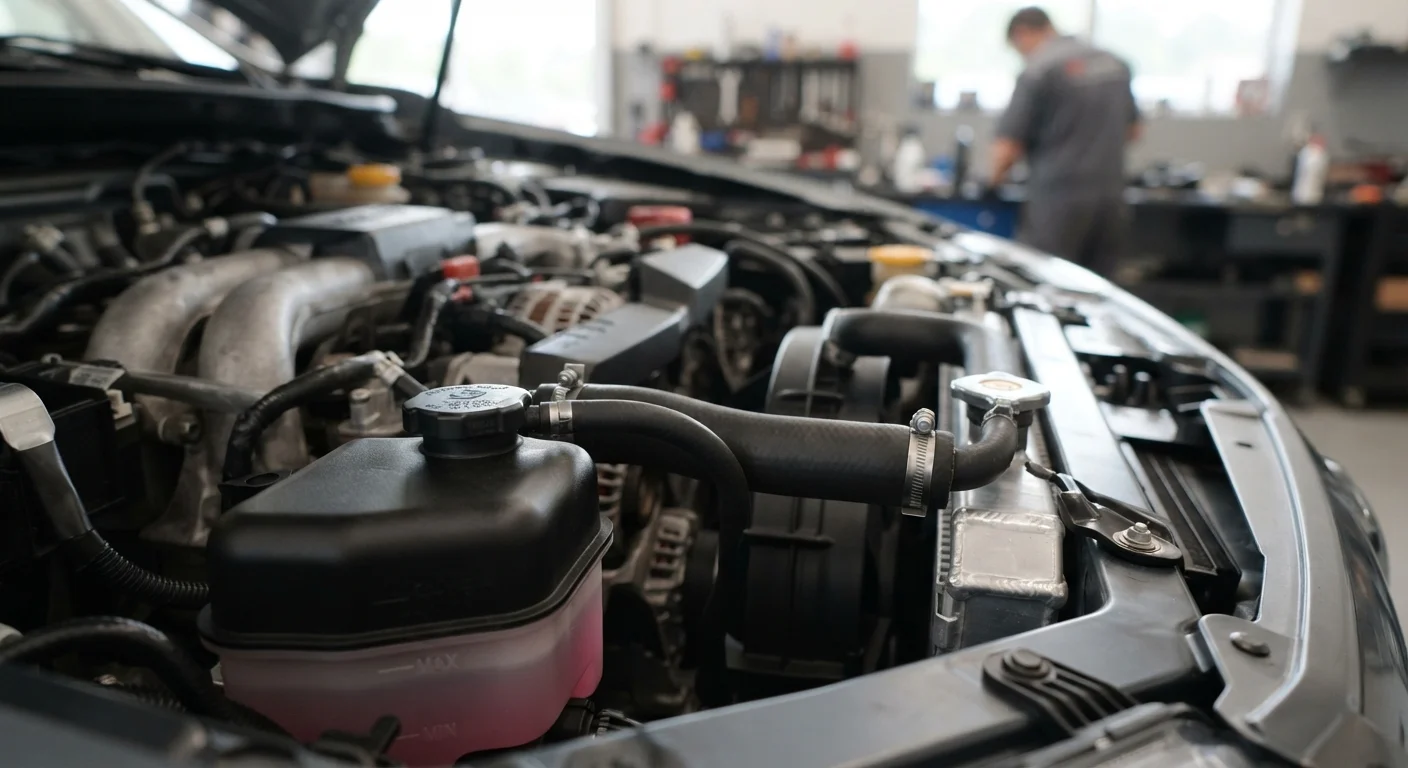
Photo: FaqsDrive.com | Smart Way To Search editorial
—— In This Article
Key Takeaways
- Plain water is not a safe long-term substitute for proper coolant in your radiator.
- A running engine can still overheat even when your temperature gauge reads normal for a while.
- Flushing coolant on schedule matters more than most drivers realize - degraded coolant causes corrosion.
- A faulty thermostat can cause both overheating and under-heating, not just one.
- Adding coolant to a hot, pressurized radiator cap is dangerous and should never be done.
Why Cooling System Myths Are So Costly
The cooling system is one of the hardest-working parts of your vehicle, yet it's also one of the most misunderstood. Many drivers only think about it when the temperature gauge spikes - and by then, serious damage may already be underway. Overheating is among the most common causes of catastrophic engine failure, and a surprising number of those failures trace back to simple misconceptions.
Whether it's a shortcut someone heard at the auto parts store or advice passed down from a well-meaning family member, cooling system myths are widespread. Learning to separate fact from fiction is one of the most valuable things a car owner can do. For a broader look at how mistaken beliefs drive up repair costs, see our article on car ownership misconceptions that lead to unnecessary repair bills.
Myth
You can just use plain water in your radiator if you run low on coolant.
Fact
Water alone lacks the additives that prevent corrosion and freezing, and it boils at a lower temperature than a proper coolant mix.
Coolant - often called antifreeze - is a mixture of ethylene or propylene glycol and water, typically blended 50/50. That blend raises the boiling point and lowers the freezing point compared to plain water. More importantly, coolant contains corrosion inhibitors that protect aluminum components, rubber hoses, and the water pump. Using plain water in an emergency for a short trip is understandable, but continuing to drive on it allows corrosion to build up and leaves the system vulnerable in hot or cold weather. Top off correctly with the coolant type specified in your owner's manual as soon as possible.
Myth
If the temperature gauge looks fine, your cooling system is fine.
Fact
Temperature gauges measure coolant temperature at one sensor location and can lag behind or fail to detect localized overheating or low coolant level.
Modern temperature gauges are designed to stay in a comfortable middle zone under a wide range of conditions, which can actually mask early warning signs. A sensor that's failing may read normal even when coolant is dangerously low. Additionally, air pockets in the cooling system - caused by improper bleeding after a flush or repair - can create hot spots in the engine that the gauge doesn't catch right away. Relying solely on the gauge is not a substitute for checking your coolant level and condition regularly.
Myth
Coolant lasts forever - you only need to top it off, not flush it.
Fact
Coolant degrades over time, losing its corrosion-inhibiting properties and becoming acidic, which can damage metal and rubber components.
Over miles and years, the additives in coolant break down. Old coolant can become acidic enough to corrode aluminum radiators, water pump impellers, and heater cores. Most manufacturers recommend a full coolant flush every two to five years or at specific mileage intervals - check your owner's manual for the figure that applies to your vehicle. Simply topping off a reservoir full of degraded coolant doesn't restore those protective properties. A flush removes the old fluid along with any rust or scale that has accumulated in the system.
Myth
A thermostat only causes problems if it gets stuck open.
Fact
Thermostats can fail in both directions - stuck open causes slow warm-up and poor heater performance; stuck closed causes rapid overheating.
The thermostat is a small valve that stays closed while the engine warms up (keeping coolant from circulating prematurely) and opens once the engine reaches operating temperature. A thermostat stuck in the open position means coolant circulates constantly, so the engine never fully warms up, the heater barely works, and fuel economy suffers. A thermostat stuck closed is more immediately dangerous - coolant can't flow to the radiator, and the engine overheats quickly. Both failures are real, and a thermostat is an inexpensive part to replace when symptoms appear.
Myth
It's fine to open the radiator cap when the engine is warm to check coolant.
Fact
Opening a pressurized, hot radiator cap can cause scalding coolant to spray out forcefully, causing severe burns.
The cooling system operates under pressure - typically 14 to 18 psi - which raises the boiling point of the coolant. When you remove the cap from a hot, pressurized system, that pressure releases instantly, and superheated coolant can erupt. Always wait until the engine has been off for at least 30 minutes and the radiator feels cool to the touch before opening the cap. Use a cloth over the cap and turn it slowly to release any remaining pressure gradually. For routine level checks, use the translucent overflow reservoir - you can read the level without opening anything.
What the Numbers Tell Us
Cooling system failures are not rare edge cases - they represent a significant share of roadside breakdowns and engine damage claims every year. Understanding the scale of the problem makes the case for taking these myths seriously.
~33%
Of roadside breakdowns involving overheating
Industry estimates consistently place cooling system failures among the top causes of vehicle breakdowns, affecting roughly one in three vehicles experiencing mechanical trouble on the road.
$3,000+
Potential cost of engine overheating damage
Warped cylinder heads and blown head gaskets - common results of overheating - can cost several thousand dollars to repair, far exceeding the price of routine coolant maintenance.
Staying on top of your cooling system starts with knowing what's actually in your engine bay. For a practical, step-by-step walkthrough of checking coolant and other fluids at home, visit our guide on checking your car's essential fluids.
Never Open a Hot Radiator Cap
Opening a radiator cap on a hot engine releases pressurized coolant that can spray and cause serious burns. Always let the engine cool completely - at least 30 minutes - before touching the radiator cap. For routine level checks, read the external markings on the coolant overflow reservoir instead. If you suspect a cooling system problem, have a qualified mechanic inspect it rather than attempting to open the system yourself while it's hot.
Just as outdated oil change rules cost drivers unnecessary money, outdated cooling system beliefs lead to skipped flushes and ignored warnings. See how similar thinking plays out in our piece on oil change myths that cost drivers money. All of this maintenance knowledge lives under our car maintenance hub, where you can find task guides for every skill level.

Automotive Basics Editorial Team
Automotive Basics Editorial Team is the collective byline for our editorial team and contributor network. Articles published under this byline or an editorial pen name are researched, written, and reviewed according to our editorial standards for clarity, consistency, and independence before publication.
View author profile