
Why New Fish Keep Dying — and What's Usually Going Wrong
Most early fish losses come from a handful of avoidable mistakes. This article explains the most common culprits and how to address them.
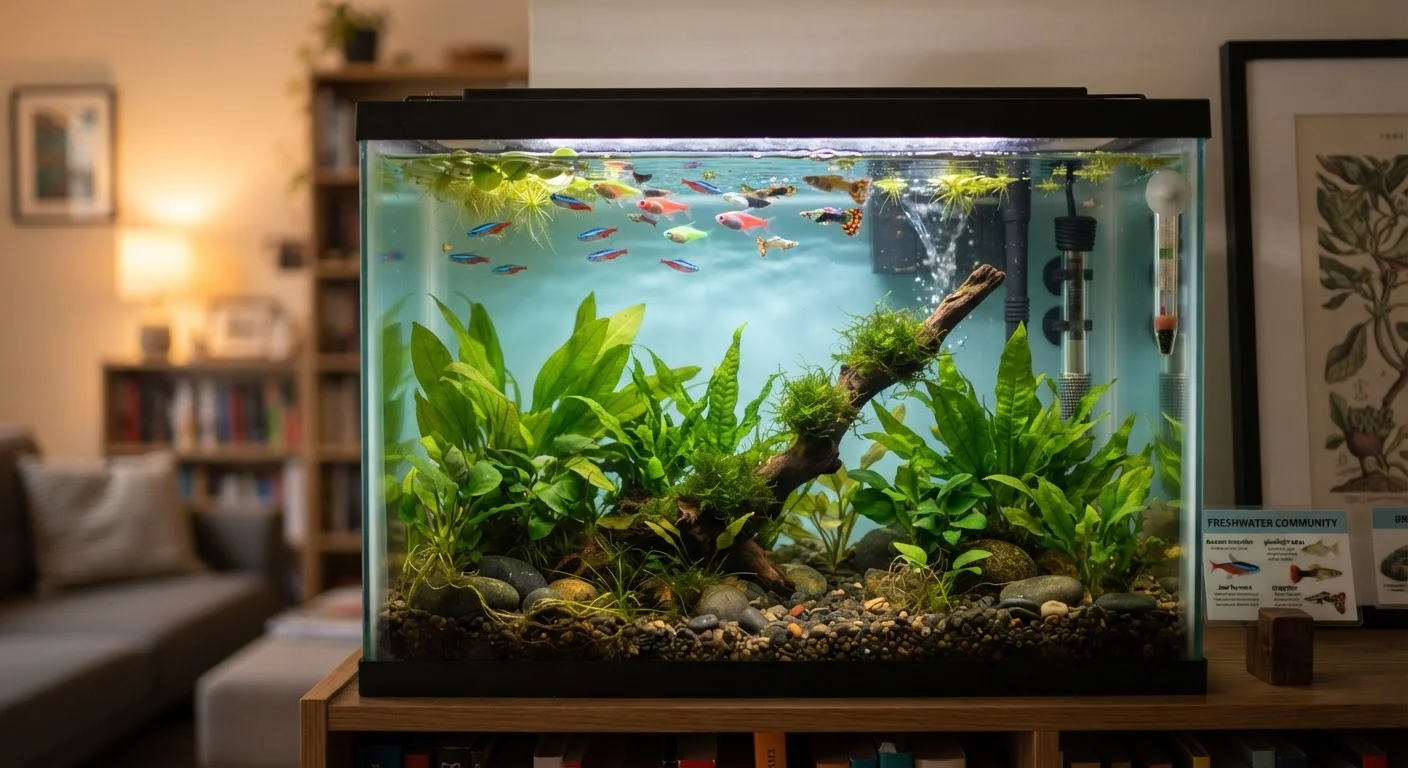
Photo: FaqsDrive.com | Smart Way To Search editorial
—— In This Article
Key Takeaways
- Skipping the nitrogen cycle is the single most common reason new fish die within days.
- Adding too many fish too quickly overwhelms an aquarium's biological filtration system.
- Poor water temperature, incorrect pH, and chlorinated tap water each cause rapid fish stress and death.
- Overfeeding pollutes the water far faster than most beginners realize.
- Quarantining new fish before introducing them to an established tank prevents disease outbreaks.
The Real Reason Fish Keep Dying in New Tanks
If you've brought home fish and watched them die within days — or even hours — you're not alone, and it's rarely about bad luck. Almost every early fish loss traces back to a small handful of very predictable problems that are almost entirely avoidable once you know what to look for.
The aquarium hobby has a steep but learnable learning curve. Unlike dogs or cats, fish communicate stress invisibly until they're already in serious trouble. That makes prevention far more important than reaction. The mistakes below are the most common culprits, listed in roughly the order they affect beginners.
Setting up the tank and adding fish the same day, skipping the nitrogen cycle entirely.
Why it happens: Pet stores often sell fish and tanks together, implying the setup is ready to go. Beginners don't realize a new tank has zero beneficial bacteria to break down fish waste.
Adding too many fish at once, overloading the tank's biological capacity.
Why it happens: It's exciting to populate a new tank quickly, and fish often look small at the store. A common but rough guideline — one inch of fish per gallon — gets misapplied or ignored.
Using unconditioned tap water that contains chlorine or chloramine.
Why it happens: Tap water looks clean, so beginners assume it's fish-safe. Chlorine and chloramine, added by municipalities to make water safe for humans, are toxic to fish gills.
Overfeeding, which causes uneaten food to rot and spike ammonia levels dangerously.
Why it happens: Fish appear to beg constantly, which encourages owners to keep feeding. Many beginners also underestimate how little food a small fish actually needs.
Ignoring water temperature or using a tank without a heater for tropical species.
Why it happens: Room temperature feels warm enough to humans, but most tropical fish need stable water between roughly 74°F and 80°F. Fluctuations of even a few degrees cause immune system stress.
Skipping quarantine for new fish and introducing disease directly to an established tank.
Why it happens: Setting up a second tank feels unnecessary and expensive. New fish often look healthy in the store even when they're carrying parasites or bacterial infections.
How to Build Habits That Keep Fish Alive Long-Term
Fixing most fish deaths comes down to one core habit: test your water regularly. An inexpensive liquid test kit (not test strips, which are less accurate) lets you measure ammonia, nitrite, nitrate, and pH so you're not guessing at conditions your fish can't survive.
Never Do a 100% Water Change
When fish appear sick, the instinct is to empty the tank and start fresh. This almost always makes things worse. A complete water change removes the beneficial bacteria your filter depends on, essentially un-cycling your tank overnight. It also shocks fish with an abrupt shift in water chemistry. Stick to partial changes of no more than 30% at a time, and always use conditioned, temperature-matched water.
Beyond testing, consistency matters more than perfection. Stable water that's slightly off is generally safer for fish than water that swings between correct and incorrect parameters. Make partial water changes of roughly 20–25% weekly rather than large emergency changes that shock fish with sudden shifts in temperature or chemistry.
Choosing the right fish for your experience level also helps enormously. Some species labeled 'beginner fish' in stores actually have demanding care requirements. Research any fish before purchasing — not after — so the tank you set up actually matches what the animal needs.
This article is for general informational purposes only. For specific health concerns about your fish, consult an aquatic veterinarian or an experienced aquarium specialist.

Pets & Animals Editorial Team
Pets & Animals Editorial Team is the collective byline for our editorial team and contributor network. Articles published under this byline or an editorial pen name are researched, written, and reviewed according to our editorial standards for clarity, consistency, and independence before publication.
View author profile