
Mental Health vs. Mental Wellness: Understanding the Difference
Mental health and mental wellness aren't the same thing. Here's how they differ and why the distinction matters for everyday self-care.
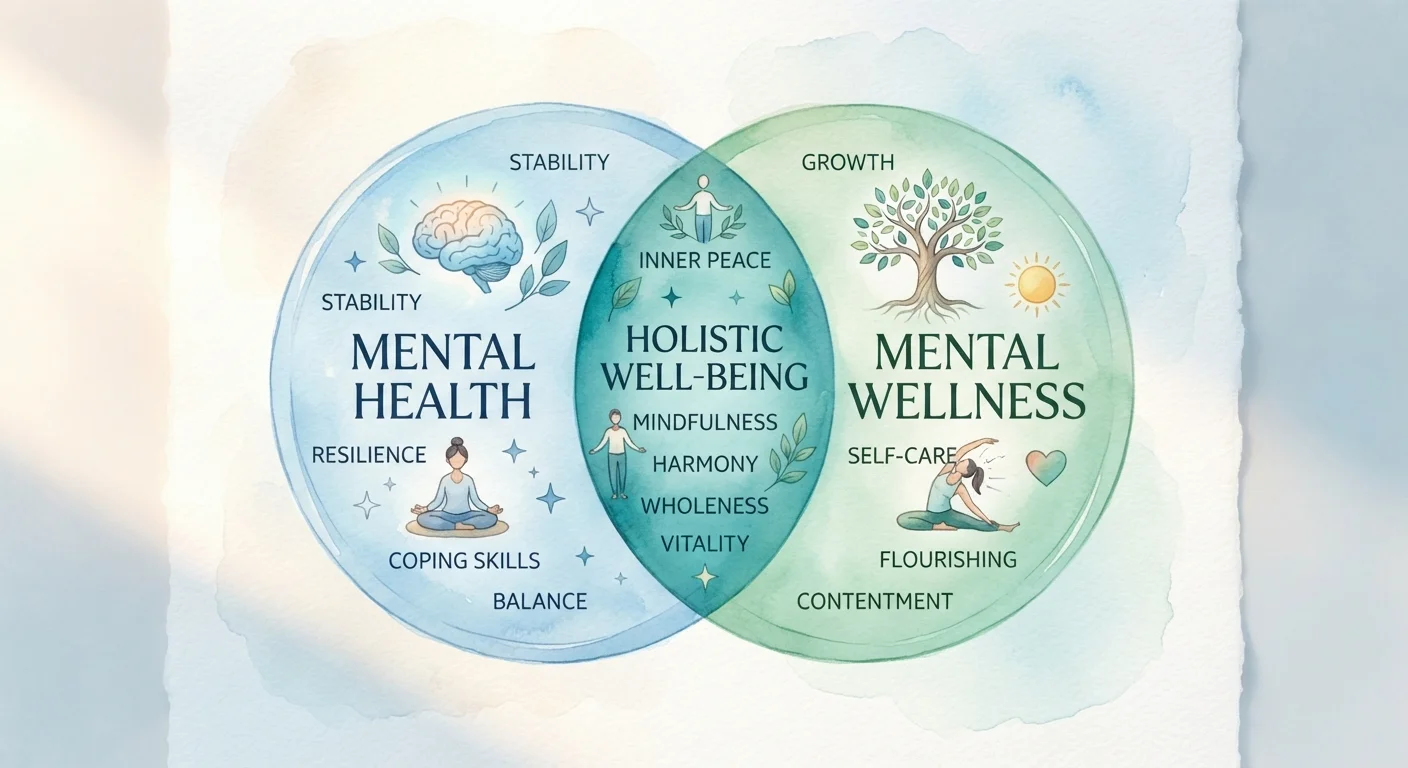
Photo: FaqsDrive.com | Smart Way To Search editorial
—— In This Article
Key Takeaways
- Mental health refers to a clinical spectrum from disorder to absence of disorder, assessed by professionals.
- Mental wellness describes the active, daily effort to support your psychological and emotional wellbeing.
- Good mental wellness does not guarantee the absence of a mental health condition, and vice versa.
- Both concepts matter for everyone - not just those experiencing a diagnosable mental health condition.
- Small, consistent habits are among the most researched tools for supporting mental wellness over time.
Why the Distinction Matters
You've probably heard both terms used almost interchangeably - in news stories, on product labels, in workplace emails. But mental health and mental wellness point to genuinely different things, and blurring them can make it harder to understand what you need or how to seek support.
Think of it this way: mental health is a clinical concept describing where someone falls on a spectrum of psychological functioning - from serious conditions requiring treatment all the way to the absence of diagnosable disorder. Mental wellness, on the other hand, is about the active, ongoing work of nurturing your emotional and psychological life, regardless of diagnosis. For a fuller picture of everything that touches everyday psychological wellbeing, our complete starting point guide covers the landscape clearly.
Understanding which concept applies to your situation helps you ask the right questions - and find the right kind of support.
Mental Health: The Clinical Spectrum
According to the World Health Organization, mental health is defined as a state of wellbeing in which a person can cope with the normal stresses of life, work productively, and contribute to their community - not simply the absence of illness. But in everyday use, mental health most often refers to diagnosable conditions: depression, anxiety disorders, bipolar disorder, PTSD, and others that are assessed and treated by licensed clinicians.
Mental health exists on a spectrum. Someone can experience periods of poor mental health - grief, burnout, prolonged stress - without meeting the clinical criteria for a disorder. Conversely, a person managing a diagnosed condition with strong support and effective treatment may function well day to day. This is why it's important not to use mental health as a synonym for mental illness, or assume that a diagnosis defines a person's entire experience.
If you're curious about where ordinary worry ends and clinical anxiety begins, our guide on anxiety vs. everyday worry draws that line carefully.
| Criterion | Mental Health | Mental Wellness |
|---|---|---|
| Definition | Clinical state of psychological functioning | Active practice of emotional & psychological care |
| Who it applies to | Everyone, with or without a diagnosis | Everyone, regardless of clinical status |
| Assessed by | Licensed mental health professionals | Self-reflection and personal awareness |
| Key focus | Diagnosing, treating, and managing conditions | Building resilience and positive daily habits |
| Examples | Depression, anxiety disorders, PTSD | Sleep hygiene, mindfulness, social connection |
| Can one exist without the other? | Yes - strong mental health, low wellness effort | Yes - high wellness effort, diagnosed condition |
Mental Wellness: An Everyday Practice
Mental wellness isn't something you either have or don't have - it's something you actively tend. Researchers and public health organizations increasingly describe it as a dynamic process involving emotional regulation, meaningful relationships, a sense of purpose, and habits that support the brain and nervous system over time.
Here's what makes wellness different from health in practical terms: you don't need a diagnosis, a provider, or a crisis to begin. Sleep quality, movement, social connection, and mindfulness practices are all documented supports for psychological functioning, and they're available to virtually everyone. Wellness is also deeply personal - what restores one person may not resonate with another, and that's completely normal.
1 in 5
U.S. adults experience mental illness each year
According to the National Alliance on Mental Illness (NAMI), approximately 20% of American adults live with a mental health condition annually.
~50%
Reduction in depression risk linked to regular physical activity
A 2023 meta-analysis published in the British Journal of Sports Medicine found regular exercise was associated with meaningful reductions in depression and anxiety symptoms.
7-9 hrs
Recommended nightly sleep for adults
The American Academy of Sleep Medicine links consistent sleep in this range to better emotional regulation and lower risk of mood disturbances.
Mental wellness also acts as a buffer. Research consistently suggests that people who maintain consistent wellness habits tend to show greater resilience when they do face psychological stressors - though wellness is never a guarantee against a mental health condition emerging. For practical ideas on where to start, daily habits that support mental wellbeing over time offers evidence-linked guidance that's easy to put into practice.
Where They Overlap - and Where They Diverge
The two concepts aren't opposites - they intersect in important ways. Someone with a diagnosed mental health condition absolutely benefits from mental wellness practices alongside any clinical treatment. And someone who invests heavily in their wellness routines is not immune from developing a mental health condition; biology, life circumstances, and trauma all play roles that lifestyle alone can't always address.
A Common Misconception Worth Clearing Up
Many people assume that investing in mental wellness means they don't need to worry about mental health - or that seeking mental health care means their wellness habits have failed. Neither is true. Wellness practices support the brain and nervous system over time, but they're not a substitute for clinical care when symptoms are present. The two approaches work best when understood as complementary, not competing.
The key takeaway is that mental wellness is something everyone can and should engage with, while mental health care - particularly clinical assessment and treatment - is essential for those experiencing significant distress or impairment. Neither is optional; they simply operate at different levels of need.
This article is for general informational purposes only and does not constitute medical or mental health advice. If you're experiencing persistent or distressing symptoms, please reach out to a qualified mental health professional.

Health & Wellness Editorial Team
Health & Wellness Editorial Team is the collective byline for our editorial team and contributor network. Articles published under this byline or an editorial pen name are researched, written, and reviewed according to our editorial standards for clarity, consistency, and independence before publication.
View author profile